

Source: The Conversation – UK
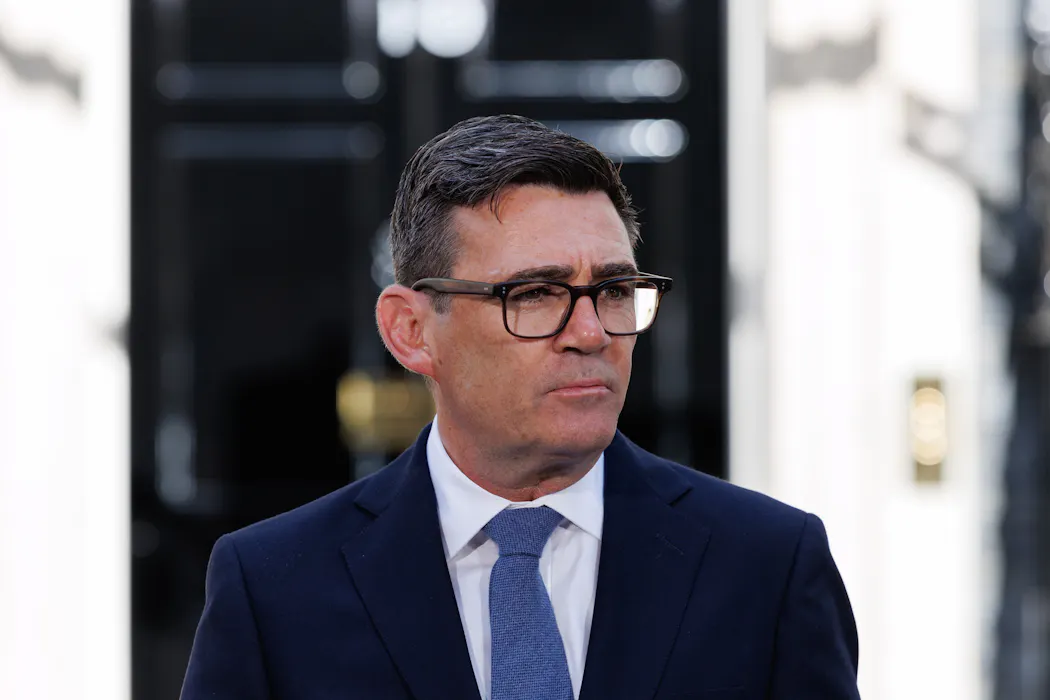
The UK’s prime minister, Andy Burnham, is facing his first major test with the public over the upcoming early release of thousands of prisoners. These plans are part of the Sentencing Act 2026, passed by Keir Starmer’s government in response to an independent review of sentencing.
The review recommended a model whereby eligible prisoners could be released at the one-third point of their custodial term, if they engaged constructively with the prison regime. (If not, they could stay in custody until the halfway point or longer.)
But the proposals as enacted under the Sentencing Act simply mean many prisoners will automatically be released earlier. The new law also reduces the use of short sentences, which have contributed to recent increases in the UK prison population.
This was a response born of crisis, designed to stop the operational collapse of a prison estate running close to absolute capacity. Nonetheless, it can be defended on public protection grounds.
Reoffending rates are highest among people serving short sentences. Diverting them into community supervision rather than inflicting a short, disruptive spell inside is likely to help bring these rates down.
Reoffending rates are markedly lower among those serving longer sentences, so releasing them earlier – particularly when those releases are planned and supervised – is unlikely to make much difference to public safety.
The rollout of this law change has placed Burnham in an unenviable position. Unless the prison population is reduced, police cells will back up and courts won’t be able to remand dangerous defendants, because there is nowhere to hold them. But this clashes with the emotional force of what criminologists call “penal populism” – the pursuit of penal policy for its electoral appeal, rather than its effectiveness.
Burnham is understandably reluctant to risk an early-released prisoner committing a serious offence in the opening months of his premiership. Faced with that bind, he has largely deferred to populist pressure.
Penal populism explains a political context in which the need to appear tough on crime overrides expert consensus and operational reality.
Read more:
Will ending short prison sentences fix prison overcrowding? What an expert thinks
When survivors of serious crimes began receiving letters from the probation service informing them that “their” offenders were being considered for release, public anger built quickly.
This anger has coalesced around emblematic cases such as the killers of PC Andrew Harper (two of whom will now become eligible for release at the halfway point of their manslaughter sentences). Political opponents led by the Conservative leader, Kemi Badenoch, have weaponised the outcry effectively.
Placed in this invidious position, Burnham paused the scheme and announced exclusions for rape, serious child sexual offences and grooming – though, controversially, not for domestic abuse. This pause calmed the immediate storm – but at the cost of a smaller reduction in the prison population, leaving the underlying capacity crisis unresolved.
The problem with ‘tough on crime’
All of this gives rise to difficult questions about what leaders need to do if they want to win votes using crime – or avoid losing votes as a result of crime.
The evidence that punitiveness wins elections is weaker than one might think. Although concern has been increasing recently, crime is only fifth on the list of issues that decide votes. Research consistently finds that support for punitiveness softens once people are given the specifics of real cases, rather than abstract categories of “offender”.
Despite many people thinking England and Wales’s criminal justice system is getting more lenient, sentencing has in fact become harsher in recent years. Much of the growth of the prison population is down to increased sentence lengths, rather than more crime.
What actually shapes leaders’ responses to issues of crime and justice is not that toughness wins, but that leniency-gone-wrong loses. A single serious offence by an early-released prisoner is a political catastrophe, while the thousands of quiet, successful releases are invisible. Leaders are not, therefore, responding to a clear public appetite for harshness, but acting in anticipation of what might happen if things go wrong.
Ultimately, bringing release dates forward is politically dangerous because it can be reframed as “letting criminals out early”, and is easily portrayed as a policy which undermines the imposition of retribution as intended by a judge.
Four solutions
So, what should Burnham do? The political storm around the early release scheme is an opportunity to pursue reforms that are harder to politicise. Four such reforms stand out to me:
1. Reform use of prison recall
Recalls are the biggest lever: in early 2026, for the first time on record, more people were recalled to prison than released – 13,193 in a single quarter. Only 22% involved a further charge; the rest were for technical breaches such as missing probation appointments. Burnham should make recall proportionate, reserving it for genuine risk rather than administrative non-compliance.
2. Address Imprisonment for Public Protection sentences
The legacy of the indeterminate sentence of Imprisonment for Public Protection still holds, despite being abolished in 2012. Around 946 people have never been released, 99.6% of them past their tariff, with a further 1,476 inside on recall. Legislative change could lead to the safe release of this cohort.
3. Reduce use of remand
The remand population – those held in prison while awaiting trial or sentencing – makes up close to a fifth of all prisoners (and is up to 16,000 in 2026, from 9,000 in 2019). These numbers could be safely reduced through tagging, enforced time limits and bail accommodation.
4. Community sentences for women
Most women in custody – less than 5% of the prison population – are serving short sentences for non-violent offences. Replacing these with community provision would cut prison numbers and avoid the wider harm of imprisoning primary carers.
Read more:
How to stop released prisoners reoffending: what the evidence says
Meaningful reform in these four areas would help ease capacity issues. Importantly, these alternatives share a feature that the early release scheme lacks. All rest on a claim of procedural legitimacy (technical breach, expired tariff, unconvicted status, non-violent offending) that is far more defensible in public argument, and therefore more durable against a populist attack.
We know that the more time people spend in prison, the more harm they suffer. Even Conservative governments have accepted that prison can be “an expensive way of making bad people worse”.
However, the early release policy has been caught by the familiar tough-on-crime script. In the process, it appears to have damaged the very confidence in the justice system it was supposed to sustain.
The lesson is not that reform is impossible. But when it is introduced under crisis conditions and applied retrospectively to people the public can already name, it is uniquely exposed to political attack.
Changing the point of release may yet have a future. But doing it in the glare of a moral panic, as a response to an operational crisis, almost certainly does not.

Jake Phillips is currently in receipt of funding from Tenacious Awards for a research project examining the IPP Action Plan.
Original source: https://analysis1.mil-osi.com/2026/08/07/can-leaders-ever-reform-prisons-without-playing-politics-four-things-andy-burnham-could-do/