

Source: The Conversation (Au and NZ)
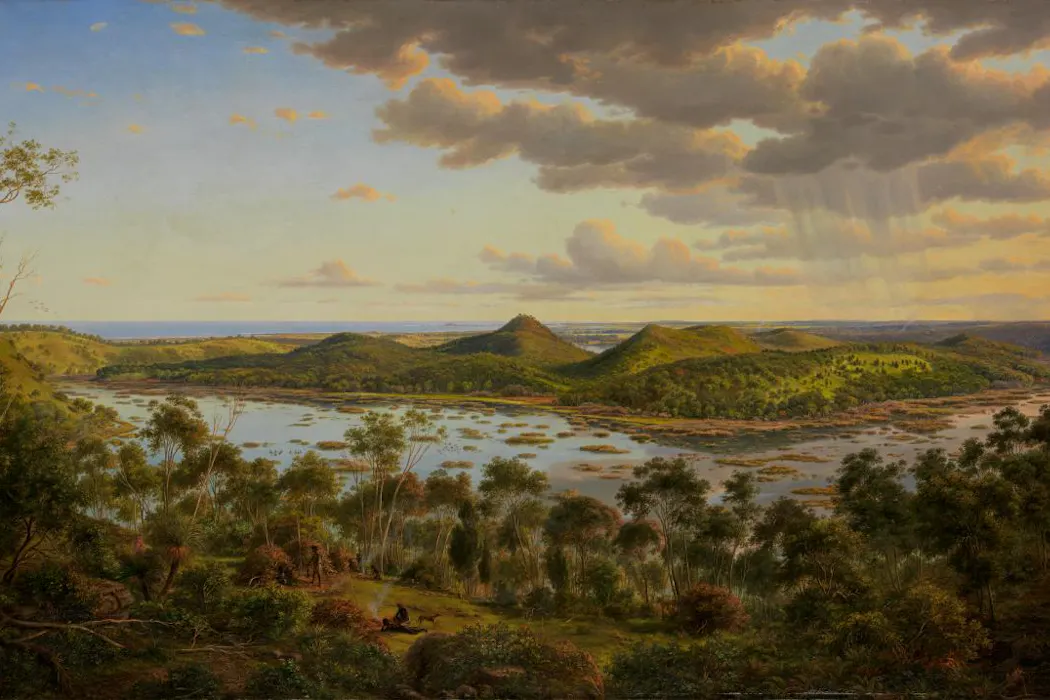
Nature is not doing well in Australia. Many unique mammals, birds and insects are struggling. Entire ecosystems are collapsing.
In response, the federal government signed a global pledge in 2022 to protect and restore nature. The global goal is to restore 30% of degraded ecosystems. But Australia only proposes to have “priority degraded areas […] under effective restoration by 2030”. The terms are not defined, no 30% target is included, and there is no method proposed to measure success.
With 2030 less than four years away, it’s time to ask hard questions. What does it actually mean to restore nature? What would success look like? And what would it cost?
What does it mean to restore nature?
If we walk through protected forests with abundant wildlife, we might think the end goal is simple: more of this.
The problem is, many current ecosystems – communities of species – look very different to those before European colonisation began in 1788. Some ecosystems no longer exist.
The tireless burrowing of millions of bandicoots and bettongs once shaped the grassy woodlands of southeast Australia. But foxes and cats, coupled with logging, farming and mining, have largely put an end to their work as ecosystem engineers.
Regent honeyeaters were once seen in “immense flocks” in eucalypt forests. There are now less than 300 birds left – so few they are losing their song.
Oyster reefs once carpeted southern seas so densely colonial ships struggled to navigate them. But the reefs were quickly dredged to near-extinction and now exist only in fragments.
It’s hard to judge the health of nature when so much has been lost. This is known as shifting baseline syndrome – each new generation will see nature’s current level of degradation as normal.

John Gould (Mammals of Australia, 1845)/Wikimedia
Remembering what was lost
Gone from living memory doesn’t mean gone for good. The historic record is richer than most people realise.
For tens of thousands of years, Aboriginal and Torres Strait Islanders managed Country using fire and selective harvesting, based on an intimate knowledge of seasonal cycles and species behaviour that Western science is only beginning to appreciate.
Much of this stewardship has been encoded in language, ceremony and oral tradition and passed down. This is how we know millions of bogong moths once gathered in alpine areas to cluster on cave walls and enter a low-energy state over the hot summer. Their migration once supported the gathering of many nations for ceremony.
Early colonial journals, field guides, fisheries ledgers and ship logs describe a different continent. In the upper Murray River, diaries from explorers Hume and Hovell describe abundant Murray cod, and lagoons “literally crowded with wild ducks”.
Fossils such as bone fragments left by owls over thousands of years also help us envisage earlier ecosystems.
It’s useful to reconstruct what Australian ecosystems once looked like. But this work offers reference points for nature restoration, not goals.
In some cases, we cannot recreate the lost ecosystems of 1788. Today’s climate is already very different to that of 238 years ago and climatic change is intensifying. Introduced species have also altered many ecosystems irrevocably.
It’s also false to assume ecosystems are static – they never were. Australia’s ecosystems have been managed by people for tens of thousands of years.
A better goal would be to strive for biodiverse, functional ecosystems, informed by past conditions and practices. We should focus on what we value most about landscapes, rather than solely focusing on recreating the past.
Restoration must be about whole ecosystems
Restoring biodiversity requires working at landscape scale to reintroduce cultural burning, manage invasive species, replant and reseed vegetation, give rivers more water, keep livestock numbers sustainable, connect remaining areas of habitat and bring back species once found in an area.
The high profile Gondwana Link in Western Australia shows how restoration requires linking fragments of habitat so animals and plants can better move through the landscape as well as invasive species control and returning traditional fire regimes.

Gondwana Link
Hard choices are necessary
Over the last 12 years, the amount of protected land has almost doubled. The problem is, this growth has largely not been in areas where it matters most.
There’s been less growth in important areas closer to population centres, which are home to threatened and culturally important species. Unfortunately, the most threatened places are often sought after for farming or development.
We need to honestly acknowledge this tension, rather than pretending we can restore Australia’s ecosystems using marginal or abandoned land.
Policymakers will need to make difficult choices. If an ecosystem is almost gone, those last precious remnants need protection – even if they could be turned into farms or suburbs.
How much is enough?
The global target is to restore 30% of degraded ecosystems. But Australia hasn’t announced a numerical target.
The nation has 418 million hectares of land modified enough to be considered “degraded”, according to a new CSIRO dataset. If Australia aimed to restore 30%, that would mean 125 million hectares. This is a concrete target – the kind that means we will know if we meet it or not.
If policymakers set this as a target, they would need to carefully decide which areas are chosen. The good news: we know how to prioritise restoration.
Is it possible?
Restoring nature faces real obstacles. But it is possible.
Aiming to restore 30% of degraded land would mean working across private lands, public reserves and the Indigenous estate. It would likely take decades and come with a substantial price tag. Our ballpark figure is a little over A$7 billion a year over 30 years.
That’s less than a third of what the federal government spends subsidising activities which damage nature annually.
The shifting baseline means it’s hard to see what has been lost. But most of Australia’s native species still exist. The knowledge is there. And we know restoration at scale is possible.

Michelle Ward has received funding from the Australian Research Council, National Environmental Science Program, Queensland’s Department of Environment, Science and Innovation, Queensland Conservation Council, Australian Conservation Foundation, the Wilderness Society, the Australian federal government and WWF Australia.
Brendan Wintle receives funding from the Australian Research Council, the Victorian, NSW and Queensland governments, the Commonwealth National Environmental Science Program, the Ian Potter Foundation, the Hermon Slade Foundation and the Australian Conservation Foundation. He is a Board Director of Zoos Victoria and a lead councillor of the Biodiversity Council.
Jack Pascoe has received funding from the Australia Research Council. He is a director of Bush Heritage Australia and the Southern Australian Aboriginal Land and Sea Management Alliance. Jack is affiliated with Zoos Victoria, Saltwater People and Back to Country.
James Watson has received funding from the Australian Research Council, National Environmental Science Program, South Australia’s Department of Environment and Water, Queensland’s Department of Environment, Science and Innovation as well as from Bush Heritage Australia, Queensland Conservation Council, Australian Conservation Foundation, the Wilderness Society and BirdLife Australia. He serves on the scientific committee of BirdLife Australia and has a long-term scientific relationship with Bush Heritage Australia and Wildlife Conservation Society. He serves on the Queensland government’s Land Restoration Fund’s Investment Panel as the Deputy Chair.
Martine Maron has received funding from various sources including the Australian Research Council, the Queensland Department of Environment and Science, and the federal government’s National Environmental Science Program, and has advised both state and federal government on conservation policy. She is a member of the Wentworth Group of Concerned Scientists, a director of the Australian Wildlife Conservancy, a councillor with the Biodiversity Council, and leads the IUCN’s thematic group on Impact Mitigation and Ecological Compensation under the Commission on Ecosystem Management.
Original source: https://analysis1.mil-osi.com/2026/08/06/australia-has-pledged-to-restore-nature-but-could-we-ever-bring-back-lost-ecosystems/