

Source: The Conversation – UK
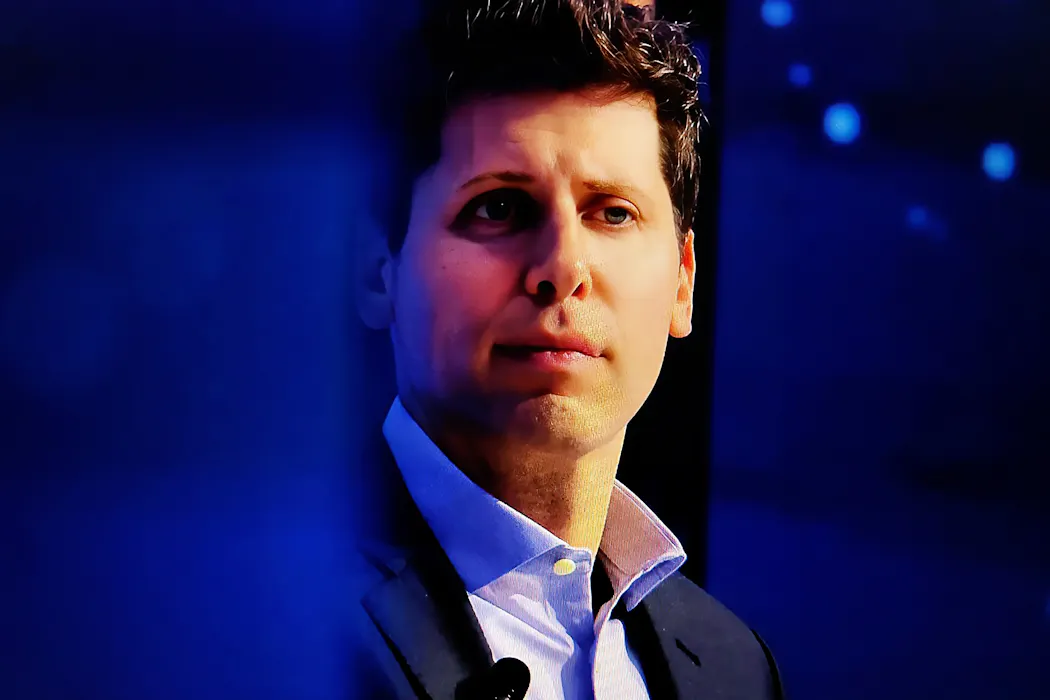
OpenAI’s CEO Sam Altman has speculated about how long it will take for artificial intelligence to replace senior leadership teams in organisations. “Shame on me,” Altman told the Conversations with Tyler podcast in November 2025, “if OpenAI is not the first big company run by an AI CEO.”
Altman is not the only one thinking about corporate robot leaders. Mark Zuckerberg has revealed he is training an AI agent to partly automate his job as the boss of Meta.
The promise of an AI CEO, powered by machine learning and neural networks, is that it can streamline decision-making and improve management operations. This vision is not new: in 2017, Jack Ma, CEO of Chinese e-commerce company Alibaba, was already predicting the rise of android business leaders.
Since then, several companies have installed a humanoid AI bot as their chief executive, including Chinese videogame company NetDragon Websoft and Polish drinks company Dictador. While these examples are probably publicity stunts dressed up as corporate strategy, the theory is that AI can do anything a human leader can do – only better and cheaper.
For Altman, though, there is a problem: not with AI – you can already run a company by algorithmic processes – but with humans. Workers might not be ready to accept an AI CEO that has the power to hire and fire at will, for example.
For this reason, Altman said he could see himself remaining the public face of OpenAI – a charismatic leader of an organisation that is otherwise largely automated.
Human face, AI brain
Altman’s vision aligns with what we call the “reversal of the Mechanical Turk”, a phenomenon that involves hiding AI behind a human face.
The original Mechanical Turk was a chess-playing machine designed and constructed by the engineer and inventor Wolfgang von Kempelen. Unveiled in 1770 at the Austrian imperial court to impress Empress Maria Theresa, it displayed an Ottoman-dressed figure seated behind a chessboard on top of a large cabinet. The doll appeared to play chess, usually beating its human opponents.
For nearly a century, the Mechanical Turk toured Europe and the US, defeating such eminent figures as Napoleon and Benjamin Franklin. Finally, Edgar Allan Poe’s family doctor acquired it and confirmed what had long been suspected: the machine was an illusion, operated by a human chess player hidden inside the cabinet.
The future of leadership in Altman’s vision is the exact opposite of the Mechanical Turk: a company that appears human (with Altman as its friendly face) but is actually machinic.
In Altman’s view, AI can do all the things a human CEO is supposed to do – including formulating a corporate vision, communicating organisational values and making strategic decisions. But the public will see only the human in the loop, not the algorithms behind the scenes.
Leadership in the age of AI
Could an AI CEO really do the job better than its human counterpart? If the role of CEO is to maximise efficiency and pursue market growth at all costs, then the answer might be “yes”. After all, AI is built to produce high-probability outputs based on patterns in data.
But most people expect more from leaders than algorithmic optimisation – a means-ends logic without heart or soul. The importance still placed on popular concepts like authenticity, responsiblity and value-driven leadership indicate that what we want from corporate leaders is something intrinsically human.
Just as we know that computers are infinitely better at number crunching than humans, we also know that computers are incapable of key leadership qualities like empathy or ethical judgment. A large language model (LLM)-based chatbot is unable to exert true leadership, just as a dishwasher is unable to fall in love.
Yet an AI CEO might be able to imitate the qualities we expect from good leaders. It’s plausible, for example, that an AI CEO could convince us that it cares about its employees or that it feels strongly about the company’s mission, in the same way that any chatbot tells us things we want to hear.
But none of this would be true. An AI CEO can only ever be a bundle of predictive algorithms geared towards operational effectiveness.
Against the anthropomorphisation of AI
The idea of an AI CEO is an extreme form of the anthropomorphisation of LLM-based systems. We already use terms such as artificial intelligence, reasoning models and hallucinations when talking about non-sentient machines. The word “leadership” applied in this context is no different.
The anthropomorphism of AI creates the illusion that chatbots operate “just like a human leader”. At the start of this year, the US AI company Anthropic published an 84-page constitution in which the company set out its “vision for Claude’s character”, including the personality traits for its AI chatbot.
These traits included intellectual curiosity, warmth and care, and a deep commitment to honesty and ethics – all qualities that we normally associate with good leadership.
It is important to call out such chimeras. Doing so can avoid amplifying the illusion of the Mechanical Turk reversed: a belief that an AI CEO could really take the place of a living, breathing corporate leader, supplanting their most quintessential human qualities.
AI has long been discussed as a threat to jobs and livelihoods. But what’s the reality? In this series, we explore the impact it is already having on different occupations – and how people really feel about their AI assistants.

Nick Butler receives funding from the Swedish Research Council (Vetenskapsrådet), grant no. 2023-00986.
Sverre Spoelstra receives funding from the Swedish Research Council (Vetenskapsrådet), grant no. 2023-00986, and Jan Wallander and Tom Hedelius Foundation, grant no. P23-0119.
Original source: https://analysis1.mil-osi.com/2026/08/06/will-companies-ever-be-run-by-an-ai-ceo/