

Source: The Conversation (Au and NZ)
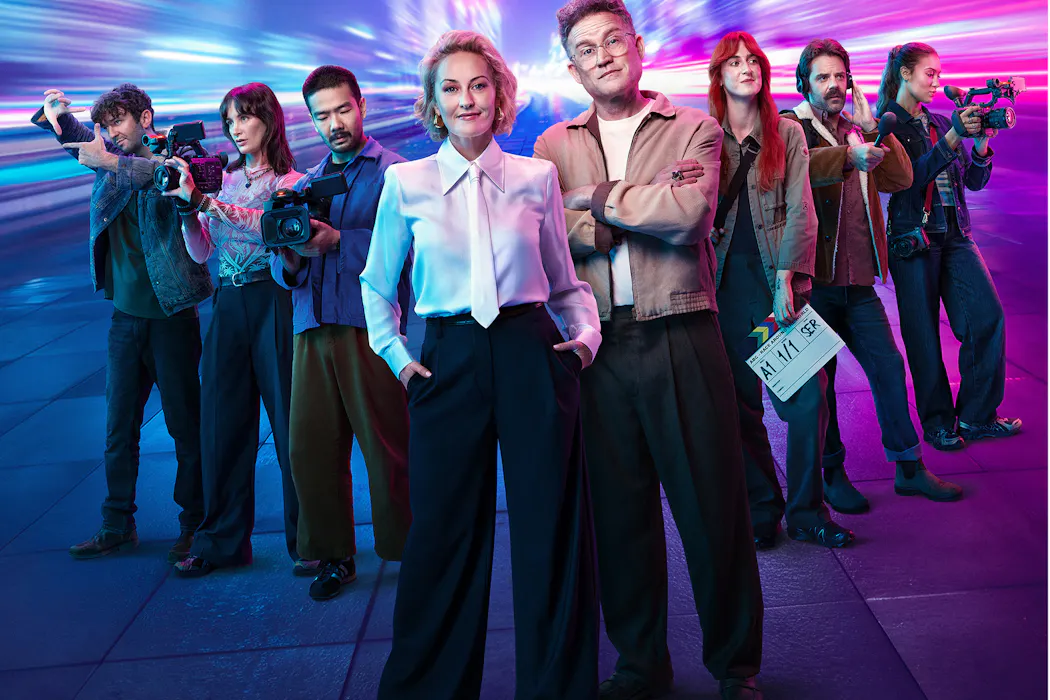
It wasn’t until episode eight in the ABC’s current reboot of Race Around the World that the question of ethics was raised.
Kate McGuinness’ film intercut accounts of village residents in Romania discussing their hardships under and after communist rule. McGuinness is known through the series for her droll humour and, here, her deadpan tableaux-vivants resemble something from a Wes Anderson film.
Judge John Safran is unsure about the ethics of moving between humour and the tragedy of other people’s lives, and the judges and McGuinness have a brief discussion. But then the show moves on.
This brief exchange is an anomaly. The show emphasises on-screen personalities, technical prowess, light entertainment and not-too-critical feedback. But what is being left unsaid about the ethics of documentary filmmaking?
Shifting landscapes
Race Around The World began in 1997. Eight filmmakers were equipped with newly released handycams and sent to a different country every ten days for 100 days.
In each country, the contestants would shoot footage and send the tapes back to the ABC studios, where an editor would cut the four-minute films, following explicit instructions from the filmmakers.
In 2026, with the internet, digital media and laptops, the contestants have the skills to shoot and edit their own films.
The original series is perhaps best remembered for its breakout star Safran, the resident judge in the 2026 reboot.
He centred himself in his films with bold humour and provocative stunts: a naked run through Jerusalem; breaking into Disneyland to replace the information plaque to reveal Walt Disney’s alleged Nazi sympathies; secretly recording Catholic priests in Brazil.
Safran’s influence is clear on the current crop: William screens the clip of Safran’s nude streak in one of his films; Mikaela creates voodoo dolls of other contestants in a throwback to Safran’s voodoo hex on his ex-girlfriend.
Performance and self-reflexivity have long been part of documentary making. But here there is an out-sized representation of filmmaker as central protagonist.
Documentary ethics
Most of the films made in Race Around the World are documentary.
Ethics is fundamental to documentary storytelling. Filmmakers’ understanding of ethics has evolved with increasing recognition of power in the asymmetric relationship between filmmaker and participant.
Documentary ethics should ask whose story is being told, who is doing the telling and who determines how people are represented.
But unlike journalism, there is no standard code of ethics for documentaries. Increasingly, documentary makers, especially those who come from diverse backgrounds, have been calling for more accountability in who gets to tell stories, how these stories are told, and how consent is given by participants.
What about the ethics of Race Around the World?
As a documentary filmmaker and researcher, I have become increasingly aware of the show’s lack of consideration and discussion of ethics.
Episode six has come under particular fire from Gina Rinehart, when Kate’s satirical film from Scotland ended with the line:
When the revolution comes, will you hide under the bed or will you know exactly how to shove a stick right up Gina Rinehart’s butthole, stirring it round, mixing her guts up nice and smooth, to make one big sausage roll to make something out of nothing?
Judge Leigh Sales critiqued the tonal shift from whimsy to a “nasty gag”. Safran added he is under investigation with the ombudsman for a joke he made about Rinehart on SBS. But there isn’t a broader discussion of the ethics of this joke.
While this film has come under the most scrutiny from the media, I was also concerned by other films in the series that blur ethical lines.
In the same episode, Jayden’s film drops us into Timor-Leste, where a woman with tears running down her face recounts the story of a crocodile taking her husband’s life while fishing. The film ends with a young man, visibly distraught, hugging the cross at the grave, and his sobs mix with sad music.
Jayden is one of the most competent and rewarded filmmakers in the series, and has an easygoing style. But how does this family benefit from reliving the trauma of that day?
I am concerned about two major ethical factors raised by films like these, stemming from the power imbalance between filmmaker and community.
Firstly the lack of long-term relationship building and a clear sense of how it services the community, rather than just the filmmaker.
Secondly, the tight turnarounds with little time for participant aftercare. As a viewer, it is hard to know if anyone has checked on the family’s welfare or they have seen an edit of the final film.
‘The game we are in’
The original series sometimes featured nuanced observations about documentary practices.
In particular is one episode from 1997, where seasoned documentary maker Bob Connolly questions the ethics of one of the films, saying in watching it he became “worried about the game we are in”.
This season of Race Around World doesn’t have a Connolly equivalent – there are more actors, fiction filmmakers and television talent than documentary filmmakers as judges.
But in the past 30 years, expectations of documentary making have increasingly addressed questions of power, resourcing and ownership of stories. What a pity Race Around the World hasn’t kept up.

Kim Munro does not work for, consult, own shares in or receive funding from any company or organisation that would benefit from this article, and has disclosed no relevant affiliations beyond their academic appointment.
Original source: https://analysis1.mil-osi.com/2026/08/05/the-race-around-the-world-reboot-has-one-glaring-omission-where-is-the-discussion-of-ethics/