

Source: The Conversation – UK

There was an energetic push to install air-filtering devices in schools and care homes when the COVID pandemic struck. However, these devices had rarely been tested in real situations looking at infection outcomes in people.
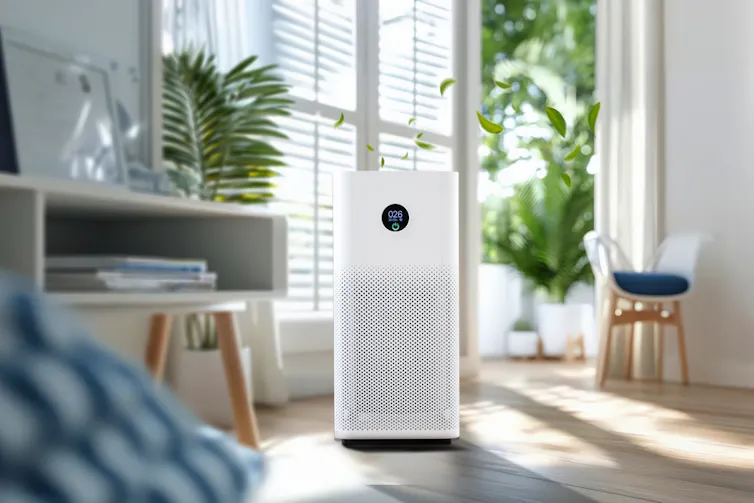
Because there was no solid proof that these devices actually worked, researchers ran a trial testing whether air filters can prevent viral respiratory infections in care homes for the elderly. The filters used in the study – called Hepa (high-efficiency particulate air) filters – are designed to remove more than 99.9% of very small particles from the air, including, in theory, many viruses.
The UK trial, funded by the National Institute for Health and Care Research, included 91 care homes. Forty-seven were given Hepa filters for communal areas, and 44 were not. Researchers then tracked whether residents or staff developed respiratory infections, and whether staff needed time off sick.
The results showed that there was no difference in infection rates between homes with filters and homes without. There was also no difference in staff illnesses or absenteeism between homes with and without filters.
In this study, staff and residents knew whether they had filters in their home. This kind of open, unhidden setup (called “unblinded” in the jargon) can sometimes skew results because people’s expectations affect what they report. But this kind of skew almost always makes treatments look better than they really are, not worse – so it’s unlikely to explain why the study found no benefit.
In our own review of the evidence in 2023, we found that while air treatment technologies could reduce the amount of virus in the air, there was no solid proof they cut rates of respiratory or stomach infections among people in real-world settings.
Three other studies since 2022 point the same way. A randomised trial in Australian care homes found no significant drop in infection rates in homes using Hepa filters.
Two further studies, although not randomised, add to the picture. One compared German kindergarten classrooms with and without portable air filters, and actually found higher illness rates in classrooms that had them. The other, a small Swiss study, found air filters made no difference to COVID transmission risk.
Casezy idea/Shutterstock.com
The evidence isn’t even consistent on whether Hepa filters reliably clear viruses from the air in the first place. A large US study, mainly designed to test whether air filters could reduce asthma risk in schools, also measured virus levels in classroom air as a secondary check. It was “double-blinded” – some classrooms got real filters, others got sham ones – and the real filters made no difference to the total amount of virus in the air.
Why don’t they work?
Why might air filters fail to cut infection risk? Filters alone were probably never going to make much difference. Early in the COVID pandemic, it became clear that the biggest risk factor for catching an infection from someone else was simply being close to them, with the risk dropping sharply once people were at least one metre apart.
Most transmission probably happens almost instantly at close range, so a filter sitting in the corner of a room can’t act fast enough on the air passing directly between two people standing near each other. And even where filtration might help in one room, people move constantly between spaces, so filtering air in one place can’t stop infections happening in all the others.
There’s one context where air filtration does seem to have real value: preventing invasive aspergillosis, a serious fungal lung infection that’s especially dangerous for people with weakened immune systems. Unlike viral infections, aspergillosis doesn’t spread between people – most outbreaks are linked to construction or building work instead.
So the evidence is building towards a clear conclusion: Hepa air filtration doesn’t reduce the risk of catching viral respiratory infections. Given the size and quality of the new study, it’s unlikely any future study will overturn it.
Installing Hepa filters shouldn’t be treated as an effective way to control respiratory infections in care homes or schools. As the authors of the latest study put it, care homes should stick to the prevention measures already recommended.

Paul Hunter consults for the World Health Organization. He receives funding from National Institute for Health Research and has received funding from the World Health Organization and the European Regional Development Fund
Julii Brainard receives funding from the NIHR Health Protection Research Unit in Gastrointestinal Infections.
Original source: https://analysis1.mil-osi.com/2026/07/28/air-filters-dont-stop-you-catching-infectious-respiratory-diseases-landmark-study-indicates/