

Source: The Conversation – UK
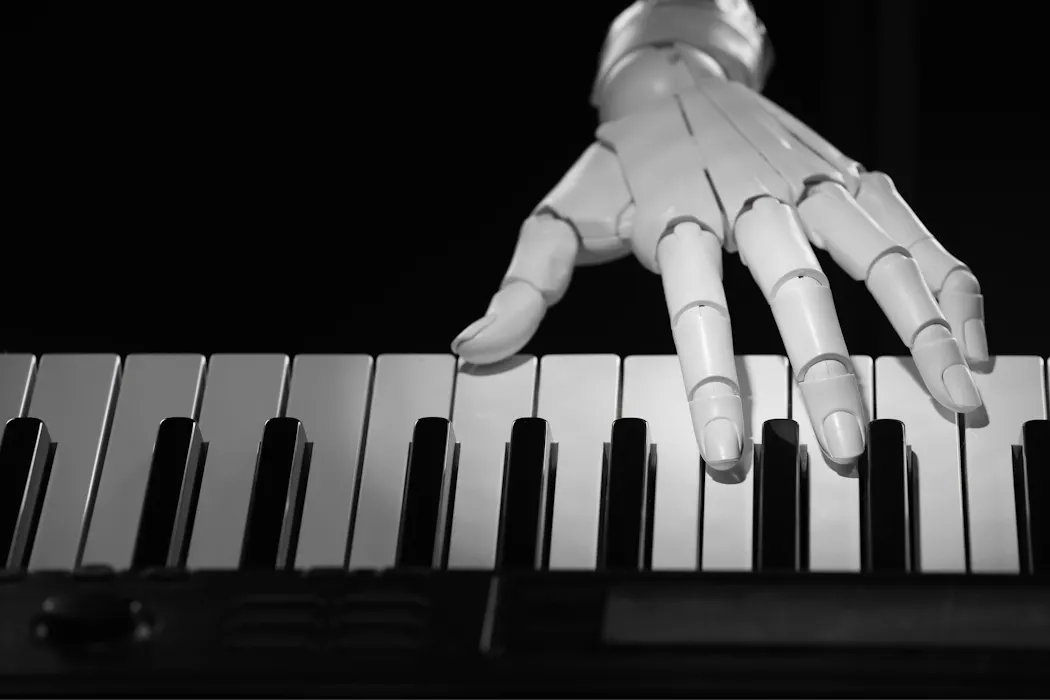
Copyright is built on the idea that human creativity deserves protection. Legally, this is known as “originality”. The principle is simple: people create valuable cultural works and the law protects that effort.
But artificial intelligence (AI) is challenging one of copyright law’s most basic assumptions. In doing so, it may force us to rethink what we mean by intellectual property.
AI can now generate songs, images, novels and artworks in seconds. Many of these works are already being streamed, licensed and sold. This raises an increasingly important question: should works produced without direct human authorship receive copyright protection?
Most legal systems currently say no. They continue to place human creativity at the centre of copyright. But the history of copyright suggests things may not remain that way for long.
In the US case Thaler v Perlmutter (2023), a federal court confirmed that copyright requires a human creator. European law takes a similar approach. The Court of Justice of the European Union defines originality as the author’s “own intellectual creation”.
So, at first glance, that appears to settle the issue. But copyright has never evolved according to a single, consistent theory of creativity. Again and again, it has adapted to new technology and commercial pressures. AI is not the first disruptive technology to force a rethink. The history of sound recordings offers a revealing example.
When recordings weren’t considered creative
When recording technology emerged in the late 19th century, it transformed how people experienced music. Before Thomas Edison’s phonograph appeared in 1877, music was largely encountered through live performance or written notation.
Recordings changed that. Performances could be captured, copied and distributed by machines. Today, recordings feel like an obvious form of creative property. But that was not how they were initially viewed.
Early recordings were often seen as mechanical reproductions rather than original works. They copied music rather than creating it. By the standards of traditional copyright thinking, they struggled to satisfy the ideal of originality. As a result, recordings were denied copyright protection for decades.
It took 34 years for English and Welsh law to recognise them in the Copyright Act 1911. The US did not grant federal protection until the Sound Recording Amendment of 1971. France waited until 1985.
As the recording industry grew, copyright law changed with it. Gradually, lawmakers abandoned the view that recordings were merely technical reproductions. Instead, they became recognised as a form of protected intellectual property.
FOTOGRIN/Shutterstock
Technically, sound recordings are protected through neighbouring rights rather than traditional authors’ rights. In practice, however, they sit at the heart of the modern music industry. Economic importance succeeded where strict theories of originality could not. AI-generated works may be following a similar path.
Many experts argue that AI outputs differ from sound recordings because they lack human creativity. But history suggests that copyright’s boundaries have often shifted when new technology becomes economically valuable.
The signs of this are already visible in the UK. The Copyright, Designs and Patents Act 1988 states that for computer-generated literary, dramatic, musical or artistic works, “the author shall be taken to be the person by whom the arrangements necessary for the creation of the work are undertaken”.
The law was written long before modern generative AI. Even so, it shows that copyright has not always depended on a traditional understanding of human authorship.
The UK government’s recent consultation on copyright and AI points in a similar direction. While it emphasises protecting creators (whoever they are), it also frames copyright as a tool for growth, innovation, investment and competitiveness.
Is copyright still ‘intellectual’ property?
Copyright appears to have evolved through successive technological phases. First, the protection of sheet music, then sound recordings and maybe in the future, AI-generated works too.
Each stage has been reflective of copyright’s capacity to adapt to technological and economic change. Each time challenging the idea of “intellectual” property.
Read more:
Can a rhythm be owned? What a reggaeton lawsuit reveals about how copyright misunderstands music
If that pattern continues, the central question may soon change. The debate may no longer be whether AI-generated works deserve legal protection. Instead, society may find itself asking whether copyright can still be described as a form of intellectual property if human intellect is no longer essential to what it protects.
In that sort of future, intellectual property could gradually become little more than property, a system shaped less by creative principles than by commercial interests. That outcome is not inevitable, however. Copyright’s connection to human creativity can survive. But it will survive only if it is actively defended, rather than simply assumed.

Anna Monnereau does not work for, consult, own shares in or receive funding from any company or organisation that would benefit from this article, and has disclosed no relevant affiliations beyond their academic appointment.
Original source: https://analysis1.mil-osi.com/2026/07/16/who-owns-an-ai-generated-song-what-we-can-learn-from-the-phonograph-and-the-evolution-of-copyright-laws/