

Source: The Conversation – USA (2)
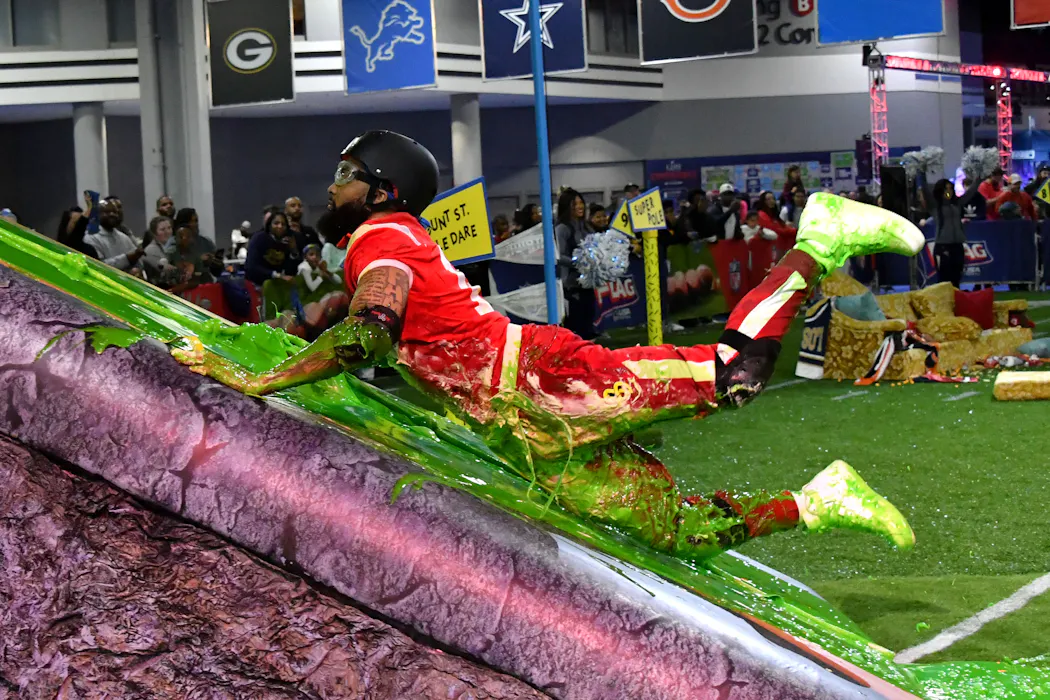
A generation of kids who grew up watching “Double Dare” dreamed of picking a giant nose or riding down the sundae slide.
The children’s game show, which mixed trivia, physical challenges and an obstacle course, is credited with helping to spark Nickelodeon’s rise to become the top children’s cable network.
Many fans may not realize that the massively popular show was originally produced in Philadelphia, where it was filmed at the WHYY studios from 1986 to 1989. Nickelodeon was looking for low-cost original programming, and filming in Philadelphia was cheaper than New York or Los Angeles.
The success of “Double Dare” led to a flood of children’s TV game shows, including “Finders Keepers,” which was also filmed at WHYY. In “Finders Keepers” competitors solved puzzles and the winning team completed a scavenger hunt in a house for prizes. It was conceived by the same creator as “Double Dare” and was produced between 1987 and 1989.
As a teacher and researcher of television and popular culture, I have studied the history of children’s media in the U.S., and as a kid growing up in Philly, I too enjoyed these shows – as well as some of the other locally produced shows that came before them.
Philadelphia was the fourth-largest media market during TV’s rapid growth after World War II, and it had a robust local children’s television schedule.
Some Philly shows lasted for several decades, surviving significant shifts in the children’s television industry.
Radio programs move to TV
One of these shows was “The Horn and Hardart Children’s Hour,” a variety show developed and hosted by Philadelphia broadcast pioneer Stan Lee Broza where children performed songs and dance routines.
It premiered on radio on Philly’s WCAU 1210 AM in 1927 and was produced until 1958, premiering on television in 1948 as a simulcast of the radio program.
In the 1940s, a second version with the same name and format launched from New York and served as a model for later children’s television programs such as “Romper Room” and “Bozo the Clown,” which were franchised and produced in the same format across local markets.
This wave of 1950s shows typically maintained a variety format like their radio predecessors, but they featured a staple of children’s television: cartoons. This era also marked the start of what many consider the golden age of local children’s television, which ran through the mid-1970s.
In 1948, “Cartoon TeleTales” debuted on Philadelphia’s ABC affiliate WFIL before going national through the end of its run in 1950. The show featured an original story by Jack Luchsinger, with his brother Chuck drawing characters as Jack read.
Although reading over still pictures would be reproduced in later shows, including “Reading Rainbow,” cartoon series such as “Tom and Jerry,” “Popeye,” and the “Looney Tunes” proved more popular.
Legends of Philly children’s TV
Philadelphia was home to a historic group of memorable hosts who helped define an era of children’s entertainment in the region and beyond.
When Seneca Nation member Traynor Ora Halftown hosted the
“The Chief Halftown Show,” which debuted in 1950 on Philly’s WFIL, he wore traditional tribal attire at a time when Westerners deeply distorted the history and customs of Native Americans.
The show featured low-budget cartoons such as “Clutch Cargo,” children’s performances, interactive segments with a live studio audience and educational segments about Native American culture. It became the longest-running local children’s television show, produced for nearly half a century until Halftown retired in 1999.
Legendary Philadelphia broadcaster Wee Willie Webber’s first children’s show, “Breakfast Time,” also launched on WFIL, in 1956. The morning show was unique, as it included general news and weather for adults along with cartoons and other segments for children. It directly competed with NBC’s national “Today Show” in the Philadelphia market.
His next show, “Wee Willie Webber Colorful Cartoon Club,” aired in the 1960s and 1970s and was notable for featuring Japanese anime such as “Astro Boy” and “Speed Racer.”
Several female hosts were also integral in Philadelphia’s robust children’s television market. The two most famous were Sally Starr and Jane Norman. Starr hosted “Popeye Theater,” which ran from 1957 to 1971 on WFIL and featured shorts with the cartoon sailor along with “Three Stooges” films.
Norman’s “Pixanne” ran on Saturday mornings on WCAU Channel 3 beginning in 1960 and aired a similar collection of shorts as “Popeye Theater.” The show moved to weekday mornings in 1966 and was taken off the air in 1969 – despite being the No. 2-rated show on WCAU behind the soap opera “As the World Turns.” Norman brought the show to New York and it was syndicated until 1976.
‘Send your pictures …’
The most popular local children’s show in this era was “Captain Noah and His Magical Ark.” The program, which aired six days a week at its height in the early 1970s, gained a 57 share, meaning 57% of all the TVs on at that time in the Philadelphia market were tuned to the program.
Ordained Lutheran minister and former Philadelphia Police chaplain W. Carter Merbreier and his wife, Patricia, hosted the show, which was produced by the Philadelphia Council of Churches. It originally launched as a religious program in 1967 with music, puppets and cartoons before it toned down the religious aspects and became a more secular show in 1970.
“Captain Noah” was syndicated in 22 other markets –in Philadelphia it had higher ratings than “Sesame Street” and “Captain Kangaroo” combined at its height in the early to mid-1970s. Its guests, who were interviewed, included Elvis Presley, John Lennon, Stevie Wonder, Charles Barkley, Jim Henson and a young Jon Stewart. The Phillie Phanatic debuted on the program, with Captain Noah and Mrs. Noah serving as his godparents.
At the end of each episode, Merbreier would say to the audience, “Send your pictures to dear old Captain Noah,” motivating kids to watch to see whether their creations made the show.
End of an era
The golden age of production of local children’s television ended for several reasons. A main revenue source for these shows was in-program advertising for toys and other products. Groups such as Action for Children’s Television protested this targeting of young audiences, which ultimately led the National Association of Broadcasters to update their Television Code to ban advertising by the program hosts. They also limited advertising to 12 minutes per hour on children’s television.
At the same time, networks wanted to increase their local news programming, since stations keep all the ad revenue from local news broadcasts. They preferred syndicated sitcoms, soap operas and talk shows to attract adults as lead-ins to the news shows.
These trends, combined with the expansion of national morning news shows, pushed children’s programming on local television to the weekends by the end of the 1970s.
As children flocked to Saturday morning broadcasts, national networks relied on animated shows rather than live action hosts. Cartoons were popular, had a long shelf life and cost less to produce than live programming. The expansion of cable throughout the 1980s further deincentivized local stations from launching new children’s shows.
While it came years after the golden era had ended, “Double Dare” had a major influence not only on children’s television but future game shows that also featured athletic challenges. The show’s Philadelphia roots are an important part of the show’s legacy, and host Marc Summers still lives in Philadelphia. On Oct. 4, 2026, he and other members of the crew will host a 40th anniversary celebration in the city where it began.
Read more of our stories about Philadelphia and Pennsylvania, or sign up for our Philadelphia newsletter on Substack.

Jared Bahir Browsh does not work for, consult, own shares in or receive funding from any company or organization that would benefit from this article, and has disclosed no relevant affiliations beyond their academic appointment.