

Source: The Conversation (Au and NZ)
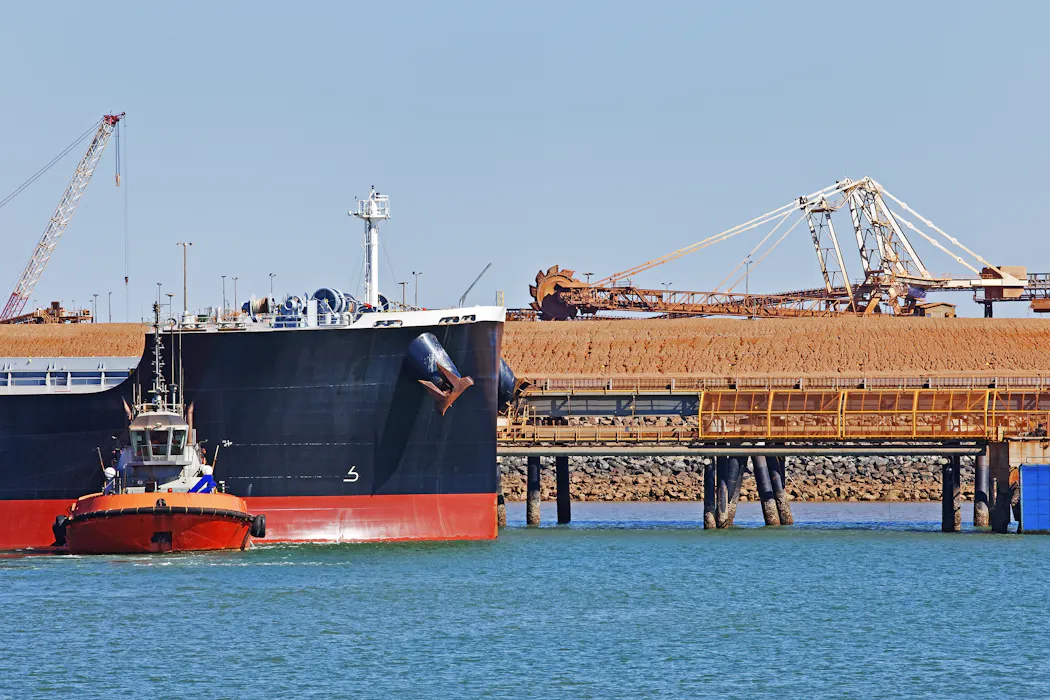
On Thursday, up to 200 workers at mining giant BHP’s Port Hedland export terminal will take protected industrial action for eight hours. This will mark the first strike action at the company’s iron division since 2000.
Port Hedland is home to the world’s largest bulk export port. It’s previously been estimated a full shutdown could cost BHP up to A$120 million in revenue per day.
Known historically for militant unionism, the iron ore industry in Western Australia’s Pilbara region is a powerhouse of the national economy. Yet since BHP de-unionised in 1999, unions have had little influence.
That may be starting to change. Battle lines have been drawn as workers join unions and mining companies fiercely resist change.
What workers want
Mining workers are among the highest paid workers in Australia. So, why are they striking?
Workers – represented by the Electrical Trades’ Union (ETU), the Australian Manufacturing Workers’ Union (AMWU) and the Western Mineworkers’ Alliance (WMWA) – are asking BHP for:
- equal pay for equal work
- a transparent classification structure whereby workers can progress their careers based on their skills, qualifications and promotion criteria
- working conditions to be set out in the enterprise agreement.
This is the norm for enterprise agreements negotiated by unions across Australia. Yet if workers successfully win these demands, it would challenge the industrial relations model that has come to dominate the Pilbara iron ore industry in recent decades: setting wages and conditions without union involvement.
Negotiating without unions
Under this non-union model, above-award individual contracts are the norm. Workers performing the same role can be, and often are, paid different salaries. Performance bonuses are at the discretion of management.
There is no guaranteed annual wage rise. Companies can reduce workers’ conditions or change their rosters without agreement from the workforce.
Iron ore companies and the mining lobby refer to this non-union model as “direct engagement”: companies can engage “directly” with their employees, rather than “indirectly” via unions.
Yet unions are not third parties, as their members are company employees. Actions such as organising non-union labour to undermine a strike are not taken against an external group but against workers who have decided to negotiate collectively rather than individually.
What BHP wants
In its negotiations with port workers, BHP is trying to maintain the core of this non-union industrial relations model.
The company has reportedly proposed drafting an agreement similar in nature to a non-union agreement that was recently passed at two BHP inland mines.
In that agreement, many conditions were not set out and can therefore be adjusted in future at the company’s discretion.
For example, there is no legally enforceable entitlement to parental leave (beyond national minimum entitlements), with the agreement instead referring to “the Company’s policies as amended from time to time”.
Even on pay, significant management discretion remains. Unions have argued this is because this agreement has rates “well below what workers are actually earning on site”.
The company can then pay different workers different salaries, so long as they are both above the agreement.
A union-negotiated enterprise agreement, by contrast, offers certainty over pay and conditions for the life of its term.
The return of unions
Unions were not always on the outer in the Pilbara; far from it.
In the 1970s and 1980s, workers went on strike frequently, often before telling union officials. This was a grassroots model of unionism.
Strikes forced changes from mining companies, including BHP’s Pilbara predecessor, the Mount Newman Mining Company: wage increases, shorter working hours and increased safety standards. Workers and unions also had significant influence over hiring and firing, staffing levels, and the work process.
So, what has driven the return of unions, decades since the last strike in the Pilbara?
One aspect is workers wanting change, and seeing unions as a vehicle to achieve that. Unions started to demonstrate majority support for bargaining under procedures in place since 2009, and BHP started bargaining with unions.
Shifting the focus
Often in the media, instead of hearing the voices of workers, we hear about how much the strike will cost BHP and how much that in turn will cost public coffers.
This focus can detract from a conversation about decent work. Today, the fitters, electricians, shiploaders and others about to strike at BHP ports are largely missing from the debate.
Media coverage also tends to separate issues such as mental distress, work-life balance and serious allegations of sexual harassment from the industrial relations context. They can’t be: issues of power and control are intrinsic to them all.
At the heart of the employment relationship is a power imbalance. This is very clear when the employer is a multinational. Unionisation changes the power dynamics by giving workers more of a say.
Port workers using the strike weapon, even if only for eight hours, will up the ante of this dispute. But with the stakes high for both sides, it may only be the start.

Alexis Vassiley is the author of Striking Ore: The Rise and Fall of Union Power in the Pilbara. He has received funding from the Australian government (an Australian Postgraduate Award), Curtin University (Curtin Research Scholarship), the Academic Staff Association of Edith Cowan University, and the WA government through the Mental Awareness Respect and Safety Program. Alexis is a National Councillor for the National Tertiary Education Union and a member of Socialist Alternative and WA Socialists.
Original source: https://analysis1.mil-osi.com/2026/07/14/heres-whats-at-stake-as-bhp-workers-prepare-for-a-historic-strike/