

Source: The Conversation (Au and NZ)
We warn readers that the content of this study is confronting and may be distressing.
In April 1789, the first smallpox epidemic among Aboriginal people in the Sydney region began, just 16 months after Europeans arrived on the First Fleet.
Little is known of the true scale of the epidemic, and historians have sometimes argued it was not caused by the newcomers.
In new research published in Nature Human Behaviour, we used modelling of smallpox transmission and the connections between Indigenous societies to understand how it could have spread.
The results strongly suggest the disease did come from the British outpost. What’s more, it might have spread thousands of kilometres north and west, lasting decades and killing as many as 220,000 Aboriginal people.
A destructive force throughout history
Infectious disease has long been one of history’s most destructive forces. The COVID pandemic, which killed an estimated 15 million people in 2020–2021, is only the most recent entry in a list including the Black Death, which killed up to half of Europe’s population in the 14th century, and the “Spanish” influenza of 1918 that was responsible for some 17 million deaths.
One of the earliest recorded – and most feared – diseases was the now-eradicated smallpox, caused by the variola virus.
Evidence of smallpox has been identified in Egyptian mummies dating to as early as 1500 BCE. In 18th century Europe, an average 400,000 people died every year from smallpox. An estimated 300 million people died of the disease during the 20th century, about double the total deaths from wars fought during the same period.
For Indigenous peoples around the world, smallpox was one of the most devastating diseases introduced by Europeans. The disease was a major driver of the catastrophe that killed countless Native Americans from Canada to Tierra del Fuego after the arrival of Spanish and Portuguese in the 16th century.
Smallpox caused fever, severe illness, and high death rates, especially in Indigenous populations with no previous exposure. Survivors were left with severe scarring.
What caused the 1789 smallpox epidemic?
A persistent narrative in Australia’s colonial history is that the disease did not come from the First Fleet. Instead, the argument goes, it was introduced earlier by Makassan traders in the far north of the country. Supporters of this idea proposed that it just happened to make its way to Sydney by the time the British established a colony there.
This interpretation has gained some traction because no sailors in the First Fleet were known to have smallpox when they arrived. There were also some anecdotal reports of smallpox survivors in the far north shortly after the 1789 outbreak.
Modelling the spread of the disease
Our research looked at how the disease could realistically have spread across Australia. Our model combined what we know about smallpox transmission with how Indigenous people were connected through regular exchange, trade, and long-distance movement.
Before colonial invasion, the movement of Aboriginal people followed known paths – for water, ceremony, food, trade, and family. The disease could only travel where people could realistically walk, rest, and recover.
Our reconstruction shows there was no plausible pathway for the disease to travel from northern Australia to Sydney in time to cause the 1789 outbreak. The evidence strongly supports a Sydney origin linked to the British colony.
The spread of the disease followed coastlines and major rivers. But it did not reach all of Australia.
Exactly how the outbreak started is still unclear. The colonists had brought “variola matter” with them – biological samples infected with the virus responsible for smallpox – to be used if needed for inoculation. It is possible this material could have been accidentally or intentionally released.
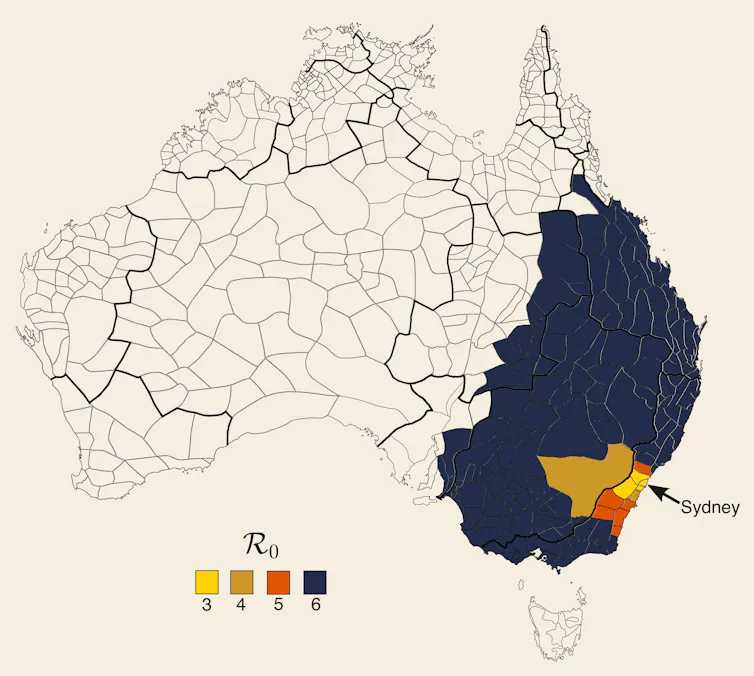
M.C. Nitschke, Flinders University, CC BY-NC-ND
Another myth our model deflated is the notion that the disease did not extend much beyond the Sydney region. In fact, the disease could have persisted in the Indigenous population for up to 21 years. It might also have spread as far north as Townsville and as far west as Adelaide.
Even more striking was the estimated death toll. Using recent reconstructions of the Indigenous Australian population at the time of European invasion, our model suggests the epidemic could have killed as many as 220,000 Aboriginal people.
An impact that lasted generations
This new evidence outlines the catastrophic impact of smallpox on Indigenous communities, including enduring effects passed down through generations.
Families, knowledge systems, and ways of caring for Country were badly damaged, and the effects are still felt today. Elders, children, and pregnant women were especially vulnerable, meaning knowledge, language, and culture suffered deep harm alongside population decline.

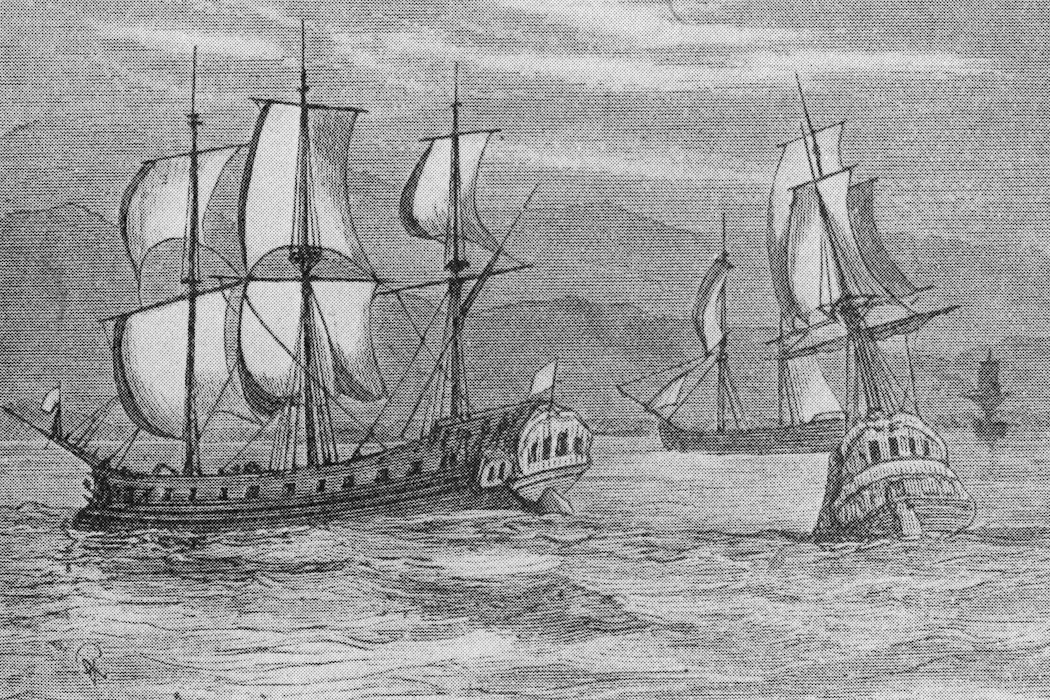
Voyage of Captain Bellingshausen to the Antarctic Seas, 1819-1821, State Library of NSW, CC BY-NC
The modelling does not speak over Aboriginal knowledge, memory, or oral history.
Aboriginal histories describe Dharawal people returning to Sydney Harbour within weeks of the outbreak’s peak. Despite its enormous demographic and cultural toll, communities regrouped and over the next century, continued living in and around the harbour. They continued cultural practices, spoke their language, and applied their knowledge systems until remaining descendants were forcibly relocated in the 1880s.
Although it is important for Australians to come to terms with the traumatic legacy of smallpox to inform the national process of healing, we must acknowledge that Indigenous connections to Country were disrupted, but never broken.
If you are, or someone you know is, feeling worried or no good, we encourage you to connect with 13YARN on 13 92 76 (24 hours / 7 days) and talk with an Aboriginal or Torres Strait Islander Crisis Supporter.
The authors acknowledge research collaborators Kirsty Beller (Gujaga Foundation), Alan Williams (EMM Consulting), Billy Griffiths (Deakin University), Nicholas Pitt (University of New South Wales), Michael Bird (James Cook University), Syeda Fatima (University of Canberra), Ian McNiven (Monash University), Frédérik Saltré (University of Technology Sydney/Australian Museum), Alison Bashford (University of New South Wales), and Chris Wilson (University of Tasmania). We acknowledge the sovereign Traditional Owners and custodians (First Nations) of the unceded lands, seas and skies where we live and work, including Kaurna in Tarndanya/Adelaide, Dharawal/Sydney, Dharawal in Kamay/Botany Bay, Kulin Nation in Naarm/Melbourne, Yirrganydji and Gimuy Walubara Yidinji in Gimuy/Cairns, Dharawal in Woolungah/Wollongong, Ngarrindjeri of Murrundi/lower Murray River, Kurangk/Coorong, and eastern Fleurieu Peninsula, Palawa in Nipaluna/Hobart, lutruwitra/Tasmania, and Peramangk in Bukatila/Mount Lofty Ranges. We also recognise the deep historical and cultural harm our truth-telling exposes, and we commiserate with all First Nations peoples of Australia.

Corey J. A. Bradshaw receives funding from the Australian Research Council.
Lynette Russell receives funding from the Australian Research Council.
Sean Ulm receives funding from the Australian Research Council.
Shane Ingrey receives funding from the Australian Research Council and is a member of the La Perouse Aboriginal Community and the Gujaga Foundation.
Matthew Cody Nitschke does not work for, consult, own shares in or receive funding from any company or organisation that would benefit from this article, and has disclosed no relevant affiliations beyond their academic appointment.