

Source: The Conversation (Au and NZ)
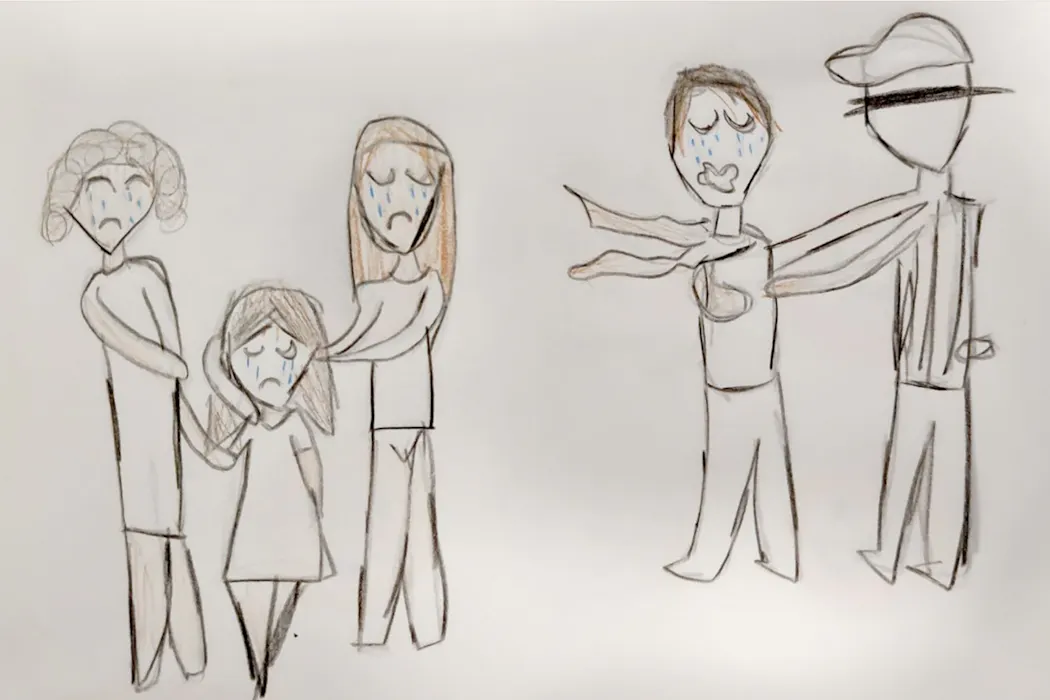
Emma* was just a baby when her dad was deported following the cancellation of his Australian visa. Now aged seven, she sometimes still sleeps with his photograph. She can’t understand why he doesn’t visit her, or why he can’t pick her up from school.
Oliver’s* dad is currently in immigration detention, fighting to stay in Australia. Oliver visits the detention centre each week with his mum and little sister, but worries his family is falling apart.
Ruby* was 17 when her mum was deported to New Zealand. She had planned to start uni the following year, but that had to wait. She has grown up quickly, but still feels like a kid who needs her mum.
Stories like these are rarely heard in public debates about visa cancellation. Yet children and young people are profoundly impacted when a parent or caregiver is detained or deported.
Our new report, A Ripple Effect of Suffering, shines a light on these impacts. We interviewed over 100 children, young people and members of their families and support networks, and documented the harm children and young people are experiencing in the shadow of Australia’s immigration detention and deportation systems.
Who are the families caught up in this system?
Australia’s Migration Act requires the detention of any non-citizen who is in the country without a valid visa. This applies to people who arrive at the border without authorisation. It also applies to people whose visas have expired or been cancelled for reasons such as failing the character test, breaching their visa conditions or presenting a risk to the safety, health or good order of the community.
Around 61% of the detention population is people who’ve had their visa cancelled. Many have been part of Australian society for years or even decades and have families in Australia. Often their children are Australian citizens.
When detention culminates in deportation, these families may face permanent separation.
Making ends meet
When a parent is detained or deported, it affects their whole family.
Food poverty, bill stress and housing insecurity are common, especially when the parent in question was the family’s main breadwinner.
Older children and young people often take on adult responsibilities to help their families. Some of our interviewees had worked nearly full-time during high school to help cover their families’ costs. One said:
I got a job […] and was kind of working, like, crazy hours, during school to kind of pay off those debts and, like, support, my mum and us and put food on the table.
Others had become quasi-parents to younger siblings or sick relatives. One told us:
I’ve kind of had this caring role, I guess you could say, for a very, very long time, and yeah, a bulk of that has been because my [detained] dad has not been here to help.
Social and emotional harm
This can come at great personal cost to the children of detained or deported people.
Missing their parent, struggling financially, and unsure what the future will hold, children of detained or deported parents often feel their world has been shattered. Many withdraw from family, friends, and school. One told us:
[My schoolwork] went downhill straight away. I was so upset and I didn’t know how to express that. […] I was barely passing, and not even that, I wasn’t interested in going to school. I was always ditching and just getting into trouble.
Without robust support, and help finding healthy ways to cope, they are at risk of mental health problems. One young person told us:
[It’s] just been really hard seeing him, you know, once a week [in detention], and having this potential of him being removed […] that’s causing me a lot of anxiety, to be honest. Currently, I’ve been experiencing, I think, a few panic attacks.
Children and young people’s requests
The participants in this research were clear on what would help them most.
They called for children and young people’s well-being to be given greater weight in visa cancellation, detention and deportation decisions.
They asked for practical support, both for themselves and for their families. And they asked for pathways back to Australia for parents who had been deported.
It was important, participants told us, for parents whose visas had been cancelled on character grounds to “do the right thing” and prove that they deserved a second chance. But they asked that Australia recognise the possibility of rehabilitation rather than imposing a permanent punishment on the whole family.
As one young person, whose mother had been deported, put it:
It would mean the world if she could eventually come back, and she obviously would be able to show that she’s chosen a straight and narrow path […] it would just mean so much if she could actually be able to come back to Australia and be in our lives again.
Names have been changed to protect participants’ identities. This research was undertaken in collaboration with the Australian Human Rights Commission

Michelle Peterie receives funding from the Australian Research Council and the University of Sydney. This research is a collaboration between the University of Sydney and the Australian Human Rights Commission. It was supported by an advisory board of experts, stakeholders and people with lived experience of immigration detention and/or deportation.
Laura Vidal and Suzette Jackson do not work for, consult, own shares in or receive funding from any company or organisation that would benefit from this article, and have disclosed no relevant affiliations beyond their academic appointment.
Original source: https://analysis1.mil-osi.com/2026/07/07/food-poverty-stress-and-housing-insecurity-what-happens-when-your-parent-is-detained-or-deported/