

Source: The Conversation – UK

Education is compulsory for children in England, but schooling is not. Parents are legally entitled to provide an education for their children at home. This is often known as home schooling, though in policy terms, the Department for Education uses the phrase “elective home education”.
The inclusion of the word “elective” in government terminology implies that home education is a matter of parental preference. Some parents do home educate as a result of their lifestyle, preferences or philosophy. But this only tells part of the story.
The number of home-educated children has risen rapidly in recent years. This has happened against a backdrop of mounting pressure within the education system, including a special educational needs and disabilities system in crisis and record levels of persistent school absence.
Mental health is now the most reported reason for home educating – eclipsing lifestyle and philosophical or preference-based motivations. General dissatisfaction with school, as well as dissatisfaction with school for children with special educational needs and disabilities, also rank among the five most frequently recorded reasons.
Our new research helps to explain how these pressures shape the decisions of families to withdraw from the school system. We worked with 18 home-educated young people and ten home-educating parents, as well as 16 professionals with responsibilities for home education in local authorities and educational settings across England.
For the parents we spoke to, prolonged experiences of bullying, mental ill-health, inadequate support for special educational needs and subsequent attendance struggles preceded their children’s entry into home education. Parents had often spent years trying to resolve these issues and secure help from their children’s schools, to little avail.
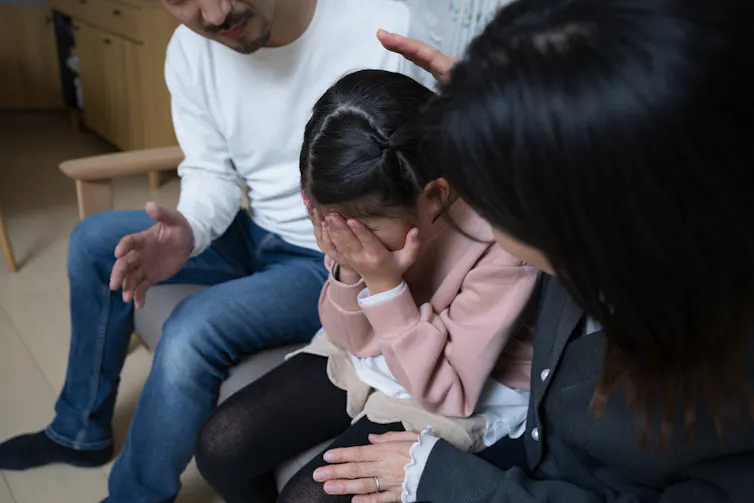
One parent, Hazel, told us how despite repeatedly appealing to her son’s school to intervene in the transphobic bullying he was experiencing, “nothing happened, nothing happened, nothing happened”. Parents commonly described feeling stuck, with no clear route to resolving the problems their children faced.
kapinon.studio/Shutterstock
School policies focused on sanctions rather than support added to parents’ frustrations. Julie described being “in some sort of battle” with her child every day to get him to school, while also being threatened with fines for non-attendance. For parents these messages felt accusatory, as though they were being blamed for circumstances outside their control. This contributed to the distress parents were already experiencing as they tried to help their struggling children.
As Lorna explained: “When you’ve got a child who doesn’t want to go to school and who will try everything and anything [to get out of going], that puts a lot of pressure on a parent as well, to try and do the right thing.”
A last resort
Knowing that school was not working, but unable to find solutions, some parents spent years trying to endure the difficulties they and their children faced. Eventually, however, things came to a head. Gemma described how, after trying to address the bullying her son Joe had been subjected to since primary school, she could stand no more.
“It got to year nine and he’d had mental episodes and I just thought, I were getting to the same point, where I were breaking down because I’d had enough,” she said. Leaving the school system was not a long-held plan for these families. Rather, it happened in response to families’ escalating distress.
In these moments of crisis, the stakes involved in leaving school were high, but the stakes involved in staying felt higher. Many parents worried about how they would balance home education alongside work. Some were already managing chronic health conditions or financial pressures. Others were concerned about the practical implications of taking on responsibility for their child’s education.
As Gemma explained: “Didn’t think I could do it, you know? Because you’re pretty much financially on your own and there’s no free school meals, there’s no support.” Yet despite these concerns, parents felt they had no other choice. The risks of becoming home educated were outweighed by concerns for their children’s wellbeing. “I’m not entirely sure [my son] would still be here if we hadn’t made that decision,” Hazel told us.
Our research shows that home education is not always the result of a freely made decision to educate a child outside the school system. For the parents we spoke to, it was the only option they felt was available. Faced with ongoing difficulties at school and inadequate support, parents felt compelled to remove their children from a system they believed was causing harm.
This distinction in how families come to home educate is important. When home education is understood as simply a parental choice, circumstances that can make that choice feel necessary can disappear from view. Framing home education as “elective” risks obscuring the unmet needs, exclusionary experiences and distress that lead some families away from school.
Unless the underlying problems exposed in our research are acknowledged, attention will remain focused on families’ decisions to leave school rather than on the conditions that made leaving feel so necessary.

Katherine Davey receives funding from The Leverhulme Trust.
Lisa Russell receives funding from The Leverhulme Trust.
Original source: https://analysis1.mil-osi.com/2026/07/07/for-some-families-home-education-isnt-a-choice-its-a-last-resort/