

Source: The Conversation (Au and NZ)
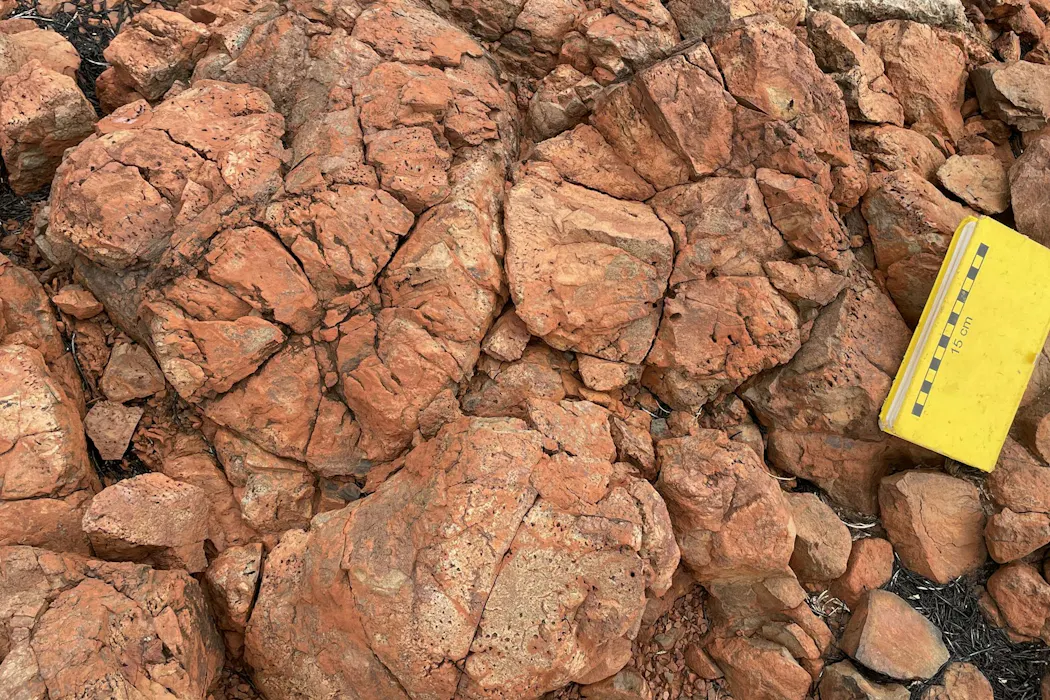
In the 45°C heat of the midday April sun, I swing my sledgehammer into the terracotta-varnished lobes of pillow basalt overlooking a sparse, almost Martian landscape.
Up close, the rock is freckled with small spheres or varioles, a texture that forms in wet magmas. It’s hard to fathom that this lava cooled when Earth was young, and has barely changed since.
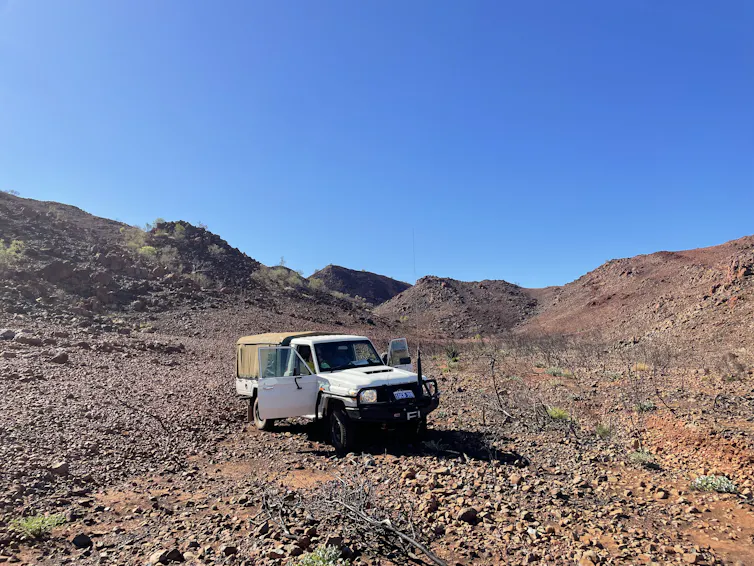
Western Australia’s Pilbara Craton is probably the last place you’d expect to learn anything about the role water played in shaping our planet. It’s one of the hottest places on Earth. The land is dry and largely barren, save for the sharp spines of spinifex grass and the occasional gum tree or acacia.
Yet our research, published today in Nature Communications, shows that a rare package of unusually well-preserved rocks from this area documents the movement of surface water to Earth’s interior more than 3.1 billion years ago.
Eric Vandenburg, CC BY-ND
A second, slower water cycle
We learn the water cycle in school as a story of evaporation and precipitation. But Earth runs a second, far slower one deep beneath our feet.
On the ocean floor, seawater seeps into the oceanic crust and reacts with the rock, becoming chemically bound inside its minerals, locked into their crystal structures rather than sitting as free water.
Over millions of years, sinking tectonic plates carry these water-bearing minerals down into the mantle, the hot rock layer beneath the crust. This sinking of one plate beneath another is called subduction, and volcanoes eventually breathe the water back out.
The deep water cycle moderates Earth’s water budget. At the surface, it keeps the oceans from drying up or drowning the continents, while in the interior, it changes how the mantle melts and builds continents.
How did Earth handle water before plate tectonics?
For decades, a puzzle has hung over Earth’s early history: could the planet recycle water into its depths before plate tectonics existed to drive it?
Our research, led by scientists at Adelaide University, Monash University and the Geological Survey of Western Australia, suggests it could.
We sampled 3.1 billion-year-old lavas from the Whundo Group, a part of the Pilbara that preserves a kind of ancient crust largely missing from the rock record. Most of what survives from Earth’s first 2 billion years is thick, granite-rich crust, but the Whundo lavas sit on something rarer: thin crust we see at only a handful of sites worldwide.
So, what do these lavas tell us? Chemically, they are close cousins of the lavas erupting today from volcanoes at subduction zones, such as those of the Pacific Ring of Fire.
Among them is the oldest widespread example on Earth of a rare, water-rich lava called boninite, which today erupts almost only in these locations. We measured the chemistry of these rocks and used it, almost like a fingerprint, to trace each lava back to the mantle source it had melted from.
Adding water to mantle rocks works like salt on an icy street: salt lowers the melting temperature of ice, so even on a cold day the ice can turn into slush. Water does the same to the mantle – by lowering its melting point, it generates melts that rise and erupt. That’s why chains of volcanoes, called volcanic arcs, trace the lines where plates sink.
How did the water travel down?
From the chemistry, we worked out how much water the mantle must have held to make these lavas, and the answer was startling: 3.1 billion years ago, the mantle beneath this ancient corner of Australia held about as much water as the mantle beneath today’s arc volcanoes.
This is where things get puzzling. Today, the planet’s crust is broken into rigid plates that can slide and sink beneath one another, dragging water with them and returning it to the interior.
But on a younger and hotter Earth, the crust was too soft for plates to behave that way. So how did the water get down?
Our answer is a process we call “dripduction”. Instead of a rigid plate diving cleanly and steadily into the depths, a whole section of the soft, water-bearing crust sagged and foundered into the mantle in short, local bursts. It’s a part-time, improvised version of subduction. The dripduction dragged surface water down with it, feeding the melting to build volcanoes.

Eric Vandenburg, CC BY-ND
The evidence we needed
The deep water cycle is far older than the machinery we thought it needed. Earth was already recycling surface water and building arc-like volcanoes more than 3 billion years ago, long before plate tectonics was operating.
The idea that the crust could founder this way is not entirely new. Computer simulations of a hotter early Earth have produced similar results to our dripduction story. These rocks supply what was missing – the evidence it happened.
To test it further, we can hunt down other scraps of this pristine early crust and look for the same chemical fingerprint.
Although shambolic, long before the Earth settled into the steady conveyor of plate tectonics, it had already found a way to manage its water budget. These rocks, baking in the Pilbara sun, hold the memory of a planet beginning to recycle its oceans.

Eric Vandenburg receives funding from the Australian Research Council and, previously, a Graduate Scholarship and Postgraduate Publication Award from Monash University.
Original source: https://analysis1.mil-osi.com/2026/07/07/3-1-billion-year-old-rocks-in-australia-reveal-a-forgotten-chapter-of-earths-water-cycle/