

Source: The Conversation – UK
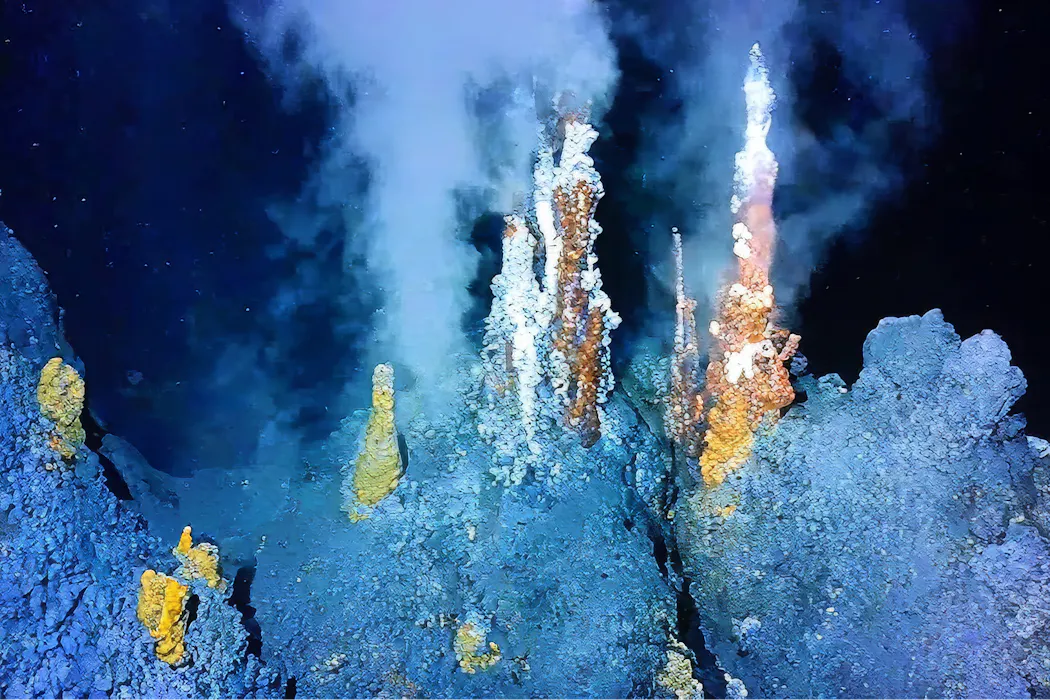
Far beneath the surface of the ocean lies the largest and least explored habitat on Earth. The deep sea is cold, dark, highly pressurised – and home to a huge amount of undiscovered life.
The first hydrothermal vent systems were only discovered in 1977 during an expedition to the Pacific Ocean’s Galapagos Rift by a team from the US Woods Hole Oceanographic Institution. They observed these underwater geysers surrounded by dense communities of organisms such as giant tube worms, clams and mussels, all living in complete darkness.
These deep-ocean vent systems represent natural laboratories for studying life in extreme conditions. My latest research with colleagues at the Institute of Oceanology and BGI Research, both of which are based in China, shows that this extreme world is an evolutionary engine, producing tiny organisms with yet-to-be-discovered properties anywhere else on land or in the sea.
Such biological novelty could help drive important innovations in biotechnology. Potential benefits include discovering new antimicrobial molecules for fighting disease, diagnostic tools to track the spread of pathogens in the environment, and even new ways to tackle plastic pollution in our oceans.
Difficulties of deep-sea research
Scientists have long known that microbes dominate the deep ocean. Many of these tiny organisms help more complex lifeforms such as tube worms and crabs thrive, because microbes convert hydrogen sulphide and methane into organic matter.
But until now, the deep ocean has remained taxonomically uncategorised. Our research programme set out to address that, using around 2,000 samples from deep-sea environments across the planet. Half had been collected by previous studies, while the other half were collected by our team from ecosystems in the deepest part of the ocean, known as the hadal zone – more than 6,000 metres below the surface.
Collecting samples at such depth is very challenging. Our team used a Chinese state-of-the-art crewed submersible, the HOV Fendouzhe.
Traditionally, the field of biotechnology has relied on organisms that can be cultured in the laboratory. But most deep-sea microbes cannot be grown easily. We overcame this bottleneck with the help of AI and bioinformatics tools such as AlphaFold.
This enabled us to do large-scale genetic sequencing of natural microbial communities (microbiomes) – and discover many more enzymes originating in the deep sea without extracting them directly from individual species or strains.
Our project has now isolated more than 500 million genes from a diverse array of sediment and water samples – expanding the Global Ocean Gene Catalog by over 50%. This represents a shift in how scientists explore biodiversity. We believe it could unlock the potential of deep ocean genomes to tackle some of humanity’s greatest challenges.
How deep oceans supercharge evolution
Our study suggests a substantial part of the deep ocean’s genetic diversity is explained by much faster rates of evolution, compared with nearer the surface. This helps organisms cope with the elevated water pressure and low oxygen levels, as well as toxic metals and highly reactive molecules in the deep ocean.
These harsh environmental conditions do a lot of damage to the DNA of deep-sea microbes. Since DNA repair is error-prone, the rate of mutations increases. This speeds up evolutionary change over time (evolvability), driving genetic diversity and biological novelty.
Microbes in other extreme environments – for example, polar ecosystems with sea ice, permafrost and glaciers – are likely to possess similar supercharged evolutionary engines. However, as they are equally understudied, we lack solid proof.
Extreme environments also produce enzymes that drive the chemical reactions necessary for life – but in some cases, with unusual and potentially valuable properties. For example, we have identified a new type of helicase – an enzyme that unwinds DNA strands. This process underpins the latest DNA sequencing technologies, now widely used in medicine, environmental monitoring and basic biological research.
Our deep-sea helicase is able to process DNA approximately twice as fast as the existing enzymes being used. We assume this is because of structural changes in non-core parts of the helicase that as yet have only been found in these deep-sea microbes.
We also discovered a new variant of the enzyme Cas9 from a hydrothermal vent. This variant exhibits extreme heat tolerance to much higher temperatures exceeding 70°C.
Cas9 is already widely used for genetic engineering, with applications from crop science (such as synthesis of drought-resistant crops) to medicine (treatments of heritable diseases such as sickle cell disease). The variant we have discovered could make biofuel production and fermentation more efficient, for example, because these processes would be more resistant to chemical breakdown at high temperature.
On average, more than 60% of the proteins we have derived from the deep sea have not been previously identified, according to our analysis of public DNA databases. This is a significant level of novelty compared with what has been found in the surface oceans.
A crucial ally
In time, our and other global efforts to record the genetic and genomic diversity of the oceans (at all depths) could transform their image as a hostile and largely unproductive environment for scientific discovery.
For these efforts to materialise, though, international collaborations and major funding are needed. This research requires sophisticated technology both to access these environments (including manned submersibles and ice breakers) and for the subsequent DNA sequence analysis.
The investment will be worth it. Earth’s largest environment is also one of the most valuable frontiers for understanding and safeguarding life on every part of this planet.

Thomas Mock receives funding from the Natural Environment Research Council, The Royal Society, The Leverhulme Trust, and the European Commission.