

Source: The Conversation – UK
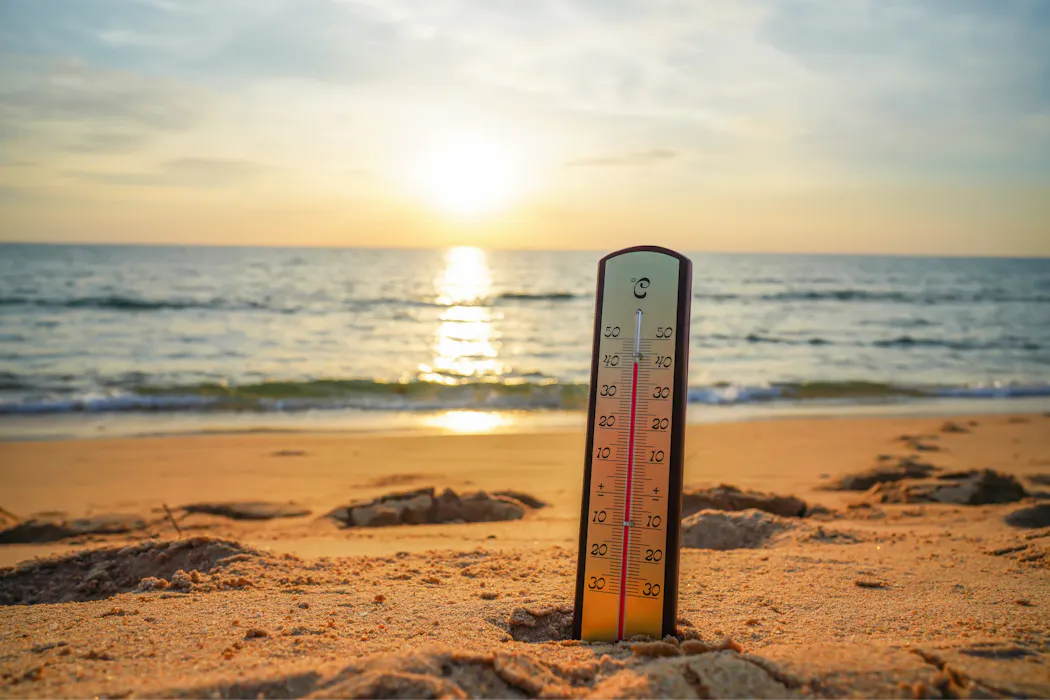
Europe is in the middle of something that no longer feels exceptional. Temperature records have broken across the continent, hitting 40°C and above in Germany, France, Hungary and Spain – and costing hundreds of lives.
Where I live in Scandinavia, this kind of temperature is more unusual. Yet Denmark also recently joined the list when 37°C was recorded in the village of Beldringe, north of Åarhus, in late June.
This was the country’s hottest day since records began in 1874, exceeding the previous all-time high by more than half a degree.
For many people, the instinct is to respond using the language of adaptation – talking about things like cooling centres and the need for public health warnings. In other words, adjusting to the effects of climate change.
Adaptation matters – but it is the wrong frame for the more important question of mitigation. That is, whether we’re actually cutting the emissions that are making summers like this more likely and dangerous in the first place.
But is it climate change?
The Danish Meteorological Institute was careful to say a single record cannot be pinned on climate change alone, but that global warming made these temperatures more likely.
Findings that prove whether an extreme weather event is actually caused by human-induced climate change (known as attribution research) is blunter still: fossil-fuel emissions have made European heatwaves measurably more frequent and more intense.
Anna Est/ Shutterstock
To me, as an expert in environmental and climate law, this recent heatwave reinforces the fact that climate science and climate law are still evolving on separate tracks.
Climate modelling — which simulates Earth’s climate to understand how it is changing — is often disconnected from the climate laws that shape government decisions. And this disconnect is becoming a liability, weakening the legal case for faster climate action and, ultimately, increasing the human costs of climate change.
Climate modelling in law
Climate modelling can tell us how likely a 37°C day in Denmark has become in a warmed climate – a precision that law has historically lacked.
But when science can point to a specific heatwave and say this was made more likely by human emissions, that stops being an academic exercise and becomes evidence.
If legal systems begin treating each weather record (once it’s been attributed to climate change) as evidence that can be used to enforce targets, then maybe we might see less extreme and deadly heatwaves in the future.
And we already have the legal tools to make this happen.
EU climate law, for example, sets binding trajectories which mandate member states to reduce emissions by at least 55% by 2030, and 90% by 2040. The Danish Climate Act commits to a 70% emissions cut across Denmark by 2030.
In 2019 we saw a glimpse of what is possible when science and law do work together.
Dutch courts ordered the Netherlands government to do more to meet the state’s emissions targets, relying in part on scientific evidence.
This was at a national level at first, but was actually the predecessor of the European Court of Human Rights’ 2024 decision which ruled that inadequate climate change mitigation can breach fundamental rights – a legal first.
So, the legal architecture is not missing. What is missing is the mechanism that connects climate science to legal enforcement in real time. Bringing modellers and lawmakers into the same room from the start could make this the rule, rather than the exception.
What now?
What is needed now is a steady supply of robust, standardised modelled evidence that courts, regulators and legislators can rely on. Denmark’s new record is precisely such a data point, a Nordic entry in an accumulating European case.
So, what are the practical steps from here?
Embed climate modelling directly into legislation. Treat carbon budgets – the caps governments set on their carbon emission – as legal limits rather than political preferences. And give scientific institutions a seat at the legislative table, not just a press release after the fact.
Above all, modellers and lawyers need to start working together. The 37°C record will not stand for long – it’s only going up.
The real test is whether our legal system treats each record as an isolated weather event, or as evidence in a case that grows stronger every summer.
This article was commissioned as part of a partnership between Videnskab.dk and The Conversation.

Sandra Cassotta receives funding from Independent Research Fund Denmark
(Danmarks Frie Forskningsfond).
Original source: https://analysis1.mil-osi.com/2026/07/06/climate-law-expert-europes-deadly-heatwaves-belong-in-court/