

Source: The Conversation (Au and NZ) – By Miniature Malekpour, Research assistant, University of Sydney
For women in Iran, life changed dramatically after the 1979 Iranian Revolution.
The new Islamic Republic of Iran enforced compulsory veiling, legalised polygamy, severely restricted women’s rights to divorce and child custody, lowered the minimum marriage age for girls, and gave husbands legal authority over their wives’ movements and sexual autonomy.
These conditions led to the 2022 Zan, Zendegi, Azadi (Woman, Life, Freedom) movement, triggered by the death of 22-year-old Mahsa Amini. Amini died in September 2022 while in the custody of Iran’s morality police, after being detained for allegedly violating hijab regulations.
For more than 40 years, Iranian women filmmakers have documented and protested against these conditions. These seven film are essential viewing to understand their experiences, and the broader systems that enable them.
1. The Day I Became a Woman (2000)
Marzieh Meshkini shot her debut film, The Day I Became a Woman, more than 20 years before the Women, Life, Freedom movement.
Presented as a timeless contemporary tale, the film tells the stories of three Iranian women at different life stages – each constrained by the system at every turn.
A nine-year-old girl named Hava (Fatemeh Cherag Akhar) can no longer play with her male friend because Islamic law now considers her a “woman”.
A young wife, Ahu (Shabnam Tolouei), enters a bicycle race in defiance of her husband, and is pursued on horseback by the men of her tribe. This is among the most cinematically potent images in the Iranian feminist film movement: women on bicycles move forward through the asphalt of the modern world, while men on horses thunder across the sand behind them. During the film’s production, there were ongoing discussions regarding the permissibility of women cycling in public.
The third is an elderly woman, Hoora (Azizeh Sedigh), who finally spends her savings on all the household items and domestic goods she was denied throughout her life as a wife, mother and subordinate.
She displays them publicly, an act that turns the private domestic space inside out. Later, we see her drift out into the open sea on a makeshift boat – symbolising her departure from societal constraints.
The Day I Became a Woman is a masterwork, charting the female life cycle under an oppressive patriarchy.
2. Women’s Prison (2002)
Set across 1984, 1992 and 2001, Manijeh Hekmat’s Women’s Prison is a fictional work inspired by real testimonies covering three decades of post-revolutionary Iran.
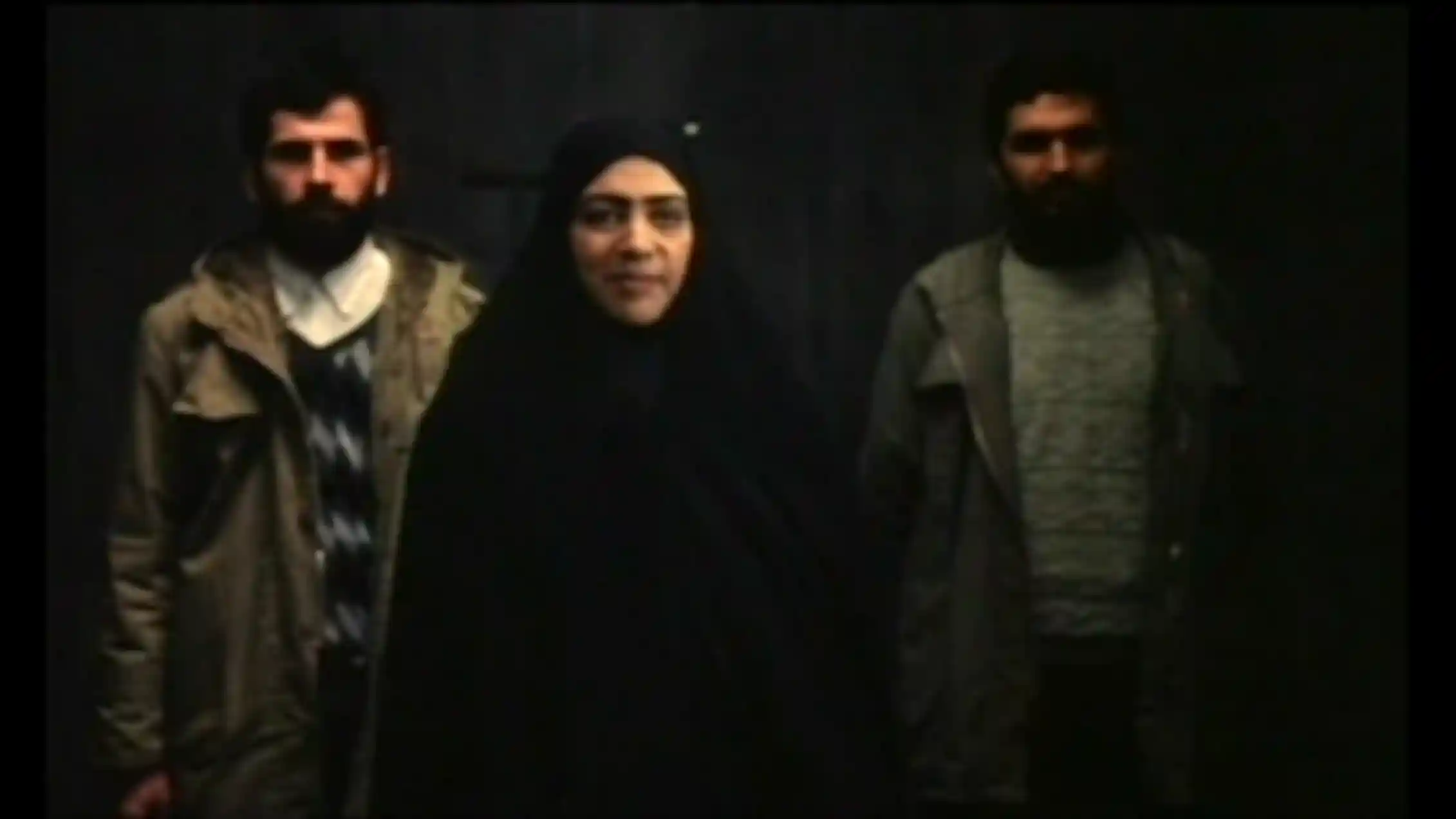
It follows the lives of incarcerated women in a Tehran jail. Many of these women are inside because they violated moral codes, held political convictions, or simply existed in the wrong place at the wrong time.
The film is a powerful, politically sharp portrait of post-revolutionary Iran. It covers crime, political conviction, prostitution, drug addiction, homosexuality and the Iran–Iraq War bombing raids — all from within prison walls.
Hekmat was denied a director’s certificate for the film and had to use her husband’s permit to make it. The film was banned from Iran’s 2002 Fajr Film Festival, after which Hekmat was threatened with arrest for attempting a private screening.
A cinema was set on fire in protest when the film was eventually released.
3. Nargess (1992)
Rakshan Bani-Etemad’s Nargess won the best director prize at the 1992 Fajr Film Festival.
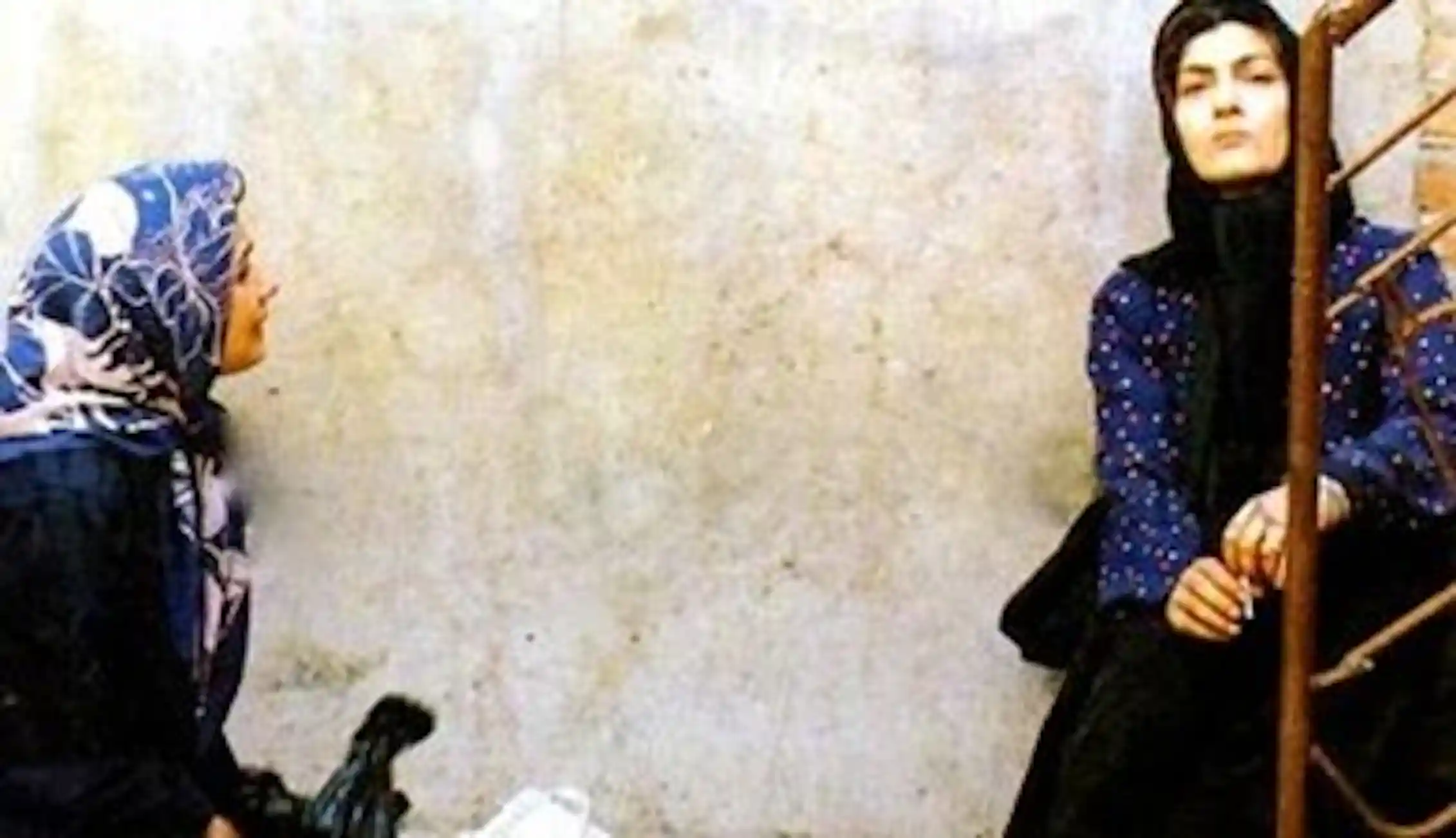
The film follows a love triangle between a petty thief named Adel (Abolfazl Poorarab) and two women: Afagh (Farimah Farjami), his older lover and partner in crime, and Nargess (Atafeh Razavi), the young woman he becomes obsessed with.
The film interrogates the Shi’a legal practice of siqeh, where a couple agrees to a temporary marriage for a specific duration, formalised by a contract that can range from minutes to years. In the context of Islam, temporary marriages are intended to be short-lived. They are often viewed as a way to engage in casual (yet legally sanctioned) sexual relationships.
The practice is highly contentious, due to reports of underage girls being coerced into such agreements. This loophole has also facilitated underage prostitution and human trafficking, while providing a legitimate avenue for married men to engage in extramarital affairs.
Through her film, Bani-Etemad exposes the practice as exploitation dressed in the language of religious permissibilty.
4. Hush! Girls Don’t Scream (2013)
From director Pouran Derakshande, this is the angriest film on the list – and the most direct. It shows how the Iranian legal system is not designed to hear women.
Arrested on her wedding night for murder, Shirin’s (Tannaz Tabatabayi) only defence lies in a childhood trauma (sexual assault) no one believes. Her lawyer uncovers a cycle of systemic failure — from a mother who looked away, to a teacher who stayed silent.
But Shirin didn’t just kill a man; she stopped a predator. Now, the court must decide if she is a cold-blooded killer or the only person brave enough to do what the adults in her life wouldn’t.
On October 25 2014, 26-year-old Iranian Reyhaneh Jabbari was executed after stabbing a man she said had tried to rape her. Her self-defence plea was rejected without thorough inquiry.
Hush! Girls Don’t Scream feels less like a film and more like a grim prophecy, made in haunting anticipation of the death of Jabbari and the many others the nation chose to ignore.
5. Track 143 (2014)
Narges Abyar’s Track 143 tells the story of Olfat (Merila Zarei), a widowed single mother whose son, Younes, volunteers to fight in the Iran–Iraq war and disappears.
The film spans more than a decade of Olfat waiting, listening obsessively to the radio for news from the front, weaving a carpet with threads that mark the passage of time. She refuses to accept what she can’t prove.
Adapted by Abyar from her own novel, Track 143 is a devastating portrait of what the war actually cost Iranian women.
6. Tatami (2023)
From Iran’s Zar Amir Ebrahimi and Israeli filmmaker Guy Nattiv, Tatami follows an Iranian judoka (judo practitioner) named Leila.
Leila is at the world championships in Georgia, on course to win — until her government orders her to fake an injury, rather than face an Israeli opponent. The story is based on a 2019 incident in which Iranian judo champion Saeid Mollaei was ordered to forfeit matches at a tournament to avoid facing a rival from Israel.
The film was shot outside Iran during the 2022 Women, Life, Freedom uprising.
Tatami is a reminder that, for Iranian women, the fight for freedom isn’t metaphorical. It has a scoreboard, a deadline and consequences that follow you home.
Inspired by Mollaei, Tatami’s story has since found an uncanny echo in another sport. In March, members of the Iranian women’s football team stood silent during their national anthem at the Women’s Asian Cup in Australia, and were immediately branded “wartime traitors” by Iranian state media.
Seven sought asylum. Five ultimately returned after their families were threatened.
7. Women Without Men (2009)
Shirin Neshat’s Women Without Men is set during the 1953 CIA-backed coup that overthrew elected Prime Minister Mohammad Mosaddegh.
Four women from different social backgrounds find their way to a garden outside Tehran: a prostitute haunted by visions; a devout woman hoping for marriage; a wealthy married woman suffocating in her social position; and Munis, a political activist.
Fleeing lives that have been defined entirely by men, the garden becomes their sanctuary, a space outside patriarchal control where they can reclaim their identities.
The film is as much an elegy for an Iran that could have been as it is a portrait of four women who deserve more freedom than they have.
Neshat made this film from New York, where she has lived since leaving Iran in 1979. She brings an exilic consciousness to the film, which won her the Silver Lion Award at the Venice Film Festival in 2009. It remains banned in Iran.
– ref. 7 films to help you understand Iranian women’s fight for freedom – https://theconversation.com/7-films-to-help-you-understand-iranian-womens-fight-for-freedom-282057