
Source: The Conversation (Au and NZ) – By Amin Saikal, Emeritus Professor of Middle Eastern Studies, Australian National University; The University of Western Australia; Victoria University
As the Middle East war enters its third week, there is no sign from either Iran or the United States and Israel that they will stop the fighting any time soon. It is getting more violent and nasty by the day.
The Iranian Islamic regime is fighting for its survival, while the US and Israel want to substantially degrade or destroy it.
The Iranian side lacks the US and Israeli firepower, yet it has proved to be more resilient than its adversaries may have expected. It has resolved to fight for as long as possible and inflict as much economic pain regionally and globally as is necessary.
So where do things go from here? What do the US and Israel want to achieve in the war, and how might it end?
Trump’s incoherent objectives
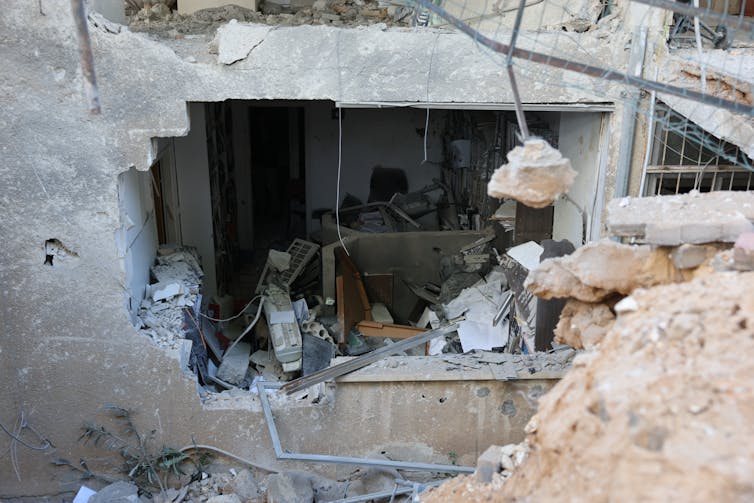
The US and Israel launched this “war of choice” against Iran on February 28. Trump evidently expected the formidable US air and naval power, as well as Israeli air power, would rapidly prevail.
At a minimum, Trump was anticipating the Iranian regime would then accept his demand for a favourable nuclear deal. But he was also suggesting broader aims aligned with Israeli Prime Minister Benjamin Netanyahu’s objectives – to force Iran to forfeit its long-range ballistic missiles and sever its ties with regional proxies.
This would then open the way for Iran’s restless population to resume their protests, aiming to topple the regime and replace it with one acceptable to Washington and Jerusalem.
But this has not happened.
It is now abundantly clear the US and Israel started a war without a clear goal, strategy, timeline, end game or justification. There was also no adherence to international law.
The Trump administrations’s objectives have been confusing and contradictory, with different narratives being spun by the president and his main advisers.
They have included everything from freeing the oppressed Iranian people to removing a direct threat to America and destroying Iran’s nuclear program and missile capability. (Never mind Trump previously claimed he had “obliterated” Iran’s nuclear program in last year’s bombing campaign.)
Trump has also called for regime change, or as he put it, “a little excursion” to get rid of “some evil” leaders.
Trump has further claimed the human and economic cost of the war – including oil and gas shortages worldwide – will be temporary. But when the fighting will stop is anyone’s guess. Trump has insisted the war is already won, then said it will only end when he feels it in his “bones”.
In the meantime, the US has intensified its air bombardment of Iran, claiming to have hit 15,000 targets and destroyed every military site on Kharg Island in the Persian Gulf, the main terminal for exporting 90% of the country’s oil.
Trump is now reportedly considering sending US forces to occupy the island, while inviting US allies, as well as China, to help reopen the Strait of Hormuz to oil shipments.
Inviting China to such a coalition is a fanciful idea – it has good relations with Iran. Most other countries have thus far refused to commit.
Israel’s one clear goal
While Trump’s goals seem to change by the minute, Netanyahu has a more clear war objective. He wants to destroy not only the Islamic regime but also diminish the Iranian state, no matter the consequences for the Iranian people and territorial integrity.
He has also lately been vocal about his ambition for a Biblical notion of “greater Israel”, based on the Book of Genesis, spanning from the Euphrates River to the Nile River. The US ambassador to Israel, Mike Huckabee, backed him on this in a recent interview with Tucker Carlson.
Although Netanyahu has been widely condemned for voicing these ambitions, he has not backed away from them.
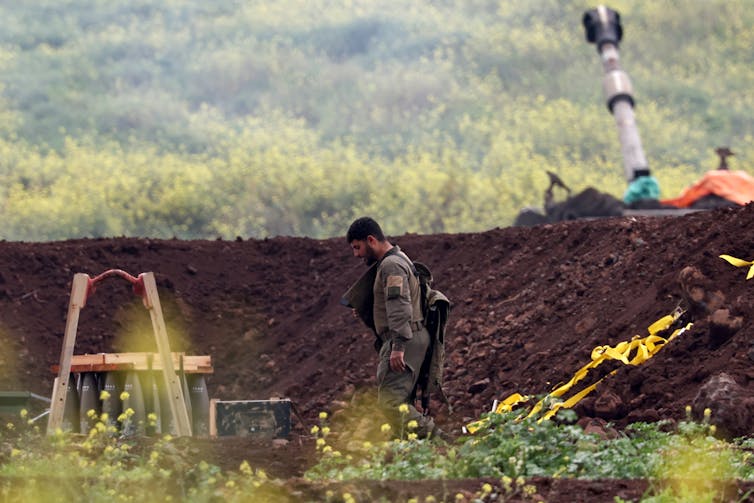
Meanwhile, Israel has also just sent troops into southern Lebanon for what it calls “limited and targeted ground operations” against Hezbollah, though many fear this could lead to a prolonged occupation. Israel’s defence minister says residents will not be permitted to return until the safety of northern Israel is secured.
Iran’s strategy: hold on
Whatever one’s view of the Iranian regime, it has been more goal-oriented and strategic than its adversaries. It has also displayed a remarkable degree of entrenchment and durability.
The regime rapidly replaced the slain supreme leader with his son, Mojtaba Khamenei, though he has not yet been seen in public.
Despite all the internal and external pressure the regime is facing, the members of its heavily armed and well-structured security and bureaucratic apparatus have remained solidly loyal.
And though thousands joined street protests against the regime before they were quashed in January, other Iranians have united behind the regime. Many Iranians have historically been motivated to support the regime against external aggression, due to civilisational pride, a Shia tradition of martyrdom and a strong sense of nationalism.
On the battlefield, the regime is pursuing a strategy of asymmetrical warfare, with the aim of outlasting the US and Israel and inflicting as much damage as possible. This entails turning the war into a regional conflict to pressure the Arab states in the Persian Gulf to push the Trump administration for an end to the war – and perhaps reconsider their reliance on the US as a security provider.
The regime has managed to hold out so far, and rejected any negotiations.
Two possible outcomes
As the situation stands now, the scene is set for a long, bloody and destructive war. Each of the protagonists has painted itself into a corner and doesn’t know how to get out.
There are two possible ways the war could end.
The first is centred on hardware. Whichever side depletes its stocks of missiles and interceptors first could signal a desire to end the fighting.
The second possibility is that Trump claims he has degraded the regime sufficiently and declares a kind of victory. He has hinted at this already given the domestic opposition to the war (including some of his influential MAGA supporters), the growing economic costs of the war, and the impending midterm elections.
If this happens, the Islamic regime will also claim victory, given it has held on and remains intact.
Whatever the outcome, the Iranian and Lebanese civilians would have borne the brunt of this war, and the region will transition to another historical phase of uncertainty and instability in a highly polarised world.
– ref. As the war drags on, what does victory look like for the US, Israel and Iran? – https://theconversation.com/as-the-war-drags-on-what-does-victory-look-like-for-the-us-israel-and-iran-278520