
Source: The Conversation (Au and NZ) – By Kevin Taylor, Senior Lecturer, School of Indigenous Studies, The University of Western Australia
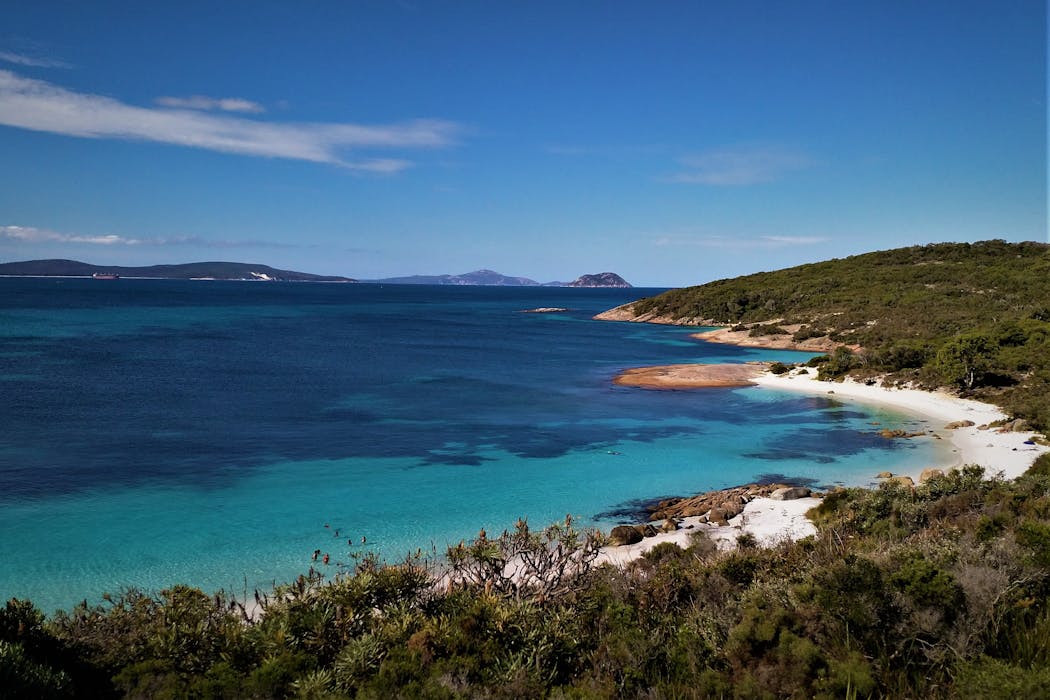
“It makes me feel like I am right there on Country”.
This was the response of a student after they used a new virtual reality (VR) tool I codeveloped to help Indigenous people around Australia learn on Country.
Learning on Country is the way in which Indigenous people teach and learn about Indigenous knowledge systems and culture – and the new VR tool, known as 360 On-Country, makes it more accessible than ever.
It not only brings Country to the classroom, but it also has the potential to bring Country to one of our most vulnerable populations who need it the most – our Elders.
Country is knowledge
Indigenous knowledge is intricately linked to the natural environment.
It is a knowledge system taught by being present with the changing environment and observing the changing colours of the land, the moving position of stars, the changing availability of food and water. It’s based on interactions with the environment made over thousands of years and is embedded in Indigenous language, culture, identity, totems, kinships and Dreaming stories.
Learning on Country is core to Indigenous knowledge. However, it isn’t always possible. For example, students sometimes can’t access Country due to disability, location or other constraints such as travel costs.
Using virtual reality to access the opportunity to learn on Country remotely can potentially remove such challenges.
The 360 On-Country journey
The idea to develop a VR tool came during the time of COVID lockdowns, when universities were moving from teaching face-to-face to completely online.
At the time I was coordinating a unit alongside Elder Len Collard looking at Country through a western scientific and Indigenous lens.
A large proportion of the unit was delivered on Country. Students would note their observations in scientific field journals and then research the Indigenous perspectives after. Developing the unit for online delivery was challenging.
Luckily, Perth was not severely impacted by lockdowns, so students were able to access local parks and observe the native flora and fauna close to home while staying within the restrictions.
When investigating alternative options where students could replicate learning on Country, VR was one idea we had. And eventually we secured funding to launch a pilot.
The VR resources were co-designed and developed with Indigenous academic Shandell Cummings, a Menang woman local to Kinjarling (Albany), Western Australia.
Shandell’s mother Dr Lynette Knapp, a Menang Elder, along with daughter Jessikah Woods, provided access to sites and stories with historical and cultural significance to their family and local Menang people. Shandell took me on an on-Country tour at Quaranup (Point Possession) sharing her cultural knowledge at several sites including the petroglyphs, lizard traps, the keeping place and local waterholes.
Strapped to my head was a 360 degree video camera filming a first-person experience of walking on Country. Later, our team edited the footage and turned it into a 360-degree virtual reality experience.
Connecting with the land
Aside from the slight nauseated feeling students experienced when removing the headset, they found the experience profoundly positive. As one told us afterwards:
The VR made me feel like I was really on Country, helping me connect with the land and its cultural meaning.
Another echoed this, saying:
It was a respectful and engaging way to learn about Indigenous stories, knowledge, and traditions. The visuals and sounds helped show the strong connection between people, culture, and the environment.
Students still preferred to be outside on Country. However, they saw VR as a tool which gives them a more immersive learning experience while creating a connection with Country they didn’t think was possible.

Kevin Taylor, CC BY-SA
VR connecting Elders to Country
360 On-Country has the potential to benefit not just Indigenous students, but also Elders who are far beyond the classroom.
A 2023 study assessing the quality of life factors most important to older Indigenous people identified that opportunities to connect to Country was the most unmet factor in urban settings.
Though VR is currently used in aged care in cognitive stimulation, physical exercise and reminiscence therapy resources aren’t targeted towards cultural therapy such as using it to access Country.
Elders’ last wish in end-of-life is to return to Country – something that is not always possible. This is where VR such as the ones developed here can help Elders return home in their final days.

Kevin Taylor does not work for, consult, own shares in or receive funding from any company or organisation that would benefit from this article, and has disclosed no relevant affiliations beyond their academic appointment.
– ref. A virtual reality tool I developed is helping Indigenous people connect with Country – https://theconversation.com/a-virtual-reality-tool-i-developed-is-helping-indigenous-people-connect-with-country-271851