

Source: The Conversation (Au and NZ)
It has been a turbulent month in Indonesian politics. Students have taken to the streets, protesting Indonesia’s worst fire season in a decade as well as economic downturn, increased militarisation, attacks on freedom of expression, and the government’s controversial free meals program.
In Yogyakarta, a peaceful student protest turned into clashes with security forces, who detained 154 protestors and entered the campus of Universitas Gadjah Mada.
In Jakarta, two local events drew headlines. Vice-President Gibran Rakabuming Raka resigned after a court ruled he was unqualified for the post as he did not hold a high school diploma.
And perhaps more surprisingly, crowds gathered at luxury mall Senayan City for the resolution of a month-long drama about a celebrity cat named Parhan, which had drawn online ire, media attention, lawyers and even intervention from the Jakarta government.
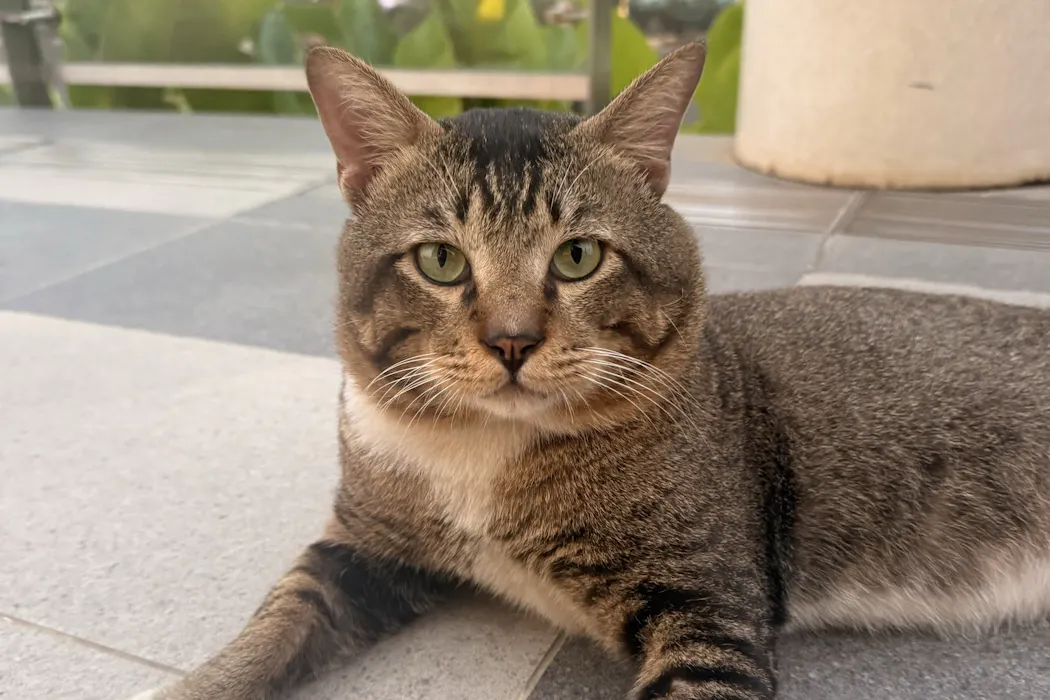
Parhan, Senayan City’s handsome cat
Parhan is a community cat (kucing komunitas) cared for by security guards at Senayan City (or Sency for short). Referred to as si ganteng (the handsome one) or artis Senayan (Senayan celebrity), Parhan has become popular among Sency workers, who describe him as their “mascot”.
Parhan is one of several selebcing – slang for selebriti kucing (cat celebrities) – in Jakarta. These are cats that have become famous on social media.
Selebcing residing in public areas, such as Oyen at FX Sudirman mall and Sopian at Jakarta’s Gondangdia train station, have themselves become attractions, drawing the eyes of media and influencers.
In October, Parhan was taken by an Indonesian-Australian woman who claimed she had adopted him and planned to take him to Sydney. Her social media posts about Parhan triggered responses worrying he was losing weight, saying he had been taken without permission, and demanding his return to Sency.
An online petition and advocacy by animal welfare group Animal Defenders Indonesia led the Jakarta government to intervene. Mediation ensued, involving local politician Francine Widjojo, who is well known for her love of cats and animal rights. After some delays related to medical concerns, Parhan was returned to Sency on November 18.
Cats, social media and politics
Cats have always been hugely popular in Indonesia. Cats are the country’s most popular pet. Protecting them is deeply embedded in Indonesian culture.
In the world’s largest Muslim-majority country, this affection is also shaped by the special place cats hold in Islam. This cultural and religious affinity underpins the growing prominence of cats in public life, particularly among the urban middle class.
The popularity of cats also means social media activity around them produces strong public engagement. Research on social media activism in Indonesia suggests simple, non-sensitive stories are more likely to draw mass support than explicitly political issues. Cat stories fit this pattern.
Parhan’s case also reflects a popular complaint of “no viral, no justice”. Many people feel Indonesian authorities only act once an issue goes viral. The phenomenon is so widely recognised that even the national police chief has responded to it.
One difference in Parhan’s case was that it is unclear whether a crime was even committed. However, legal questions over who owned the handsome cat led a security guard who had cared for him to engage lawyers to fight for his return.
This step provided justification for the government to get involved. Animal-loving community groups appealed to Jakarta’s provincial government to organise mediation.
A feel-good win for government
A loose legal pretext alone does not explain the provincial government’s willingness to get involved in Parhan’s case. Amid pressing issues such flooding, traffic congestion and air quality, it may seem irrational to divert resources to mediate an alleged cat-napping.
Justifying the intervention, Jakarta governor Pramono Anung highlighted his government’s special attention to animals, especially cats and dogs.
However, Jakarta’s advisor for social communication also said the government intervention was a direct response to intense social media and public pressure.
Both may be true. Unlike flooding or air pollution, a dispute over a cat requires little structural change and carries few political risks.
With the issue resolved within weeks, involvement generated feel-good publicity at little cost. The successful mediation presented photo opportunities and linked the Jakarta government to a much-loved celebrity cat.
What governments can’t ignore
To outside observers, it may seem extraordinary that news coverage of a mall cat could sit alongside a vice-presidential resignation and widespread protests. However, Parhan’s story tells us something about how cats and other viral subjects interact with politics in Indonesia in the digital age.
Democratically elected governments cannot ignore social media, which both amplifies and shapes public opinion. Parhan’s case gave the Jakarta government a rare chance to successfully respond to a viral outcry.
It also carried an added benefit. Cats have become a fixture of political image-making in Indonesia. Most famously, President Prabowo’s cat Bobby Kertanegara has helped him project warmth and care.
By bringing a much-loved cat home, the Jakarta government could claim some of that goodwill for itself.

Elisabeth Kramer has received funding from the Australian government through the Australia Research Council.
Charlotte Setijadi has received research funding from Singapore’s Ministry of Education and Social Science Research Council. She is also co-convenor of the University of Melbourne’s Indonesia Forum.
Ken M.P. Setiawan receives funding from the Australian government through the Australian Research Council. She is a Board Member of EngageMedia, a nonprofit organisation that promotes digital rights, open and secure technology, and social issue documentary in the Asia-Pacific.
Original source: https://analysis1.mil-osi.com/2026/11/25/the-handsome-one-how-parhan-the-celebrity-indonesian-mall-cat-became-government-business/