

Source: The Conversation – USA (2)
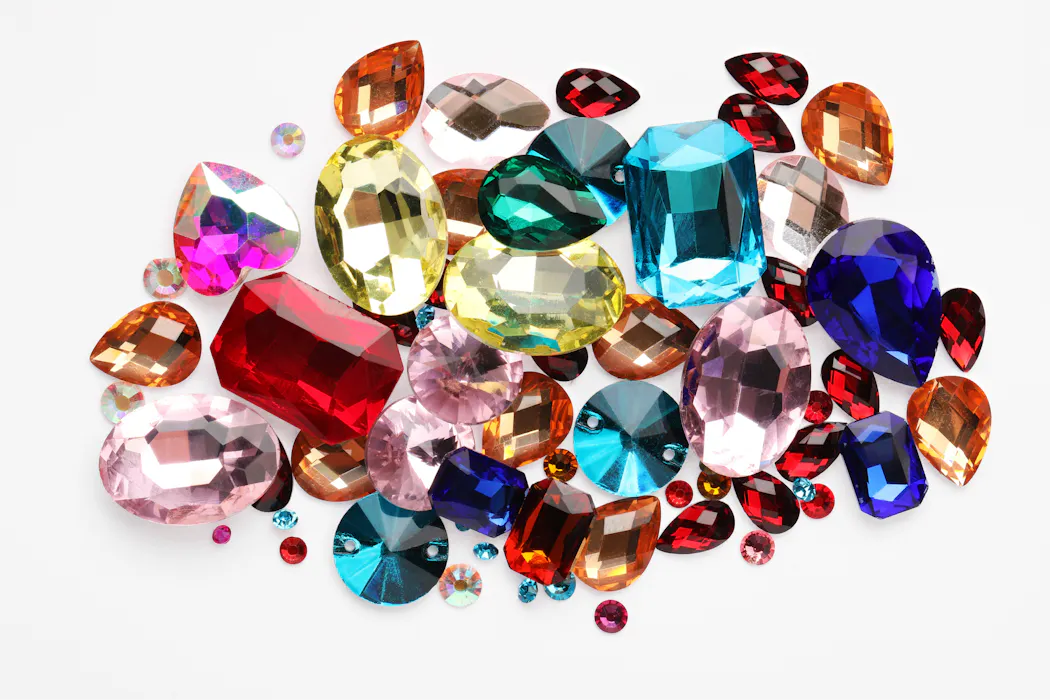
The art of transforming everyday objects from drab to fab is having a moment.
Bedazzling is experiencing a quasi-revival, while a newer craft, diamond painting, has emerged as its shiny cousin.
Both crafts involve placing resin gems or crystals on everything from canvases and coasters to tumblers and tote bags.
Bedazzling was popularized by DIY rhinestone application kits like the Ronco Rhinestone and Stud Setter in the 1970s and the Bedazzler in the 1990s. But whereas those older bedazzling techniques involved using a large staplerlike device to push studs and rhinestones into fabric, today’s bedazzling and diamond painting usually rely on wax or putty-infused pens to pick up and place drills and crystals onto objects and canvases. Today, a single item could be adorned by more than 100,000 gems of more than 100 colors, requiring weeks or months to complete a project.
To me, these activities are not simply fueled by boredom or nostalgia. Instead, they reflect a desire to interact with material, tangible things, as opposed to digital devices. They serve as a mental wellness practice. And they show how productivity and value are not synonymous.
Easy to pick up
As a geriatric millennial, I’ve always loved – and been known for – my shiny attire and accessories.
But it wasn’t until my colleagues who enjoy pottery and sewing suggested that I begin crafting, particularly diamond painting, as a way to boost my well-being that I considered becoming the person creating the glitz.
The art form easily accommodates the responsibilities of motherhood: It’s something I can do at home, where I can get tips from people online rather than needing to attend evening or weekend classes. And then there’s the twinge of satisfaction I experience after hearing each “pop” of the pen separating from the placed drill.
In short, I’m obsessed. The best part? I have a daily routine that doesn’t involve striving for perfection.
Unlike my teaching and research, diamond painting requires no line on a curriculum vitae or score on an evaluation sheet. Crafting isn’t about quantifying my worth or the pressure of making myself more beautiful. Its appeal lies in prioritizing myself, the experience of tranquility and the opportunity to work with my hands.
Making the mundane a little more marvelous
My college freshmen had different reasons for picking up the art.
Many of them came to it inadvertently. While they now enjoy bedazzling to unwind and unplug, some of them told me they originally turned to the practice to decorate their high school graduation caps.
To use a trendy Gen Z term, the craft is a form of “whimsymaxxing” – a way to imbue playfulness and joy into everyday life. College newspapers around the U.S. report that young women on campus are gemming anything that can hold a rhinestone. My students tell of dorm rooms wallpapered with sparkle. When they open their bags in class, I watch them retrieve chargers, lip gloss cases and water bottles, all adorned with gems arranged in impossibly intricate patterns.
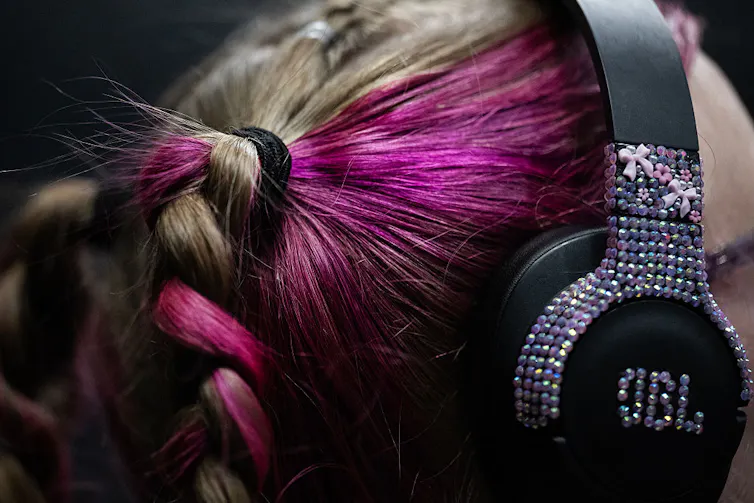
Timothy Hurst/MediaNews Group/The Denver Post via Getty Images
Much of the media coverage of these art forms frames them as either a consumer trend – sparkle crafts are now a multimillion-dollar industry – or a form of therapy or self-preservation.
But I think bedazzling and diamond painting represent far more than that. Despite the fact that much of the history of sparkle crafts is documented solely by retailers, I see these current iterations of craftwork as part of a long tradition of women using craft as a means of self-expression, connection, catharsis and resistance against social constraints.
Crafting, in fact, underpins many activist movements.
In the 19th century, women abolitionists formed sewing circles, where they decorated objects with abolitionist emblems. Later, suffrage banners used stirring colors and messages to rally support for women’s right to vote. In 1979, an art installation called “The Dinner Party” commemorated women’s overlooked contributions to history through a triangular table featuring 39 place settings, each with embroidered and painted decorations. More recently, the Clothesline Project conveys the collective experience of sexual violence survivors through decorated T-shirts on a clothesline.
Standing up and standing out
In a world where the message to women is either that they are too much or not enough, bringing glitz and glam into public spaces demands women be seen and rejects a “toned-down” or “minimalist” way of moving through the world. It shows that women are prioritizing themselves and taking the time – hours for most projects – to resist consumer culture in favor of making something new.

Nicholas Faulkner/Icon Sportswire via Getty Images
Amid the many stresses of 21st-century womanhood – from sexual violence and unequal pay to disproportionate childcare responsibilities and unrelenting beauty standards – bedazzling and diamond painting allow women to literally add a little shimmer to their lives, one gem at a time.
Still, women’s craftwork has long occupied a complicated space between conformity and nonconformity, or collective and individual interest. While often dismissed as unimportant forms of femininity and domesticity, craftwork continues to challenge the notion that women’s labor must serve others or offer practical application.
Of course, there’s a tension between embracing femininity and resisting the expectations attached to it. At the 1968 Miss America protests, women discarded makeup, bras and other symbols of conventional beauty standards.
Yet rejecting glamour altogether overlooks its potential for empowerment, experimentation, expression, enjoyment and connection. At the 2026 Ball Without Billionaires, Amazon workers embraced glamour on their own terms, creating their own extravagant fashion show as a way to protest the Met Gala taking place just a few miles away.
The distinction between conformity and resistance lies in the purpose behind the activity and who determines it.
Bedazzling is not automatically excluded from traditional expectations of femininity, nor does every rhinestoned object constitute an act of resistance. But a meaningful difference exists between aiming to meet expectations that include looking beautiful and choosing a messy, imperfect, playful and slow process that is beautiful to those who engage in it.
In other words, shine isn’t necessarily tacky, and a desire for beauty isn’t necessarily shallow.
There’s something supremely satisfying about slow progress and adding that last gem or rhinestone. After spending so much time methodically placing individual pieces, you can step away and soak in the entirety of the work in all its glistening glory.
Labeling women as not enough or too much has led women to choose more: more color, more sparkle, more visibility, more time spent on themselves for themselves.
Plus, there’s really no such thing as too much sparkle.
Duke University undergraduates Zoe Dakin and Rowen Spitz assisted with the research and writing of this article.

Jessica Rose Corey does not work for, consult, own shares in or receive funding from any company or organization that would benefit from this article, and has disclosed no relevant affiliations beyond their academic appointment.
Original source: https://analysis1.mil-osi.com/2026/11/23/whats-behind-the-bedazzling-mania-thats-taken-over-high-school-and-college-campuses/