

Source: The Conversation – UK
As nature declines over time, it becomes easier to normalise an increasingly impoverished environment.
One way to help counteract this so-called shifting baseline syndrome is the nation’s annual status report for nature, commissioned by the UK government. First published in 2007, this impressive environmental healthcheck explains how and why habitats and the wildlife within them are changing.
It brings together the best data on a diverse set of 28 biodiversity indicators. These cover measures such as air pollution and habitat condition. They show how birds and butterflies are faring and record how much time people spend volunteering in conservation. The report outlines struggles in the natural world as well as some reasons for hope.
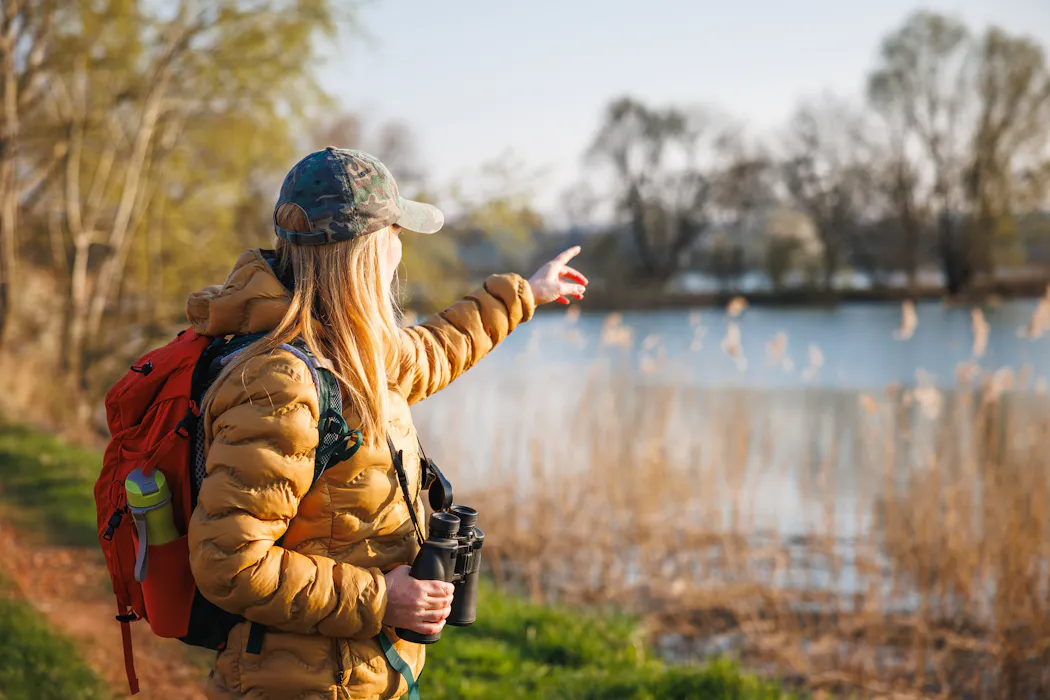
Conservation volunteering highlights the best news. The number of hours worked by volunteer citizen scientists to support the natural environment has increased over both the short- and long-term. Between 2000-24, recorded volunteer time in UK increased by an amazing 70%. This shows the public’s keen appetite to engage with nature and do good. This nature data is being used increasingly by conservationists, planners and researchers to help protect and restore nature, to monitor change and to educate.
Read more:
Why grandparents should talk to children about the natural world of their youth
The latest UK biodiversity indicator report draws on a wide range of measures to give an unrivalled picture of how the environment is changing.
The indicators touch on direct and indirect drivers of biodiversity change, on conservation interventions, on data and expenditure, on awareness and nature connection. It allows researchers to track nature and begin to understand what drives the ups and downs and how to limit and counteract harmful change.
Using huge volumes of data generated by monitoring programmes and recording schemes, coordinated by many conservation and research organisations, many of the indicators go back several decades.
But disappointingly, only half of the 28 biodiversity indicators were updated this time, so the picture isn’t complete.
Looking at trends from all of the indicators that use data compiled over decades, 44% were assessed as improving, 44% deteriorating (12% little or no change). Over the last five years, 38% were assessed as improving, 29% deteriorating and 32% as having little or no change. Certainly, some pressures are reducing and some responses are improving. But outcome measures of the state of nature are either deteriorating or flatlining.
The latest statistics on the UK’s wild birds sadly make for grim reading. Nature in the UK is already known to be depleted, but the apparent acceleration of decline in birds is particularly alarming.
Trends are classified as “deteriorating” in most bird groups in the last five years; none are increasing. This nosedive is most evident in farmland birds (such as lapwing, yellow wagtail and starling) and seabirds (such as Arctic skua and Arctic terns).
It isn’t just birds, butterfly populations are in trouble, declining from steadily from 1976 when systematic monitoring began. These include the small tortoiseshell, adonis blue and small pearl-bordered fritillary.
The UK is a world leader in promoting biodiversity targets and indicators. The Environment Act, for example, includes a legally binding target to halt the decline of species abundance and reduce extinction risk, among wider environmental objectives.
Biodiversity indicators form the basis of much of the UK’s international reporting obligations on biodiversity. They are used to measure progress against targets set by the UN’s Convention on Biological Diversity in 2022. The groundbreaking agreement, known as the Kunming-Montreal global biodiversity framework, contains 23 action-oriented targets for 2030 and four overarching goals for biodiversity recovery by 2050.
Soberingly, government reporting earlier this year showed the UK was on track to meet just three of those 23 targets. For 19 targets, progress was being made but not fast enough. Progress for one target on the management and use of wild species couldn’t be assessed because the UK still lacks evidence on benefits to people.
Mixed signals
Protected areas of both land and sea are both vital for nature protection. The news on the area they cover and their condition sends mixed signals. While the total extent on land and sea protected has increased since the 1950s, the increase has been only at sea since the 1990s. The total area of protected land has flatlined and not changed since 2020.
Reliable information on the condition and quality of those sites is lacking, so whether they protect nature in a meaningful way remains open to question. Overall, the UK is way short of reaching the UN’s bold goal to protect 30% of the world’s land for nature by 2030. At sea, that 30% target has just been reached, according to the update, thanks to expanding marine protected areas around UK coasts.
Overall, more money is being spent on nature, both in the public sector and the non-governmental organisations and private sector. Whether that spending is in all the right places and up to the task of protecting nature is debatable. The current evidence on the state of nature says it is not because the loss of nature continues.
But at least with brilliant volunteers, monitoring schemes and comprehensive indicators, it will be easier to track and respond to any potentially insidious change around us.

Richard Gregory works for the Royal Society for the Protection of Birds (RSPB) as the Head of Monitoring Conservation Science.
Original source: https://analysis1.mil-osi.com/2026/11/20/uks-nature-healthcheck-doesnt-stack-up-in-wildlifes-favour-but-volunteers-are-collecting-plenty-of-crucial-data/