

Source: The Conversation (Au and NZ)
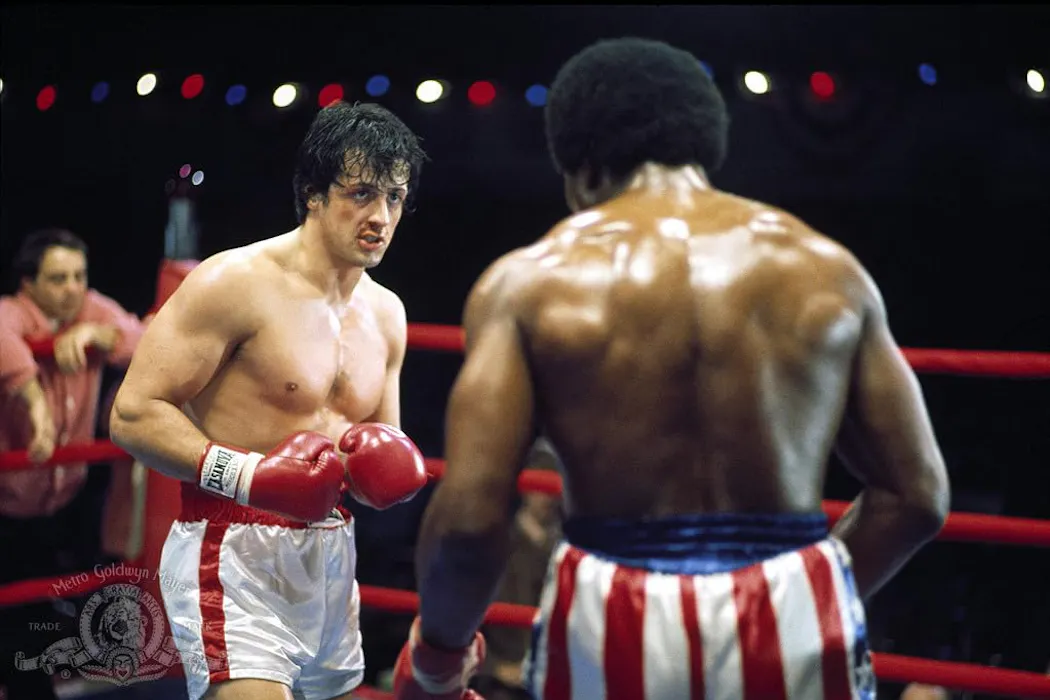
By all measures, Rocky (1976) is the most successful sport film of all time. Half a century on from its release, the story of small-time boxer Rocky Balboa – who rises to square up against heavyweight champion Apollo Creed — continues to capture our imagination.
Directed by John G. Avildsen, the film won the prestigious Best Picture and Best Directing Oscars in 1977. And the broader franchise, consisting of five sequels and three Creed spin-offs, has generated more than US$1 billion at the global box office.
Rocky resonates because it is the ultimate underdog story. The hero is flawed, yet faithful to his dreams – working to overcome his self-doubt. His final victory is not a boxing title, but in proving his worth.
Standing your ground
The story of Rocky, written by Sylvester Stallone himself, was inspired by a real-life match between heavy weight champion Muhammad Ali and Chuck Wepner.
Wepner was a little known boxer from New Jersey at the time. While he didn’t win the fight, he held his own, becoming one of few boxers in history to be able to knock Ali down.
As Stallone recalled in an interview:
for one brief moment, this supposed stumblebum turned out to be magnificent. And he lasted and knocked the champ down. I thought: ‘if this isn’t a metaphor for life.’
Hollywood lore tells how Stallone wrote the script in just three days after seeing Ali and Wepner’s fight. Stallone later admitted that 90% of this original script was terrible, but the “germ of the idea was there”. He says it took about 25 rewrites to get it right.
When interested producers wanted a famous name to take on the eponymous role, Stallone declined. He was determined to play Rocky.
It was a big risk, since Stallone was broke – so broke he was forced to sell his dog, Butkus, for US$40. But like Rocky he had faith in himself, and persisted until the studio, United Artists, agreed to cast him in the role.
When paid his advance, Stallone was able to buy Butkus back for $15,000. The hound went on to feature in several Rocky films.

IMDB
Rocky was filmed on a budget of just US$1 million, a small budget for a film, even in those days.
Many of the scenes were shot in public, including those in the famous training montage, in which curious members of the public watch on as Rocky jogs through the streets.
In one unscripted moment, a street seller throws Rocky an orange as he jogs past. This detail adds charm to the scene, instilling the sense of Rocky as the everyday man.
The training montage also doubles as a metaphor for the American dream, which promises that hard work and persistence will lead to success.
Such montages have since become commonplace in sports films, from Karate Kid (1984) to Million Dollar Baby (2004). But Stallone is often credited as having pioneered the format.
Rocky represents a powerful ethos
There has been much discussion about just what Rocky captured in the American psyche that led to its success.
Rocky wasn’t simply a fairytale about the American dream, although this was part of it. The film reflected the neglected working class at a time of growing “ethnic” pride – and local audiences connected with this.
The film’s global success, however, arguably comes down to its core message: recognition of the self.
As film academic Eric Lichtenfeld argues, Rocky is not just training to become a better boxer – he is searching for respect, both internally and externally.
By taking on Apollo Creed, and proving himself to be a worthy opponent, he demonstrates his worth in the world – even if he doesn’t win the final fight.
The appeal of this kind of underdog story transcends cultural boundaries.
It also goes to the heart of sport, as we’ve seen with Olympians like Eddy the Eagle and Eric the Eel.
As Pierre de Courbertin, founder of the Olympics, said:
the most important thing […] is not winning, but taking part. The essential thing in life is not conquering but fighting well.
Adding to the mystique is the fact that the protagonist’s underdog story is in many ways also Stallone’s story. Rocky was the small-time fighter seizing the opportunity of a lifetime; Stallone was the struggling actor trying to make it big in Hollywood.
Rocky’s revival
The release of the upcoming film I Play Rocky (2026), a biographical film marking the 50th anniversary, is testament to our enduring fascination with the entwined legends of character and star.
Featuring Anthony Ippolito as a young Sylvester Stallone, I Play Rocky portrays the story of how the original film was made. Many of the most beloved elements will return, including the very loyal Butkus, and a recreation of the training montage.
The Rocky franchise also continues to grow. Creed IV, the 10th film in the franchise, is currently listed as being in pre-production on IMDB.

Lisa J. Hackett does not work for, consult, own shares in or receive funding from any company or organisation that would benefit from this article, and has disclosed no relevant affiliations beyond their academic appointment.
Original source: https://analysis1.mil-osi.com/2026/11/19/rocky-at-50-the-most-iconic-sports-film-of-all-time-taught-us-winning-isnt-everything/