

Source: The Conversation – UK

Electric vehicles (EVs) have become the poster child for the green transition. Governments are investing billions in charging infrastructure. Manufacturers are transforming their production lines. Electrifying transport is a central pillar of climate policy.
But there is another potentially enormous driver of electrification that deserves attention: cooking.
I’m currently at the UN climate summit, Cop31 in Turkey, with my colleague Alicia Butterfield. As global manager of the Global Electric Cooking Coalition, she works with governments, development agencies and clean energy organisations to replace polluting traditional stoves with clean, electric cooking appliances.
We have been struck by how many researchers, government representatives and international organisations at this Cop are advocating for electric cooking to be included as a major component of the global energy transition. The question is no longer simply whether we can cook with electricity, but on how doing so can transform electricity systems, stimulate investment and accelerate the transition away from fossil fuels and polluting traditional cooking fuels.
The comparison with EVs is particularly interesting. Not everyone drives a car, but nearly everyone cooks. Cooking takes place in almost every household, as well as in restaurants, businesses, schools, hospitals and other institutions. It is a universal and essential energy service.
If EVs can become a major driver of electricity demand, why should electric cooking not play an equally important role? In terms of the number of people and institutions electric cooking can involve, it could have an even greater reach than electric transport.
Africa is already undergoing rapid electrification. Mission 300, an initiative funded by the World Bank and African Development Bank, aims to connect 300 million people in sub-Saharan Africa to electricity by 2030. Across the continent, electric cooking can help make electricity systems more economically sustainable over the longer term.
For national utilities, increased electricity consumption creates additional revenue. This can improve the commercial viability of investments in electricity generation and distribution networks. For decentralised electricity providers, including mini-grid operators, reliable demand from cooking can improve the return on investment. It can also make off-grid rural electrification projects more financially viable, potentially lowering tariffs for customers.
Of course, this is not a simple process. Adding large cooking loads can increase pressure on grids at evening peak points. Promoting institutional and commercial electric cooking provides a daytime load (higher demand) which can actually help to smooth demand across a 24-hour period. Some innovative approaches are being developed around differential time-of-day tariffs that encourage use of electricity at times of low demand. This can help “smooth demand”.
This transition can happen in many ways. In urban and semi-urban areas, households with grid connections are trialling electric pressure cookers, induction hobs and other efficient appliances. When they do so, the cost of their daily cooking often falls.
But connection to a national grid isn’t essential for energy access. In remote unconnected rural communities, electric cooking can be supported through decentralised renewable energy systems. The economics of adoption in these communities can be more difficult, especially if people are cooking with wood they collected themselves for free.
Research highlights that the costs of traditional biomass (such as wood and charcoal) extend beyond direct fuel expenditure. Costs include the considerable time, physical effort and opportunity costs associated with collecting, transporting and preparing firewood.
So with the right price point, electric cooking can be attractive even where firewood is freely collected. Reducing the time and drudgery of fuel collection can free up time for income-generating activities and other productive uses.
Advances in solar panels, battery storage and energy-efficient appliances, particularly electric pressure cookers, are improving the technical and economic feasibility of off-grid electric cooking. Innovative financial arrangements, frequently supported via carbon finance (incentivising carbon emissions reductions), are driving down appliance costs for the customer.
Global ambitions
Cop31’s 35-by-35 global electrification pledge seeks to increase electricity’s share of global final energy consumption from around 23% today to 35% by 2035. This pledge is not yet a commitment, and at the time of writing, it remains far from clear what kind of an agreement will be reached.
Achieving this ambition requires more electricity generation (from renewables if electrification is going to drive accelerated climate action). It also relies on stronger grids and improved energy storage.
It needs a greater focus on the uses of electricity. The electrification of transport, buildings and industry is essential – so too is cooking.
Read more:
Plastic pollution is a problem we still know too little about
These discussions demonstrate that cooking is increasingly being considered within national energy planning and international investment conversations. There is an important gap: electricity generation and grid infrastructure are often financed separately from the activities that create demand for that electricity.
Progress in Tanzania shows how electric cooking can help bridge that gap. In one remarkable high-level session organised by Sustainable Energy for All (an international initiative hosted by the UN) and the government of Tanzania, delegates heard directly from Samia Suluhu Hassan, Tanzania’s president. She outlined how the country is advancing its energy transition, partly by prioritising clean cooking in schools and health facilities.
Tanzania’s national clean cooking strategy aims for at least 80% of its population to use clean cooking solutions by 2034. Now in its third year, the UK-funded eCooking Scale and Support programme has worked with the Tanzanian energy ministry to encourage the adoption of electric cooking among households, institutions and businesses across the country.
This programme has introduced innovative financial approaches. These include utility on-bill financing of electric cooking appliances (whereby households repay upfront costs through monthly bills) and credit lines (a flexible borrowing agreement) for new appliance suppliers.
Esther Sweeney / Climate Visuals, CC BY-NC-ND
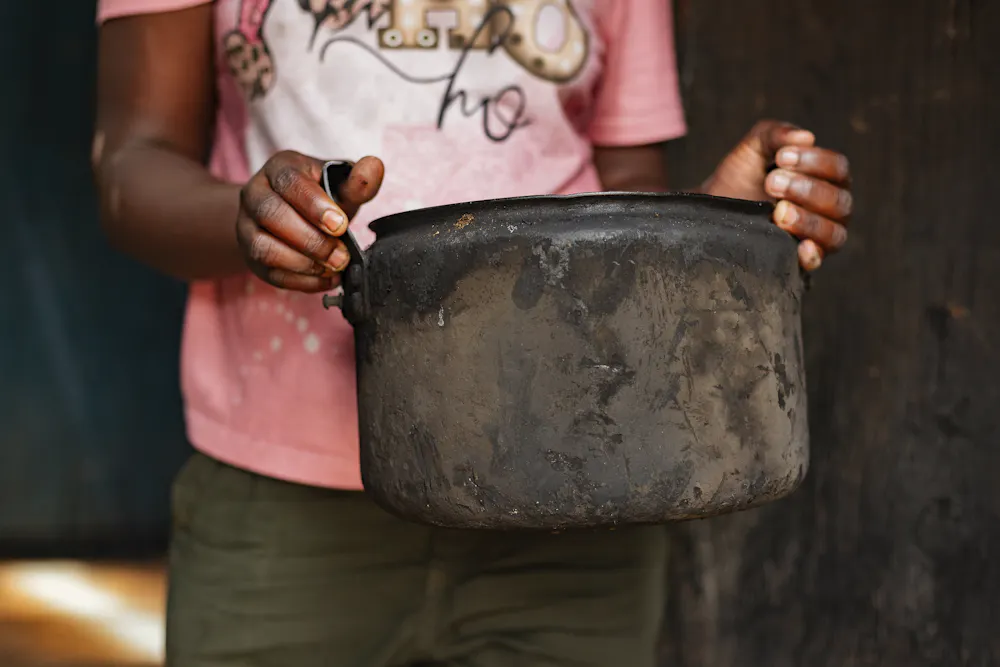
In school kitchens, polluting stoves (those that burn wood or charcoal) have been replaced with clean electric ones. New repair and maintenance training programmes have been introduced for electric cooking appliances. In collaboration with the Tanzania Bureau of Standards, new standards have been set for electric cooking appliances.
The programme demonstrates how under strong government vision and leadership, electricity utilities, financial institutions, appliance suppliers and development partners can work together to build an effective functioning electric cooking market.
Wider benefits
Energy security is another powerful driver of the move towards locally generated renewable electricity. Reducing dependence on imported fossil fuels and volatile international energy markets makes the case for developing domestic electricity resources even stronger.
Scaling up electric cooking reduces harmful pollution from methane (a potent greenhouse gas with strong links to respiratory health problems) and microscopic particles of black carbon or soot (a short-lived climate pollutant). Moving away from polluting combustion-based cooking can deliver important climate and public health benefits alongside carbon dioxide reductions.
For more households to switch to electric cooking, appliances must be affordable, electricity supplies reliable and people must know what options are available. This electrification transition must be designed around local circumstances and addressed through coordinated policy, investment and innovation. If policymakers look beyond the most visible technologies, cooking could be placed firmly on Cop31’s global electrification agenda.

Ed Brown leads UK Aid’s Modern Energy Cooking Services programme (funded via the UK’s FCDO under their Ayrton programme). Research that he leads is also currently funded by UKRI and the Climate and Clean Air Coalition.
Original source: https://analysis1.mil-osi.com/2026/11/18/electric-cooking-could-be-as-important-as-evs-in-the-global-energy-transition/