

Source: The Conversation (Au and NZ)
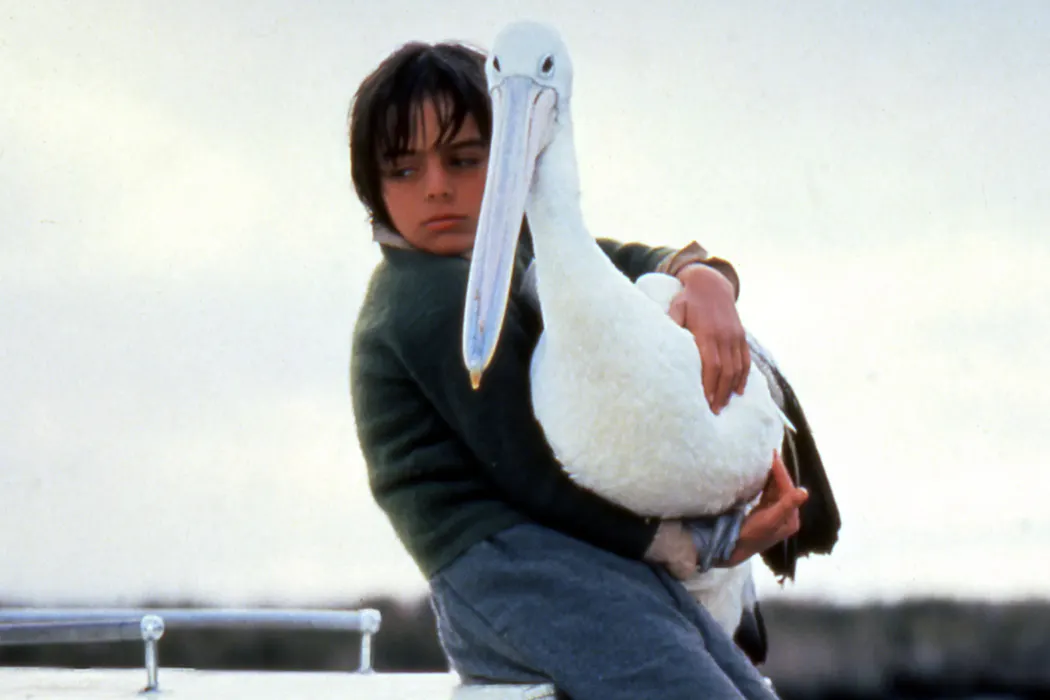
In its 50th anniversary year, Storm Boy (1976) brings to light the importance of place and region in the 1970s Australian Film Revival.
Directed by French-born filmmaker, Henry Safran, the film follows a young boy named Mike (Greg Rowe) as he forges a deep bond with a local pelican he names Mr Percival.
Storm Boy grossed more than A$2 million in the Australian box office, won Best Film at the 1977 AFI (now AACTA) Awards, and was sold internationally to more than 100 countries.
A memorable story about a boy and a bird, the enduring place of Storm Boy in Australian cinema history is anchored by its coastal South Australian setting.
A gorgeous coastal setting
Restored by the National Film and Sound Archive (NFSA) in 2015, Storm Boy is set in South Australia’s Coorong National Park, where the Murray River meets the Southern Ocean.
Its screenplay was adapted by Sonia Borg from the 1964 novel by the South Australian writer, Colin Thiele. Producer Matt Carroll recalled how he and Thiele shared a love for the Coorong. For Thiele’s part, filming there overcame some protectiveness about having his book adapted for the screen.
The vision of the Coorong was overseen by Hawkesbury-born cinematographer Geoff Burton.
Some of the film’s enduring images feature the birds and a barefoot Mike, in his outsized sweaters and shorts, ranging along the pristine coastal wetlands.
Loss and coming of age
Mike dwells with his father Tom (Peter Cummins) in an isolated hut in the sand dunes, estranged from family and distant from the community. To make a living, Tom trades his catches of cockles and mullet in the nearby town of Goolwa.
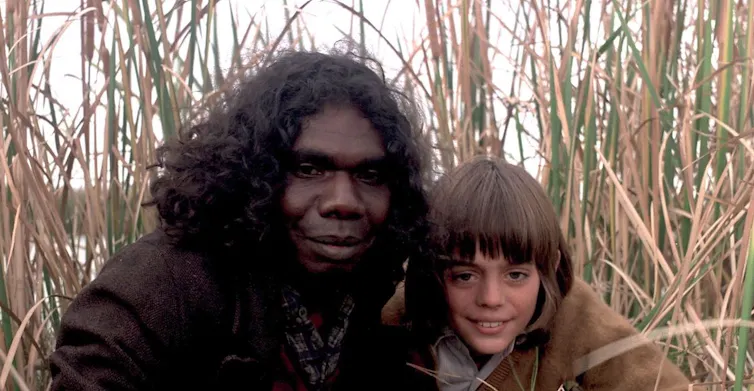
Mike’s only friend is Fingerbone Bill (Yolŋu actor David Gulpilil, credited as Gulpilil) who camps in the adjacent reserve.
“Lonely place,” Fingerbone says to Mike when they meet. “I don’t mind,” Mike replies.
National Film and Sound Archive
The pair grow close after Fingerbone wards off the hunters who orphan Mr Percival and his fellow hatchlings, Mr Proud and Mr Ponder.
“You kill pelican, sky come up with storm,” Fingerbone warns. Sure enough, a storm blows in. Fingerbone names Mike “Storm boy” because he “runs like a blackfella, like the wind”.
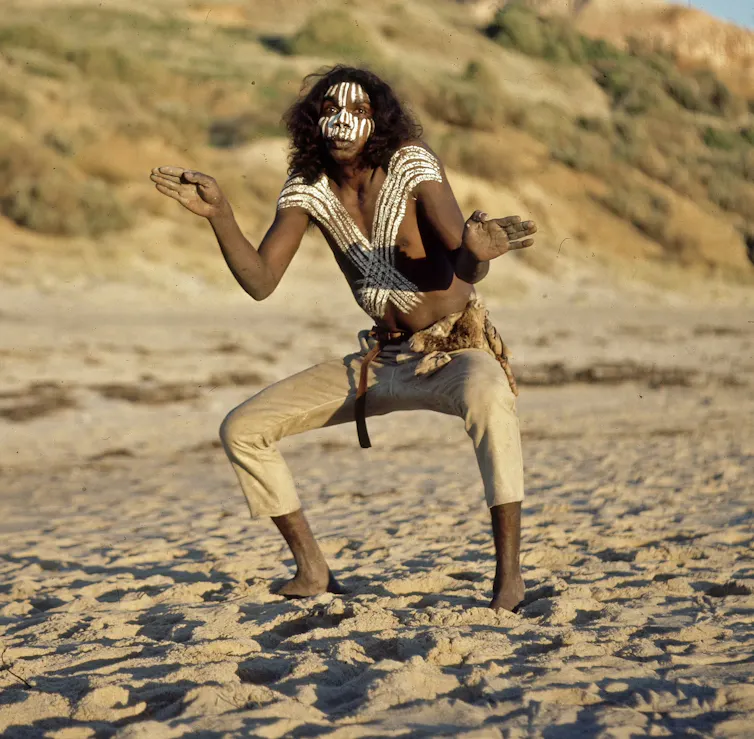
Fingerbone’s traditional knowledge is revealed through his dance, song, fish trap, and Dreaming stories of pelicans.
Feeling deep empathy for Mike’s loneliness and isolation, he mentors Mike to care for the pelicans, and encourages him to learn to read and go to school.
While Storm Boy is often remembered for its portrayal of the bond between Mike and Mr Percival, it is actually the story of Mike’s friendship with heroic Fingerbone Bill, who steers him through an important rite of passage in confronting loss.
One of Gulpilil’s most poignant performances
Gulpilil portrays Fingerbone with a high degree of emotional intelligence.
In an interview given 40 years later, Greg Rowe recalled how “fantastic” Gulpilil was to work with, and how he had insisted they call each other by Yolŋu language names for “little brother” and “big brother”.
In some ways Fingerbone is a colonial character-type: a tribal outcast with a spear and firearm, and a washed-up adventure book that Mike reads. But Gulpilil’s performance asserts sovereignty.
When Tom warns him the park ranger is after him for camping in the sanctuary, he reacts sharply: “This country belong to him?”
Tom responds by noting the law. “Whitefella law!” Fingerbone says.
The resonance of this exchange is deepened by the authentic setting; although in 1976 the credits did not acknowledge Traditional Owners, only that the movie was “filmed entirely on location in South Australia”.
National Film and Sound Archive
The 2019 remake of the film, set a generation on, returns to the same locations in the Coorong, acknowledging the Ngarrindjeri and Kaurna peoples.
In an extended memory sequence, a mature-aged Mike (Geoffrey Rush) tells his granddaughter Madeline (Morgana Davies) about Mr Percival and Fingerbone Bill (Trevor Jamieson) to aid her efforts to preserve The Coorong from development.
It’s a nostalgic homage, but a very different film. Director Sean Seet has spoken about his own affection for the original 1976 film, which he watched as a child.
A bold vision for South Australia
Storm Boy was a production of the South Australian Film Corporation (SAFC) – an entity set up in 1972 to develop film and television production in South Australia. It also leveraged federal funding from the Australian Film Development Corporation (later the Australian Film Commission and now Screen Australia).
This funding demanded “significant Australian content” and one of several criteria pertained to the place of production. The SAFC had a bold vision to create an in-state film industry, which had both successes and failures. Its first three films, however – the third of which was Storm Boy – were all success stories.
The first film, Picnic at Hanging Rock (1975), was only partly filmed in South Australia (and memorably featured Victoria’s Hanging Rock). Sunday Too Far Away (1975) brought the South Australian outback in the Flinders Ranges into view, while Storm Boy presented the coastal Coorong spectacle.
Through the 70s, other states followed South Australia in forming their own film corporations. Although not specifically aimed to showcase their respective states, many of the resulting films also featured regional locations.

Allison Craven does not work for, consult, own shares in or receive funding from any company or organisation that would benefit from this article, and has disclosed no relevant affiliations beyond their academic appointment.
Original source: https://analysis1.mil-osi.com/2026/11/18/storm-boy-at-50-south-australias-stunning-coastal-landscape-is-key-to-this-beloved-films-success/