

Source: The Conversation – UK
Smoother skin, sharper eyesight, better memory, stronger joints, improved athletic performance and even protection against ageing – astaxanthin is marketed as a supplement with an extraordinary range of health benefits. But how much of this promise is backed by evidence in people?
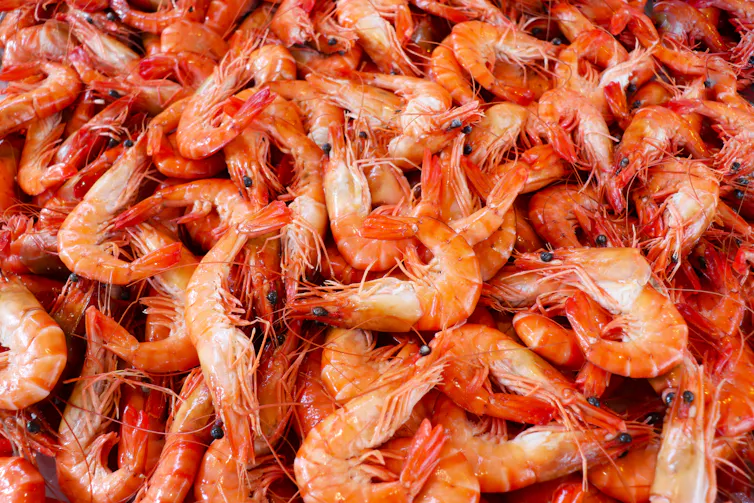
Astaxanthin is a reddish-orange pigment made mainly by microalgae. Salmon, prawns and other marine animals accumulate it through their diet, and flamingos get their colour in a similar way from foods rich in carotenoid pigments. It belongs to the same family as betacarotene, found in carrots and sweet potatoes, and lutein, found in spinach and kale.
Astaxanthin has attracted attention because it can act as an antioxidant, helping to protect cells against unstable molecules produced during normal metabolism, illness and exercise. This provides a plausible biological explanation for why astaxanthin might be useful. But a supplement that affects cells in a lab does not necessarily make people healthier, fitter or longer lived.
The best evidence is for skin. A review of 11 studies found that astaxanthin improved skin moisture and elasticity compared with a placebo. It found no clear reduction in wrinkle depth, and the benefits were largely confined to studies in healthy women.
Most of the trials were small and short, so it is hard to know whether the changes last. An improvement picked up by specialist equipment may also be invisible in the mirror. Astaxanthin is no substitute for protecting your skin from the sun.
Claims about recovery from exercise are on shakier ground. A review of 24 trials found that astaxanthin reduced markers of muscle damage after exercise. But there was no clear improvement in aerobic fitness, maximum power or time-trial performance.
A lower reading in a blood sample does not necessarily translate into less soreness or a quicker return to training. For most athletes, finishing a race faster or feeling ready for the next session counts for more than a small shift in a laboratory result.
Tamara Saveljeva/Shutterstock
The cognitive evidence is weaker still. An analysis of 11 trials involving 346 healthy participants found no clear improvement in reaction time and only a marginal effect on cognitive accuracy. That is a long way from showing that astaxanthin protects against dementia or age-related decline.
Claims about eyesight and heart health rest largely on plausible mechanisms and small studies. Astaxanthin can reach different tissues and may influence oxidative stress and inflammation, but a review found the evidence across these conditions limited and inconsistent.
Some studies in humans have reported improvements in cholesterol, blood sugar and other cardiovascular risk markers. Improving one measurement does not prove that a supplement prevents heart attacks or strokes, which would take much larger studies following people for several years.
Astaxanthin is also marketed for weight loss, sometimes with claims that it boosts fat burning. An analysis of nine clinical trials found no significant effect on body weight or body mass index. Taking a larger dose did not produce better results.
Is it safe?
On safety, the short-term evidence is generally reassuring. Side-effects are usually mild and can include stomach discomfort and changes in stool colour. Because astaxanthin is a pigment, very high intakes may also give the skin a reddish tinge.
The European Food Safety Authority concluded that 8mg a day from supplements, alongside astaxanthin from food, was safe for adults. That does not show that larger doses are beneficial, or reveal what happens after years of daily use. Evidence is also limited for children and during pregnancy and breastfeeding.
Astaxanthin is an interesting compound, and its effects on skin moisture and exercise-recovery markers deserve further research. The question for anyone considering it is whether a daily capsule will deliver a benefit you can see, feel or measure in everyday life. From what we know today, the science has not made that case.
Until larger, genuinely independent trials give stronger answers, the most noticeable effect may be on your wallet.

Mayur Ranchordas does not work for, consult, own shares in or receive funding from any company or organisation that would benefit from this article, and has disclosed no relevant affiliations beyond their academic appointment.
Original source: https://analysis1.mil-osi.com/2026/11/16/astaxanthin-supplements-what-the-science-says-about-skin-exercise-and-your-brain/