

Source: The Conversation – USA (2)
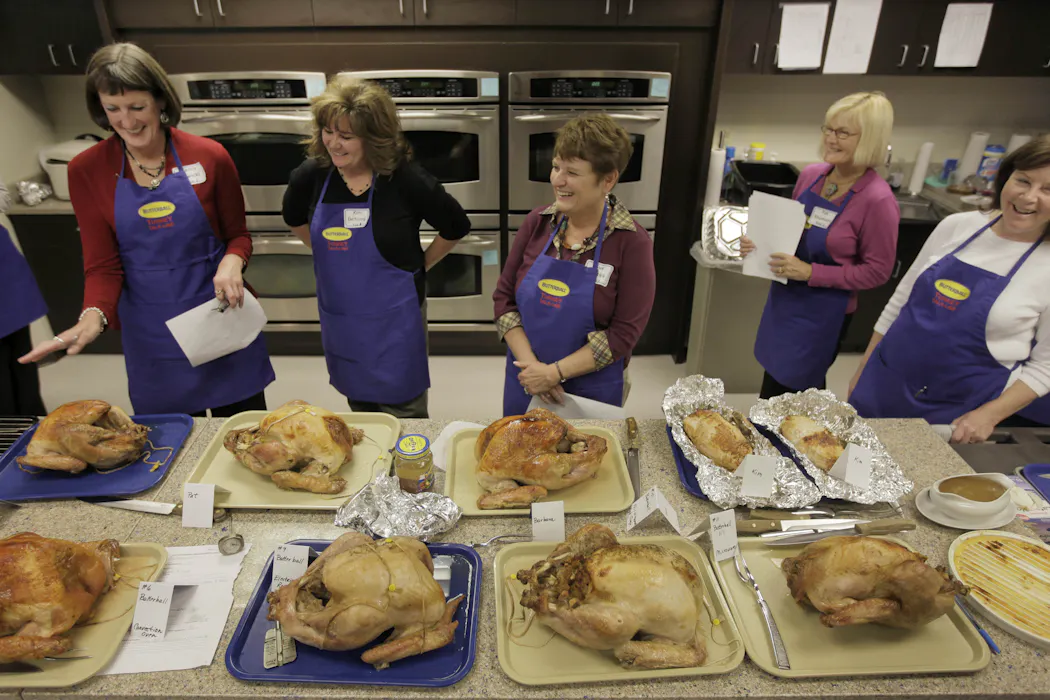
One of the most quintessential American things is having roasted turkey on the table at a Thanksgiving feast. While that remains the norm, Americans are eating much less of this kind of poultry today than in the past. Annual consumption has fallen by more than 25% over the past three decades, while demand for chicken has soared.
I’m a business school professor who has written about the economics of various holidays. I find turkeys fascinating, because even though I live in an urban area, a large group of wild turkeys has taken over my backyard.
And I can offer several good explanations for the turkey slump.
Receding since the late 1990s
Domesticated turkeys, unlike their wild cousins, are a big business.
More than US$5 billion worth of the birds were sold in 2025. That’s no chicken feed.
However, it’s the latest sign of the industry’s decline. U.S. consumers are drifting away from eating turkey. Back in 1995, the average American consumed 17.7 pounds (8 kilograms) of turkey each year. By 2025, consumption had fallen to just 13.2 pounds (6 kg).
While turkey consumption started to recede in the late 1990s, it began accelerating around 2008, when the Great Recession was underway. Occasionally, turkey production ticks upward a little, as happened in 2026 as demand for niche products like turkey jerky rose, but the long-term picture is one of steady decline.
It’s not like Americans are eating less poultry overall. Chicken consumption has steadily grown during this turkey slump, rising about 50% from 69 pounds (31 kg) in 1995 to 104 pounds (47 kg) in 2025.
In other words, we’re eating almost eight times more chicken than turkey. Well, at least the 95% of Americans who aren’t vegetarian or vegan are.
More costly at every step in the supply chain
Government agencies, researchers and some pundits have identified two possible explanations for why Americans are eating less turkey.
First: pocketbook concerns. Turkey often costs more than chicken, except when it goes on sale just before Thanksgiving.
Over the past 25 years, wholesale turkey prices per pound averaged about 10% higher than chicken, according to U.S. Department of Agriculture data. That price, which is what big retailers typically pay, affects what you owe at checkout.
For example, just before the 2026 Thanksgiving sales began, a Bell & Evans fresh whole turkey was going for $4.99 a pound, while a Bell & Evans fresh whole chicken cost $3.49 a pound at my local supermarket. That’s $1.50 a pound difference, which is significant in an economy where many people feel economically pinched.
Nationally, you will see similar price differences, with fresh turkey being more expensive than fresh chicken.
So, why is turkey pricier than chicken?
Both turkeys and chickens are fed a diet of corn and soybeans. However, turkeys consume a higher percentage of soybeans. And soybeans currently cost about twice as much as corn.
The latest data shows turkey feed costs are up almost 80%, without accounting for inflation, since 2000, while chicken feed costs have climbed only 60%.
Too big for more families
The second reason has to do with the size of today’s families.
The typical Bell & Evans whole chicken my grocery store sells weighs approximately 4 pounds, while its fresh turkeys tend to range between 10 and 12 pounds.
Big birds are handy if you have a lot of mouths to feed, but American families have shrunk over time. Today the average household includes only 2.5 people. The extra half-person does not represent children who are picky eaters or people who don’t like eating meat. It just means the typical family has between two and three people.
That means cooking a 10-pound turkey results in 4 pounds of food per person, which is far more than almost anyone who is not a competitive food eater can consume.
Cooking a 4-pound chicken, however, results in a more manageable 1.2 pounds of poultry per eater after getting rid of the bones, which make up about a quarter of a chicken. In simple terms, buying a whole chicken often results in one or two meals per person. Cooking a whole turkey often yields enough meat to produce meals for an entire week.

Getty Images
There are two more factors to consider. First, a 10-pound turkey costs a lot more than a 4-pound chicken. A 10-pound fresh bird at $4.99 a pound sets you back almost $50, while a $3.49-per-pound chicken that weighs 4 pounds costs under $14.
Last, bigger birds take longer to roast. Cooking a 10-pound turkey in an oven takes about three hours, while a 4-pound chicken takes about two. That extra hour is a big burden in an increasingly time-pressed society.
In case you were wondering, the world record for eating a turkey is held by Joey Chestnut. He gobbled down 9.35 pounds of turkey off the bone in 10 minutes in 2014. Please do not try that at home.
What about wild turkeys?
If you need to save money on turkey this holiday season, you should consider buying a frozen one. They are much cheaper.
But can you save even more by going turkey hunting?
Given all the large wild turkeys roosting in my backyard, I looked into what it would take. I live in Massachusetts, where hunting wild turkeys before Thanksgiving is legal.
For much of the fall, hunters are allowed to use only bows and arrows. Beyond needing to be a proficient archer, they also have to purchase a sporting license, a turkey permit and an archery stamp for $95 each year.
Having learned about that, I’m sticking to buying my turkeys in the supermarket.

Jay L. Zagorsky does not work for, consult, own shares in or receive funding from any company or organization that would benefit from this article, and has disclosed no relevant affiliations beyond their academic appointment.
Original source: https://analysis1.mil-osi.com/2026/11/16/americans-are-eating-way-less-turkey-than-we-used-to/