

Source: The Conversation (Au and NZ)
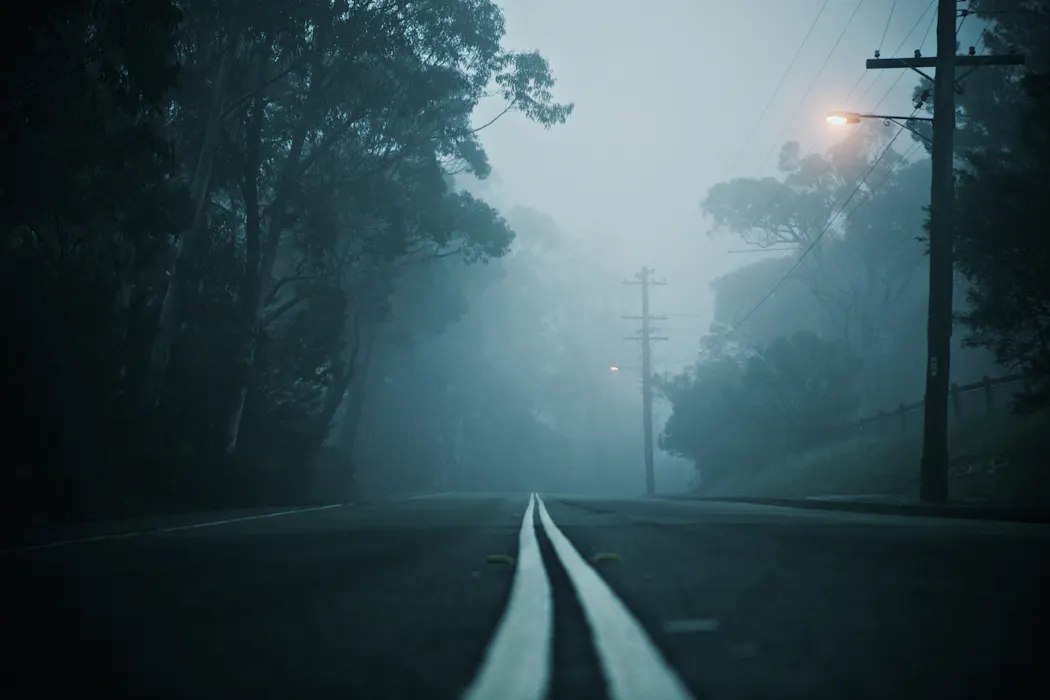
If you’ve ever been grounded at the airport due to thick fog, you’ll understand the frustration this often overlooked weather phenomenon can cause.
Fog prediction is incredibly important for aviation. But fog can also wreak havoc outside of airports.
In December 2023, 20 people were taken to hospital after thick fog contributed to a multi-car crash on Victoria’s Western Freeway.
These transport-related risks prompted us to conduct Australia’s first nationwide study of fog. We found fog is forming more often across southern Australia, in contrast to many other parts of the world.
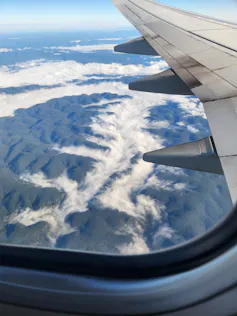
Kimberley Reid
How fog forms
Fog is a type of low-lying cloud that forms near Earth’s surface. When water vapour in the air cools enough to condense into a liquid, tiny droplets of water are suspended in the air. These droplets, which are not heavy enough to fall as rain, block light from reaching our eyes.
Scientists classify low clouds as fog if their presence reduces visibility to below one kilometre, meaning you can only see objects within 1,000 metres.
Three main ingredients are needed to make fog: moisture in the air, cool temperatures and cloud condensation nuclei, which are tiny particles such as dust and pollution that allow water molecules to meet and form larger droplets.
Read more:
Curious Kids: where do clouds come from and why do they have different shapes?
What’s the difference between fog, mist and smog?
There are several different types of fog, but in Australia radiation fog is the most common.
Radiation fog typically occurs in the early hours of a calm winter morning and disappears after the sun rises, when the land warms up again. This is because land releases heat back into space more effectively on clear, starry nights compared to cloudy ones. As the land cools, moisture near the surface condenses into fog.
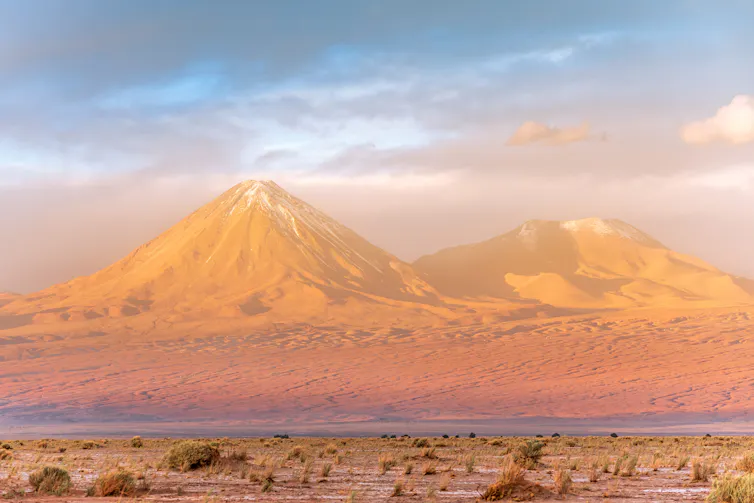
Another type of fog is sea fog, which forms when warm, moist air flows over cooler ocean waters. In Chile’s Atacama Desert, regular sea fogs are captured by huge meshes to produce drinking water and even grow lettuce.
Mist is like fog, but less dense. This type of low-level cloud reduces visibility to between one and five kilometres.
When pollution mixes with a low-level cloud, we call this smog, a merging of the words smoke and fog. Before air pollution laws were introduced in the 1950s, deadly multi-day smogs plagued big cities such as London and industrial towns like Donora in the United States.
A related weather phenomenon is haze, which forms when polluted air limits visibility but doesn’t contain enough water to form a cloud.
GiorgioG/Getty
Fog in Australia
Fog is less common in Australia compared to other parts of the world such as Delhi, San Francisco and Cape Town. Our warmer climate, relatively clean air and warm ocean currents all contribute to this.
As a result, there isn’t much research into fog trends in Australia. Most studies focus on the impact of fog on airports and the wider aviation industry.
From a practical perspective, fog is hard to observe and requires special instruments that are typically only located at airports.
For our new study, we used the Bureau of Meteorology’s high resolution reanalysis. This tool combines weather observations about temperature, pressure, humidity and winds with advanced weather models to estimate whether fog was present each hour from 1980 to 2024. Using these models allows us to cover places that don’t have weather stations.
Read more:
Stalled weather: how stuck air pressure systems drive floods and heatwaves
What we found
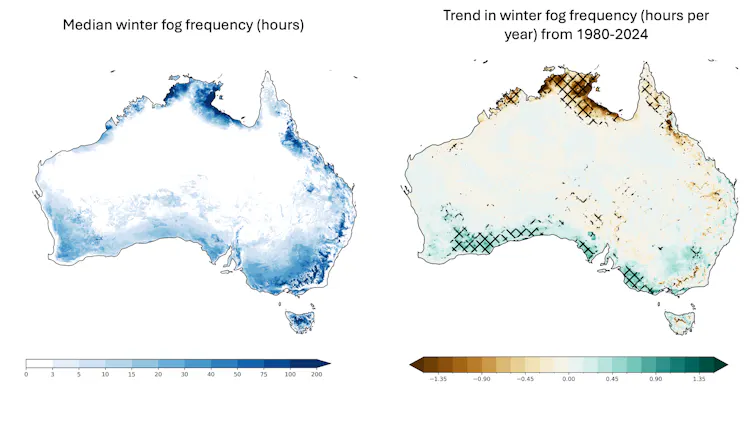
Our study shows fog is most common in Australia from autumn to spring. Winter is the foggiest season.
In general, the closer you are to the coast, the more likely you are to experience fog due to more moisture being available in the air. Areas with mountains and valleys, such as the Great Dividing Range, are particularly prone to fog.
Canberra is by far the foggiest city in Australia, likely because it is in a valley. It pays to keep that in mind when booking morning flights to or from Canberra, particularly in winter. The coastal Northern Territory also appears to be a hotspot for fog. But it’s unclear why or how reliable this result is, given the lack of fog observations in the Australian tropics.
Most surprisingly, our findings suggest more winter fog is forming over parts of southern Australia, particularly in western Victoria, South Australia’s Eyre Peninsula and southeast Western Australia.
In these regions between 1980 and 2024, there was about an extra 30 minutes to one hour of fog each year. That might not sound like much, but these places typically record fewer than 50 hours of fog over an entire winter.
Reid et al. (2026)
Bucking the trend
This result goes against the global trend of decreasing fog. Many places around the world are experiencing less fog due to global warming and reduced air pollution.
We suspect southern Australia’s increasing fog trend is linked to broader weather patterns, particularly scarcer rainfall and more frequent high pressure systems during winter. High-pressure systems discourage cloud formation, producing clear winter nights that often lead to foggy mornings.
To understand whether this trend will continue, we need to conduct more research.
We must also keep improving our weather models and invest in Australia’s weather and climate modelling sectors. Only then can we prepare for future fogs, avoiding as many grounded flights and multi-car pile ups as possible.
Read more:
CSIRO is cutting climate science jobs. This is what’s at stake for Australia

Kimberley Reid receives funding from the Australian Research Council.
Andrew King receives funding from the Australian Research Council (Future Fellowship and ARC Centre of Excellence for 21st Century Weather) and the National Environmental Science Program.
Original source: https://analysis1.mil-osi.com/2026/11/16/foggy-days-are-becoming-more-common-across-southern-australia-new-study/