

Source: The Conversation – USA

The 2026 midterm elections changed the balance of power in Washington, D.C. It also proved to be a pivotal election in Pennsylvania.
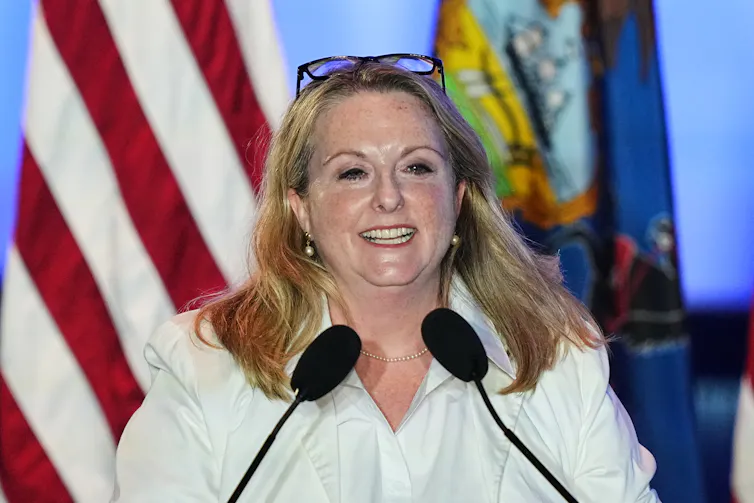
Gov. Josh Shapiro handily defeated Republican challenger Stacy Garrity, the current state treasurer. Not only that, it looks like Democrats will expand their majority in the state House and have flipped the state Senate, earning a 26-24 majority.
That gives Shapiro the coveted party trifecta – single party control of both the governor’s office and the General Assembly.
Given the pent-up demand among Democrats who have not fully controlled Harrisburg for over 30 years, the excitement is palpable among Pennsylvania Democrats.
I teach public policy at Penn State Harrisburg and have a particular interest in Pennsylvania state politics. Now that the political fault lines are clear for the next two years in Pennsylvania’s state government, it is worth considering what Democrats may do with their newfound power.
For a glimpse at potential Democratic priorities, it is helpful to look at what legislation the current Democrat-controlled House has been sending the Republican-controlled Senate.
AP Photo/Matt Rourke
Election reform
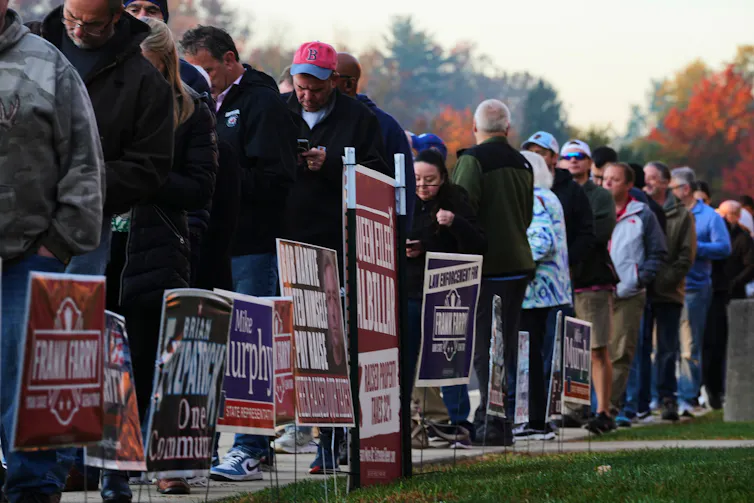
Election reform has been a perennial priority in Pennsylvania since the passage of Act 77 of 2019 and the 2020 election.
Act 77 authorized no-excuse absentee balloting and eliminated straight-ticket voting where voters could vote all at once for a single party, which was a bipartisan compromise but became a political flash point in President Donald Trump’s efforts to question the 2020 election results. No-excuse means that voters do not need to provide a specific qualifying reason to vote by mail.
Democratic election law priorities have included requiring counties in Pennsylvania to use ballot drop boxes, maintain no-excuse mail-in voting, set clear rules for ballot curing where voters are able to correct issues with their submitted mail ballots instead of having them invalidated, institute precanvassing to speed the counting of absentee ballots, and allow independents to vote in open primary elections.
Democrats may now be able to pass all of these without having to compromise with Republican demands for stricter voter ID requirements.
Marijuana
Shapiro has repeatedly included revenue projections from adult-use recreational marijuana legalization in his budget proposals, and the House passed a legalization bill in 2025. Democrats had said that they will legalize recreational marijuana if they took the Senate in 2026. But important details of legalization remain to be worked out, even with Democratic control.
Democrats have sponsored divergent bills on whether sales should be through private dispensaries or state stores, similar to how alcohol is sold in Pennsylvania.
Social equity measures meant to repair some of the harms of the war on drugs on communities disproportionately affected by the criminalization of marijuana will also be key to eventual passage. These include things such as expungements of past convictions, setting aside licenses for minority dispensary owners, and community reinvestment of cannabis tax revenues.
Even with Democratic control, the devil will be in the details. But a Democratic trifecta in Pennsylvania makes it even more likely that the commonwealth will be among the next states where adult-use recreational marijuana is legal.
AP Photo/Matt Rourke
Data centers and AI
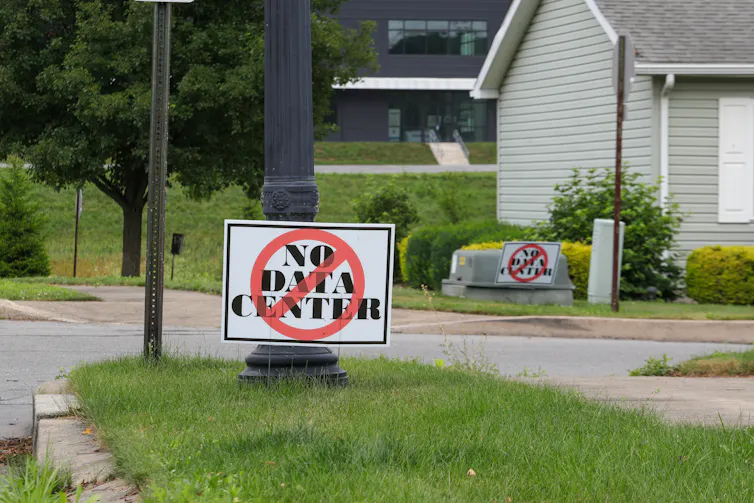
The House has passed several measures to regulate artificial intelligence and the data center build-out in the commonwealth. This includes a measure that would require warnings on advertisements that were made using AI and several that target energy costs, water use, local government authority and implementing and the Governor’s Responsible Infrastructure Development plan.
These measures and others are likely to remain on the Democrats’ agenda. Additionally, criticism over the AI-generated ads fielded by the Garrity campaign, which are regulated in other states, may add this issue to the state’s AI policy agenda.
Affordability
Given that this election was likely heavily influenced by voters’ concerns about affordability, Democrats will need to show progress on bringing down prices where they can. The Democrats’ Affordability Action Plan includes measures such as property tax and rent rebates, other housing protections for underserved communities, doubling the income tax credit and increasing food and energy security funding.
Another affordability priority for House Democrats since taking control of the chamber in 2023 has been raising the state’s US$7.25 minimum hourly wage over time. The bill passed by the House in March 2026 would have raised it to $11 in 2027, $13 in 2028 and $15 in 2029, with subsequent annual cost-of-living adjustments, if it also had been passed by the Senate. This is important in Philadelphia, given that state law prohibits the city from setting its own minimum wage. The legislation will have to be introduced and passed again by the new General Assembly.
Same-sex marriage and antidiscrimination
Same-sex marriage equality may seem like a settled issue with the 2015 Obergefell v. Hodges decision by the U.S. Supreme Court, but the 2022 overturning of Roe v. Wade by today’s more conservative court has sparked concerns of further changes to precedent.
Pennsylvania’s statutory definition of marriage is still between “one man and one woman,” something that a bipartisan majority in the House tried to change in 2026 to “two individuals.” Democrats are very likely to pick this back up and may even attempt a more durable, but also more procedurally difficult, constitutional amendment that enshrines same-sex marriage rights.
Pennsylvania also does not include LGBTQ individuals in its nondiscrimination protections. The Democrats in the House passed a bill that would add sexual orientation and gender identity to the state’s Human Relations Act in 2026, but it also died in the Senate. Democrats are likely to pick this up again in 2027.
Ultimately, Democrats will not be able to do everything. They will need to decide what to prioritize and what to leave behind.
Paul Weaver/SOPA Images/LightRocket via Getty Images
Read more of our stories about Philadelphia and Pennsylvania, or sign up for our Philadelphia newsletter on Substack.

Daniel J. Mallinson does not work for, consult, own shares in or receive funding from any company or organization that would benefit from this article, and has disclosed no relevant affiliations beyond their academic appointment.