

Source: The Conversation – USA (3)
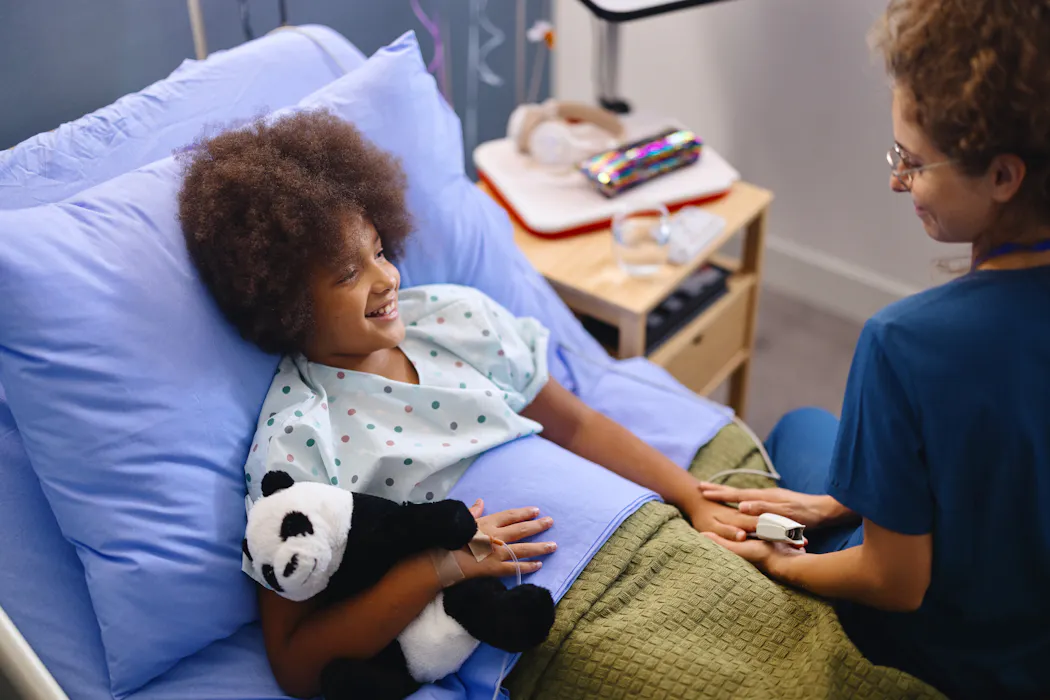
Anchiy/E+ via Getty Images
Pediatric medicine generally entails caring for patients at the beginning of their lives – performing newborn checkups, treating childhood illnesses and supporting adolescents in their health as they move toward adulthood.
So people are often surprised to hear about specialists like us who work in pediatric palliative care, helping children facing serious illness who may be nearing the end of their lives.
This approach to care focuses on relieving suffering and addressing quality of life for children and families facing complex, life-limiting medical conditions. We also work to ensure that every family who needs it has access to this care, because right now, these programs aren’t available to most families globally who need them.
Holistic, empathetic care
Pediatric palliative care is an approach that emerged out of the adult hospice and palliative care movement in the 1990s to early 2000s as a distinct discipline.
Globally, an estimated 7 million children die annually. Children with life-threatening health conditions often live longer between the time of diagnosis and death than adults. They benefit from approaches to care that consider the needs of their caregivers and family members.
Pediatric palliative care is provided by a team of professionals, including physicians, nurses, social workers, child life specialists, chaplains and other allied health professionals who take a comprehensive approach to a child’s care as they live with serious illness and ultimately approach the end of their life. The goal of this care is to support families in making every day as good as it possibly can be, regardless of whether or not a child’s life remaining is short. At the heart of this approach is the belief that each child has a right to holistic, empathetic care during illness and throughout end of their life that considers their unique social, cultural, physical and spiritual needs.
For example, an infant who is diagnosed with a rare genetic disorder that affects vital organ function and shortens life expectancy may need to be in and out of the hospital to manage acute illnesses and complex symptoms, such as pain and difficulty breathing. In turn, her parents may need help with deciding which treatments will be most helpful or may cause more suffering than benefit.
A palliative care team works with patients and caregivers to formulate a plan that ensures this baby gets care that affords her opportunities to experience as many happy moments as possible. This can improve the lived experience of this child and her parents.
Avoiding unnecessary care
Children and families who have benefited from pediatric palliative care describe these services as the supportive lifeline that helped them to navigate the complexities of diagnosis, life with serious illness and, ultimately, death and bereavement.
Over the past 20 years, there has been growing evidence suggesting the benefits of this approach. Children who receive care from pediatric palliative care specialists have less pain, nausea and other distressing symptoms that can affect their day-to-day function and overall quality of life.
Research also shows that children admitted to intensive care settings for managing life-threatening illness are more likely to receive care that aligns with their goals. When a palliative care specialist is consulted, patients are less likely to opt for life-sustaining therapies that would not change their long-term prognosis.
The US on the cutting edge
The U.S. is on the global forefront of pediatric palliative care: Nearly 80% of U.S. children’s hospitals have formal, interdisciplinary programs to provide this specialized care. But access to services in a clinic setting or at home is less consistent. Not every hospital-based palliative care program is connected to outpatient or home-based services, creating gaps for patients and families who need to access this supportive care between hospitalizations.
Generally, palliative care in the U.S. is more readily available in urban settings and at academic medical centers than in rural areas and community hospitals. These differences are most pronounced in rural states and the Southeast, a region of the country that has historically had health disparities across racial and socioeconomic differences. It can be difficult for children in these places to access patient-centered, interdisciplinary supportive services.
Global disparities
Outside the U.S., pediatric palliative care can be even more difficult to access. Though it’s hard to measure, estimates suggest that more than 21 million children worldwide would benefit from a pediatric palliative care approach.
More than half of the world’s population live in countries where the availability of any palliative care is defined as either emerging or progressing, according to the World Health Organization. Only 14% of countries – 28 total – are considered to have advanced levels of palliative care development. The numbers are fairly similar for pediatrics, with one study identifying only 11 countries as reaching the highest level of pediatric palliative care development.
As many as 97% of children in need of this approach live in low- and middle-income countries. Children in these countries have less access to medical diagnostic and therapeutic interventions and are often diagnosed at later stages of illness with less access to curative therapy.
The types of pediatric serious illnesses seen in the developing world are also very different from the landscape in the U.S. The greatest need for pediatric palliative care in developing nations – about 30% of cases – is in children with HIV. Among other children needing palliative care, about 18% are living with complications from prematurity, roughly 16% suffer from congenital malformations, and about 16% are dealing with injuries leading to severe neurologic impairment.
In contrast to many high-income settings, children with malignant diseases such as leukemias and solid tumors represent a relatively small proportion – about 4% – of patients who would benefit from a palliative care approach. In these regions, the predominant ailments are HIV/AIDS, premature birth and birth trauma, congenital anomalies and injuries.
Filling in the care gaps
In low- and middle-income countries, essential medications like morphine, used for controlling pain and other symptoms, often aren’t available. In addition, healthcare workers often haven’t been trained in foundational principles of palliative care.
On top of that, many of these countries don’t have the political infrastructure to provide basic healthcare, much less facilitate developing a comprehensive palliative care program for children.
The good news is that there are existing models for countries that are starting from scratch to build upon. And there’s room for innovation. Established community partnerships and technologies can be leveraged in new ways – for instance, using online learning and video conferencing to help train healthcare workers and build relationships.
We believe pediatric palliative care is the heart of what healthcare should be when a child faces a serious, life-limiting illness, regardless of where they live in the world. Because even when medicine cannot cure, it can always heal and comfort.

Khaliah Johnson has received funding from the Cambia Health Foundation to support her leadership and scholarship in pediatric palliative care. She is on the board of the Georgia Hospice and Palliative Care Organization and a non-profit organization entitled “Families First.”
Emilee Flynn does not work for, consult, own shares in or receive funding from any company or organization that would benefit from this article, and has disclosed no relevant affiliations beyond their academic appointment.
Original source: https://analysis1.mil-osi.com/2026/11/03/pediatric-palliative-care-addresses-the-unique-needs-of-seriously-ill-children-and-their-families/