

Source: The Conversation – UK
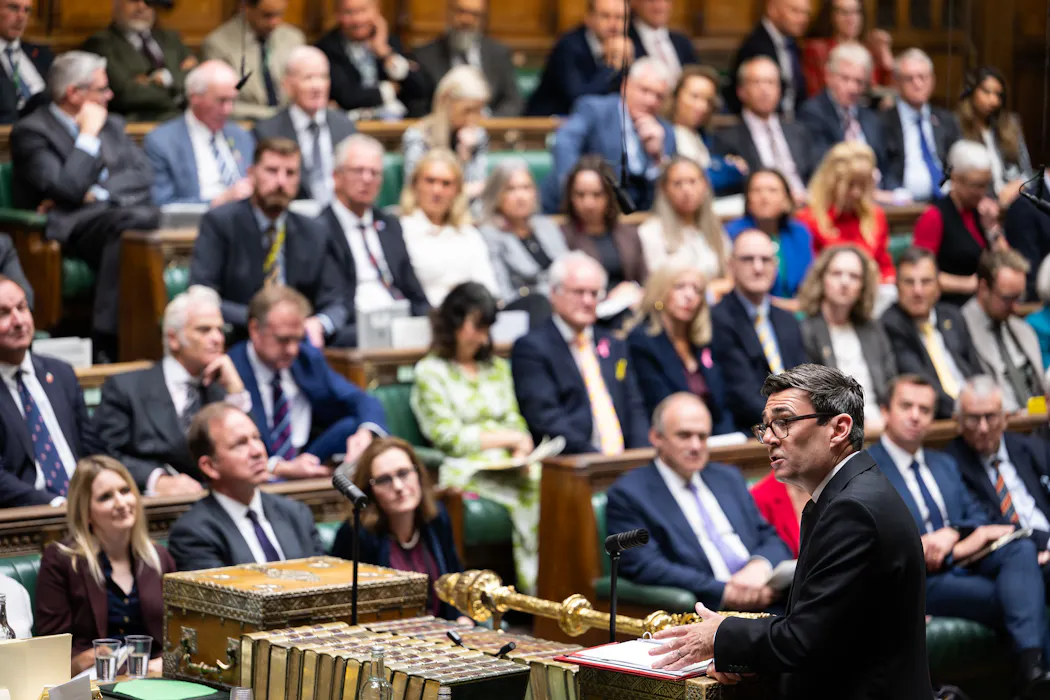
Prime Minister Andy Burnham promised from the start that he will do things differently. Whether on social care, electoral reform or ranking pub snacks with Chancellor John Healey in a video for Number 10’s social media channels, Burnham wants voters to believe he is committed to a new way of politics. In part, this means that he wants a process that is more about collaboration and problem-solving than point-scoring.
Burnham laid out this ambition in his first speech as prime minister outside Downing Street. But one major challenge to this new ethos is the Punch and Judy show that is Prime Minister’s Questions (PMQs).
My research explores the dynamics between politicians, as well as between politicians and the public. PMQs is the big moment of theatre in the parliamentary week – the one dedicated session where the prime minister is expected to answer questions from parliament. And it is the only opportunity that most MPs have to question the prime minister directly.
For his part, Burnham has also promised a “People’s Major Questions” session on social media, to answer questions from the public after PMQs.
It can be an important mechanism for parliamentary scrutiny and public accountability – 82% of people in the UK are aware of PMQs. But the event is often criticised for its noisy clashes between the prime minister and the leader of the opposition.
It has come to epitomise the adversarial nature of politics in the Commons, and researchers have found that impoliteness, verbal jabs and personal attacks are now expected in this arena. Research into broader perceptions of PMQs finds that the public has a negative opinion of it and see it as a poor example of how to behave.
Back in 2005, future prime minister David Cameron said that he was fed up of the “name-calling, backbiting, point-scoring and finger-pointing” at Westminster.
But as Conservative leader, he soon got sucked into the rowdiness and was later called the rudest prime minister at PMQs. This came after he called the then-shadow chancellor Ed Balls a “muttering idiot” (later withdrawn for unparliamentary language) and likened Ed Miliband, then leader of the opposition, to Wallace of Wallace and Gromit fame.

© House of Commons, CC BY-NC-ND
MPs themselves recognise that language in Westminster matters. Burnham’s attempt to reshape politics comes in the context of a general coarsening of political rhetoric that has been linked to the rise of something called “affective polarisation” (when disagreeing with opponents starts to become part of someone’s identity).
During the summer, the leader of the opposition, Kemi Badenoch, was criticised for describing then-education secretary Bridget Phillipson as a “spiteful class warrior”. She had already likened her to a “Gestapo officer” for ending tax exemption on private schools.
And Reform UK spokesman Zia Yusuf used the word “traitor” to describe former defence secretary Ben Wallace over his role in the Afghan relocation scheme in 2021. It was an example of a broader toxicity in public life, that even prompted party leader Nigel Farage to reject Yusuf’s choice of word.
Burnham avoids point-scoring … for now
So how is Burnham holding up in the PMQs arena? The timings of the summer and conference recesses mean that in his first 100 days Burnham faced only four PMQs. His fifth coincided with Healey’s first budget, and it appears to be a case of so far, so good.
Burnham is yet to be sucked into the political point-scoring that has so often plagued PMQs. He has pointed fingers at previous Conservative governments for their failings (Liz Truss’s disastrous mini-budget, for example). But the criticism is often accompanied by promises to fix the issues and an acceptance of the challenges and a need to confront them collaboratively.
This pattern has been most prevalent in his commitment to reform social care. On this, he has repeatedly appealed to working across the floor of the House, and has noted the need to do so to restore the esteem of politicians in the minds of voters.
Interestingly, Burnham has so far chosen not to attack members of other parties where his predecessors may have. At his first PMQs on September 2, as Reform UK was embroiled in various scandals about the party’s finances, Reform MP Danny Kruger asked Burnham a question about youth employment. Rather than attack Kruger over the finances, Burnham answered his question in good faith.
Burnham won praise for this decision, and he used PMQs to congratulate Badenoch on her speech at the Conservative party conference.
These are positive trends, which suggest that Burnham is taking his promises about PMQs seriously. In moments when he could have been sucked into the old noisy clashes, so far he has chosen not to.
The jeering and jibes from the benches continue (and Burnham has done “People’s Major Questions” only once). But in many ways the respect that he and Badenoch have shown one another thus far is unusual.
While it is too early to tell how long this will last – there may be many head-to-heads between now and the next general election – there are glimmers of hope for those who dislike the adversarial nature of PMQs and politics at Westminster. In an era of deep distrust in politicians, language and behaviour in parliament matter. Burnham (and Badenoch) has an opportunity to reimagine how this element of how politics at Westminster works.

Lauren Martin does not work for, consult, own shares in or receive funding from any company or organisation that would benefit from this article, and has disclosed no relevant affiliations beyond their academic appointment.
Original source: https://analysis1.mil-osi.com/2026/11/03/andy-burnham-at-prime-ministers-questions-whats-he-doing-differently/