

Source: The Conversation – USA
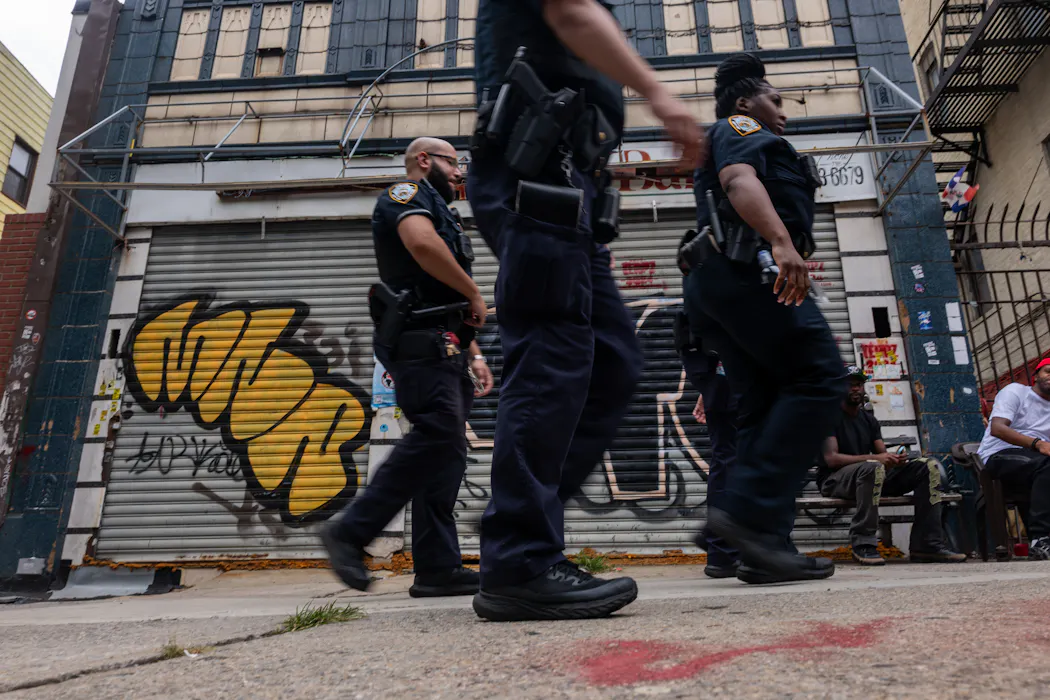
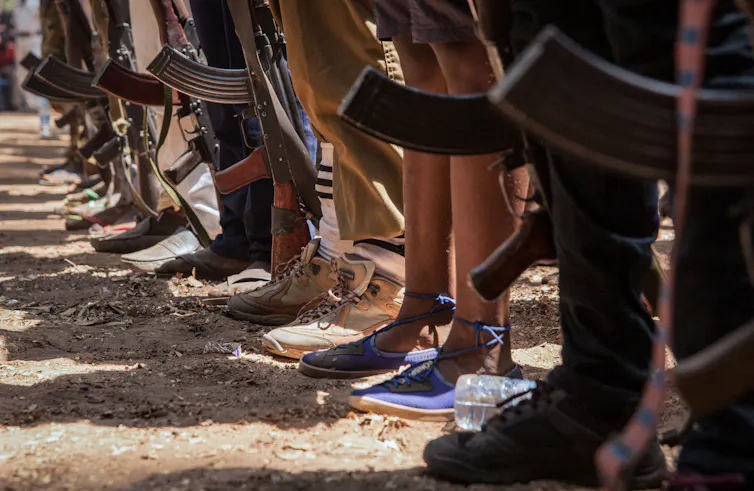
When Americans hear of child soldiers, they may imagine tragic images of children wielding rifles on distant battlefields.
But the conditions that help warlords recruit children into armed conflict abroad also help gang leaders draw young people into violent organizations in the U.S.
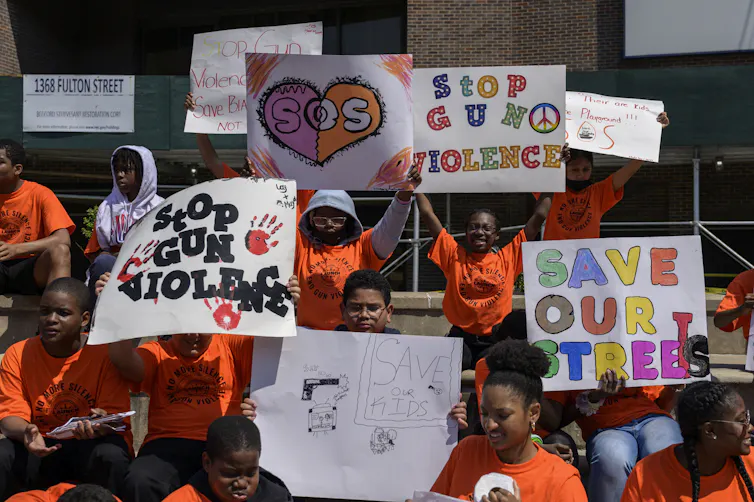
In cities across the country, gang violence continues to claim lives and fracture communities. A September 2025 FBI report recorded 69,273 incidents involving gang activity – most often assaults – between 2021 and 2024. Young people ages 13 to 16 were the most frequently reported offenders.
Policy responses to this crisis have largely focused on policing, prosecution and tougher penalties. Those responses cost federal, state and local governments billions of dollars annually.
Far less attention is paid to why violence offers some young people a sense of purpose, belonging and identity in the first place.
Gang-involved youth in the U.S. are not child soldiers in a legal or conventional sense, and American gangs are not rebel or insurgent groups. Nonetheless, the ways some young Americans become embedded in violent organizations – and the difficulty of leaving them – overlap remarkably with the child soldier experience.
As a former child soldier who is now a peace and conflict studies researcher, I have lived through organized violence and have since studied how violence shapes young people’s relationships, identities and opportunities. This work has led me to ask how decades of research on child soldier recruitment and reintegration might help young Americans caught in gang violence.
Angela Weiss/AFP via Getty Images
Recruitment is not always coercion
Research on child recruitment – and my own peacebuilding work, including negotiating the release of abducted children in Mali, South Sudan and northern Nigeria – shows that children are not always forced into armed groups at gunpoint. Their pathways into such groups cannot be understood as the result of coercion alone.
Armed groups may reach children through peers, community networks, relatives or other social connections. In places marked by insecurity and limited opportunities, children may not make a single decision to enter violence. Rather, relationships and constrained choices can draw them closer until entry seems like a viable way to gain a perceived sense of security and control over their own lives.
In many American cities, gang involvement follows a similar path: A 2025 study of 1,808 male adolescents in Multnomah County, Oregon, who have been referred to the juvenile justice system, found that exposure to gang-involved peers and relatives was associated with a greater likelihood of gang membership.
Through social networks, as well as music and online culture, gangs can project status, power and recognition. For young people who feel excluded by peers or disconnected in school, or who face instability at home, these signals can make gang involvement appear to offer something immediate and tangible: safety, identity and belonging. Researchers have found that some young people also join partly for protection, even though gang members face a higher risk of victimization than their peers.
Social media has intensified these dynamics, spreading images of violence, wealth, weapons and notoriety far beyond the neighborhoods and front lines where gangs and armed groups operate. The conflict in Sudan offers a stark example: Young fighters have been publicly celebrated and stylized online, including in videos portraying youngsters in military uniform as heroic “lion cubs” and in AI-generated clips placing them beside senior commanders.
Stefanie Glinski/AFP via Getty Images
The illusion of belonging
Young people in both gangs and armed groups may feel a sense of safety, connection and recognition. But what a young person sees as belonging can become a powerful mechanism of control.
Gang leaders in urban communities, like warlords in conflict zones, often position themselves as providers, protectors, mentors and father figures. They impose rules, settle disputes, reward loyalty and regulate access to opportunity and protection. For marginalized youth, they offer recognition where there is isolation, structure where there is instability and identity where there is exclusion.
That world gives young people purpose and belonging, but both are conditional on loyalty, obedience and participation, which makes leaving difficult even when the risks of staying become clear.
Why punishment alone falls short
Arrests and incarceration can interrupt violence, but they do not necessarily dismantle the systems that draw young people into gangs.
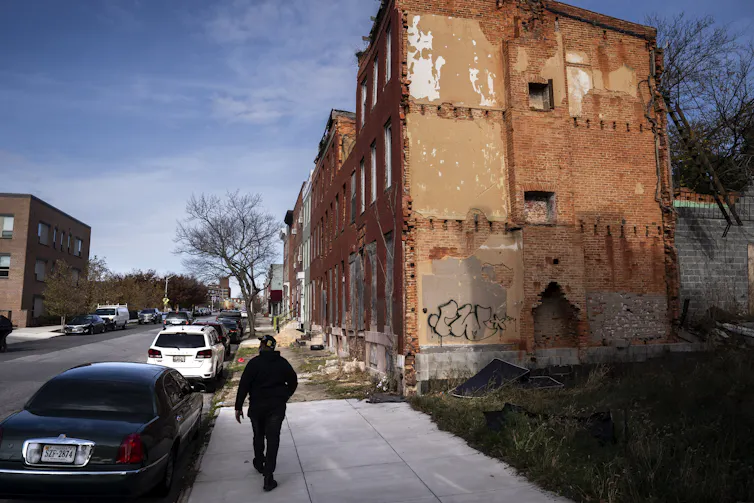
As in conflict settings – where removing children from armed groups does not eliminate commanders, recruiters, networks or incentives – incarcerating young Americans can remove participants from the street without disrupting the structures, relationships or conditions that lured them to gang involvement. When they are released, those same influences may remain, making a return more likely.
This does not mean that young offenders should not be held accountable for violent acts they commit. But evidence from juveniles convicted of serious offenses, including felonies, suggests that punishment beyond what is necessary for public safety does not produce greater deterrence. Young people are rarely the architects of the systems that exploit them. When accountability is directed primarily at the young person at the bottom of that structure, the organization itself can remain intact.
Global prosecutions for child soldier recruitment have largely focused on commanders who direct and exploit children. Likewise, reducing youth violence requires attention to those who organize it, not only those caught in it. If a gang’s leadership, or the networks that profit from it, remain in place, billions spent deterring young offenders will not protect American streets or the children who walk them.
Jabin Botsford/The Washington Post via Getty Images
Exit is a process
One of the hardest lessons from helping child soldiers return to their communities is that leaving violence does not mean the transition is complete.
Children who leave armed groups are often disarmed, demobilized and provided with vocational training, education and material assistance. But training someone to make a living is different from creating the conditions – a functioning market, infrastructure, mentorship and networks – in which that person can succeed.
For example, when a young person sells the sewing machine or other equipment that a reintegration program gave them to earn a living, it can look like a personal failure. But if the economic environment is unfavorable, or the infrastructure and support systems needed to sustain that new livelihood are absent, those shortcomings may explain the outcome as much as individual decisions do.
A 16-year study in Mozambique found that long-term reintegration of ex-child soldiers was shaped by livelihoods, sustained support, forgiveness and community acceptance. This has a direct lesson for the U.S.: A young person can leave a gang or come home from incarceration and return to a society that primarily sees them as an offender.
A 2021 study conducted across 12 U.S. states found that people with juvenile records face significant barriers to education, credentialing and meaningful employment. Another study found that a juvenile record can hurt an applicant’s employment opportunities.
If the neighborhood, family and institutions around that young person have not changed, the conditions that made violence attractive remain, and stigma can become a mechanism of re-recruitment.
Building alternatives
The U.S. does not need to replicate child soldier reintegration programs, but it can learn from their successes and failures.
Removing young people from violent organizations is only part of the solution. The real measure of success is whether there are legitimate alternatives to the social world that violence provides and whether society can hold young people accountable while still creating pathways for them to build new lives.

Charles Wratto is affiliated with the Center for Peace and Violence Prevention (CPVP).
Original source: https://analysis1.mil-osi.com/2026/10/27/punishment-alone-wont-help-gang-involved-teens-a-former-child-soldier-explains-why/