

Source: The Conversation – UK
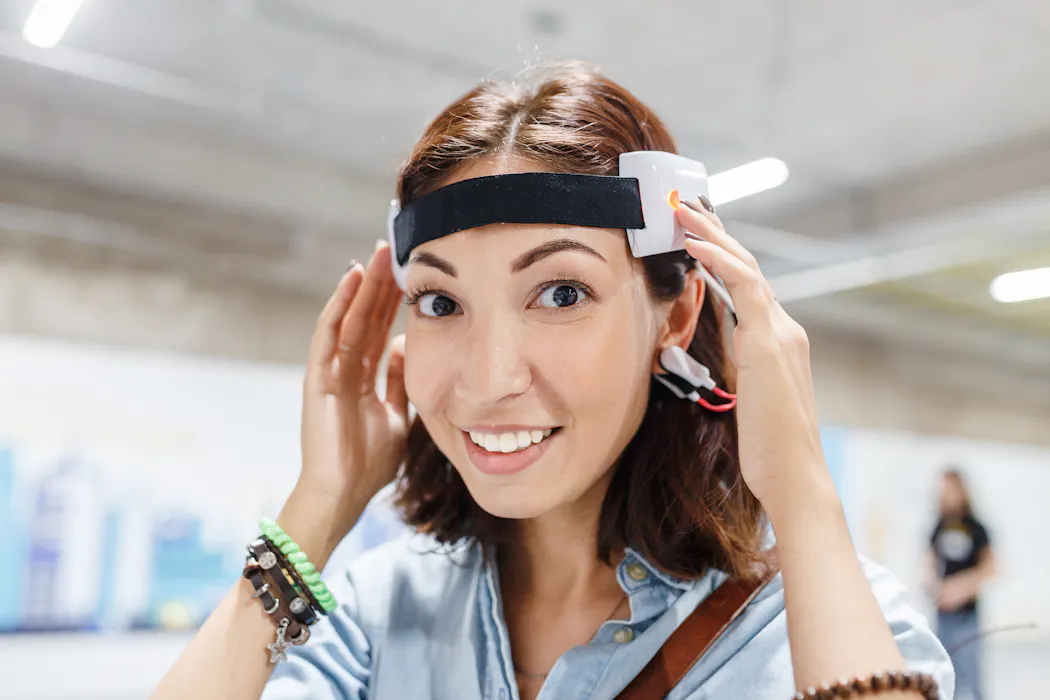
Devices that link human minds to computers are progressing rapidly. Already, these brain-computer interfaces (BCIs) are allowing patients with severe paralysis to communicate, use digital devices or control smart homes with their brains.
Trials are also exploring whether they could help restore patients’ speech or control robotic machinery. One British patient with a spinal injury has even had a BCI fitted to restore some of his body’s movement.
For now, these medical BCIs are largely implantable – requiring surgical insertion into the brain or onto its surface to work. They’re also still experimental.
But alongside them a number of wearable, non-implantable BCIs are increasingly emerging. Despite their novelty, these are already being sold to consumers as tools for enhancing daily activities and treating cognitive and physical issues.
Companies are marketing wearable devices for meditation, attention monitoring and cognitive training. Some are selling wearables they claim can monitor fatigue, be used for gaming or increase states of flow while working. There are wearable BCIs on the market that come as headbands, sensorised headphones or baseball caps.
Generally, these wearables operate in two ways.
There are sensing devices – systems that measure brain activity from outside the body. Typically these use electroencephalography (EEG), which detects tiny electrical brain signals from the scalp, or functional near-infrared spectroscopy (fNIRS), which measures changes in blood flow associated with brain activity.
These aim to translate noisy biological signals into meaningful information – for instance, whether your brain is struggling to focus and needs a rest – or enable some alternative interaction with or control of digital devices. They’re also being explored for treating pain and PTSD or for stroke rehabilitation.
Then there are wearable BCIs that seek to alter brain activity using electrical current or other types of stimulation – known as neuromodulation or neurostimulation technologies. These can be designed to treat medical conditions as well, for example depression, PTSD or nerve pain.
There’s genuine promise here. We know it’s possible to detect aspects of attention, cognitive workload, intent and changes in mental state from brain activity, or to modulate brain activity for beneficial therapeutic effect.
Brain-driven control of exoskeletons designed to help patients regain motor function after stroke has also been repeatedly demonstrated in research settings.
Nevertheless, we’re still some way away from these wearable devices fully realising their potential and becoming part of everyday life. Here’s why.
This neurotechnology is still immature
Companies are currently selling wearable BCIs based on promising but relatively small studies. Sometimes they run these studies themselves. That’s not unusual for emerging tech. But mainstream adoption will require far stronger evidence.
And companies’ claims are often supported by proof-of-concept studies conducted in controlled environments under supervision. That’s very different from independent use in homes, workplaces or daily life.
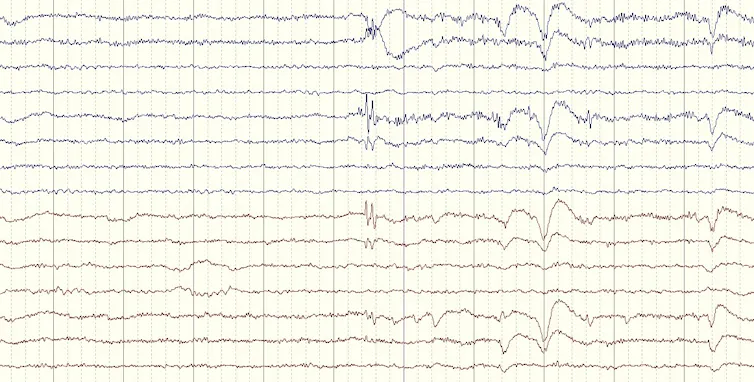
Otoomuch/Wikimedia Commons, CC BY-SA
The brain is highly variable. Signals differ between individuals, age groups, fatigue states, environments and contexts. A system that works well for one person may fail for another. One that works in the morning may perform poorly by evening. Brain signals are also noisy and low amplitude, making them hard to translate into something meaningful.
Altogether this creates one of the field’s biggest technical challenges: reliability.
Artificial intelligence may help, but BCIs face a fundamental small-data problem. Unlike for language- or image-based AI, large standardised datasets of brain activity to train on remain relatively scarce.
What the field needs is large-scale, extended, real-world deployment studies, complete with ethical governance. We need thousands of users, across diverse populations and environments, using systems independently over prolonged periods, producing meaningful data, including about users’ traits and mental states and the experimental or usage setting.
This is how we’ll determine what works, for whom and under what conditions.
A useful device is a good device
It also isn’t enough to simply show that these devices work. The challenge is proving they work well enough, consistently enough, with sufficient obvious benefit that people continue using them. That is much harder.
Some BCIs require active participation. They provide audio or visual feedback to the wearer based on their brain activity, to enable them to train their brain to self-regulate in helpful ways – for instance to focus or to relax. This process is known as neurofeedback.
This demands that users engage repeatedly and intently with their BCI, and persist with learning to regulate aspects of their mental state. If benefits feel subtle, inconsistent or slow to emerge, engagement will drop quickly.
Devices that stimulate or modulate the brain also raise questions around safety, long-term use, overuse and regulation, particularly if consumers seek to “upgrade” mood, cognition or performance without there being robust evidence or safeguards underpinning the technology.
Proving the worth of passive BCIs – those requiring no intentional user control or behavioural adaptation – may be easier. If systems can monitor cognitive state, detect stress or adapt the state of other devices automatically, user burden falls. But this introduces another challenge: privacy.
Consumer EEG is not “mind reading”. It’s extremely difficult to infer what someone is thinking from recorded brain signals without substantial contextual information, such as what someone is looking at or doing. But when brain signals are combined with contextual data, it may increasingly become possible to infer preferences, workload, emotional state or actions they are intending to perform. Mental privacy, consent and ownership of neural data will be critical issues as these devices become more popular.
Ensuring utility, safety and privacy means building ecosystems around BCI deployment, not just devices. These might encompass regulations and standards, real-world validation studies, responsibly managed platforms for collecting user data, and trained professionals to support the safe use of devices.
So when will wearable BCIs become commonplace?
Compared with their implantable counterparts, wearable BCIs could – with the right investment – deliver greater short-term impact. They are more scalable, come with a lower risk to wearers and are capable of generating real-world user data that can improve them rapidly.
Importantly, any ecosystems, trust frameworks and deployment models built around wearable BCIs today may help pave the way for broader adoption of more advanced neuromodulation and implantable neurotechnologies in the future. Investing in wearable neurotechnology now can help establish the technical, ethical, regulatory and societal foundations needed to make future BCIs more effective, trusted and safe.
A five to ten-year horizon for meaningful mainstream progress in wearable BCIs is possible – but only if investment shifts from gadget development toward large-scale validation, ecosystem development and responsible deployment.

Damien Coyle is the founder and CEO of NeuroCONCISE Ltd, which develops brain–computer interfaces. He has received funding from the UK Research Councils and Innovate UK, and is an IEEE Brain Steering Committee advisor and a member of the BSI standard committee for non-medical BCIs.
Original source: https://analysis1.mil-osi.com/2026/10/22/how-long-until-wearable-brain-computer-interfaces-become-mainstream/