

Source: The Conversation – UK
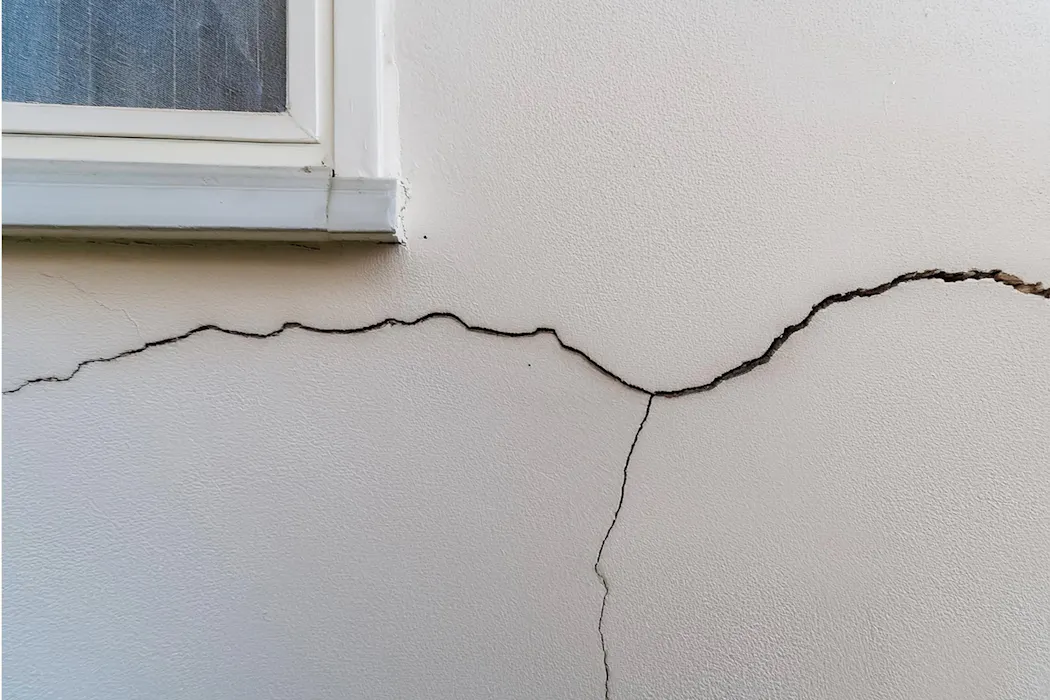
A crack appears beside a window after weeks of scorching weather. As much as you might hope the ground beneath your house will recover with the first rain, the effects of a dry summer can continue long after temperatures fall.
The UK is recovering from the hottest summer on record. The drought, however, has not simply disappeared. According to the Environment Agency, south-east England received 61% of its normal September rainfall, leaving its soil moisture deficit around twice the seasonal average.
The financial consequences are staggering. After the UK’s 2022 heatwave, insurers recorded 18,000 claims from homeowners in the second half of that year for subsidence (the gradual sinking of the ground surface).
In 2025, domestic subsidence payouts reached £307 million, 10% above 2024 figures. Between April and June 2026, the average paid claim reached £20,000. Although payouts include repair costs, the amount shows the scale of the damage to houses by climate change.
Clay-rich soils commonly lose water and contract during drought. If that happens unevenly beneath a foundation, one part of a house may settle further than another, producing cracks in its walls. Trees may intensify local drying as their thirsty roots extract water from the ground.
When rain replenishes moisture, some clays swell again, potentially pushing foundations upward. The recovery, however, is neither complete nor instantaneous. A heavy shower may wet the surface without restoring moisture several metres below ground, and different parts of a building may move at different rates.
Cycles of drought and rain can displace salt and sticky clays within sandy soils and clay-like silty soils. While that displacement generally makes these soils stiffer, it can also make them susceptible to sudden subsidence when large volumes of water flow through the pores opened up after the summer drought, weakening the contacts holding the grains apart.

Andriy Solovyov/Shutterstock
These soils can show problems normally associated with “collapsible soils”, which are explored in my 2019 study of English loess, a fine, wind-blown silty sediment that’s very porous. My research shows that seemingly similar silty soils can behave quite differently, depending on how they formed and how their particles became arranged and bonded over time. Some layers are better at supporting loads than others.
Where soils are susceptible to collapse once wet, rapid subsidence may be further escalated by a leaking drain or poorly sited soakaway (an underground drainage system that collects surface rainwater, stores it and allows for it to slowly seep out). That is one of the principal reasons the British Geological Survey (BGS) advises maintaining water pipes and keeping soakaways further from buildings where loosely cemented soils and soluble rocks may be present.
Read more:
Floods and droughts are both signs of water insecurity – they show up in these four places
Two houses on the same street may not respond in the same way. Their foundations may reach different depths or sit on different soil layers. The ground beneath one garden may be shaded by trees, while the next has been paved over. Rainwater can be diverted by a driveway, concentrated by a leaking pipe, or drawn away by roots.
A geological map can flag a potential hazard, but it cannot tell a homeowner whether a particular crack is caused by ground movement. The building, soil and local water conditions all affect that.
Soil is not simply a platform for foundations. Its pores store nutrients and water for plants, lock carbon, carry rain towards groundwater and provide habitats for roots, fungi and earthworms.
Roots are part of the soil’s plumbing. They create pathways for water and hold particles in place. If drought damages fine roots or kills vegetation, the ground may absorb rainfall differently, while its surface becomes more exposed to erosion.
A 2025 review of drought-affected soil studies by the BGS describes how drying may reduce microbial and earthworm activity, weaken soil structure and expose bare ground as plants die back. This makes some soils at a greater risk of erosion by the runoff when rain returns. Soil staying wet for a long time, combined with intense rainfall can increase the erosion risk.
Soil degradation, loss and erosion can affect the food security. In the 2026 harvest survey, UK wheat yields were around 11% below their five-year average and spring barley around 17% below. Some crops like oilseed rape, enjoyed higher yield. The contrasting yields mark why one harsh summer does not produce one uniform outcome across the landscape.
When should you worry?
So what should homeowners do to manage the problem? Many fine plaster cracks are cosmetic. New or widening diagonal cracks, cracks visible inside and outside, suddenly sticking doors or distorted floors merit closer attention. Photograph them with a ruler and date, check that gutters and drains are sound, and seek advice from your insurer and a qualified surveyor if movement appears to be progressing. Do not rush to remove a mature tree: it may change the moisture balance and create a different problem.
The longer-term outlook makes better ground management urgent. The BGS estimates that, by 2070, more than 1.8 million British properties could be in areas where clay is particularly prone to shrinking and swelling. This figure assumes a medium level of future greenhouse gas emissions. If emissions remain high, the number could rise to 4.2 million properties are at risk. This does not mean all these homes will suffer damage. The figures identify potentially vulnerable ground, rather than predict actual subsidence. They also exclude other hazards, such as the sudden collapse of some soils once flooded.
Protecting homes is not just about building stronger foundations. It calls for careful drainage, sensible land and tree management plus healthy soils that can retain and carry water without creating new hazards elsewhere.

Arya Assadi Langroudi receives funding from Royal Academy of Engineering.
Original source: https://analysis1.mil-osi.com/2026/10/20/subsidence-claims-after-drought-ground-can-shrink-swell-or-even-collapse-when-it-rains-causing-damage-to-homes/