

Source: The Conversation (Au and NZ)
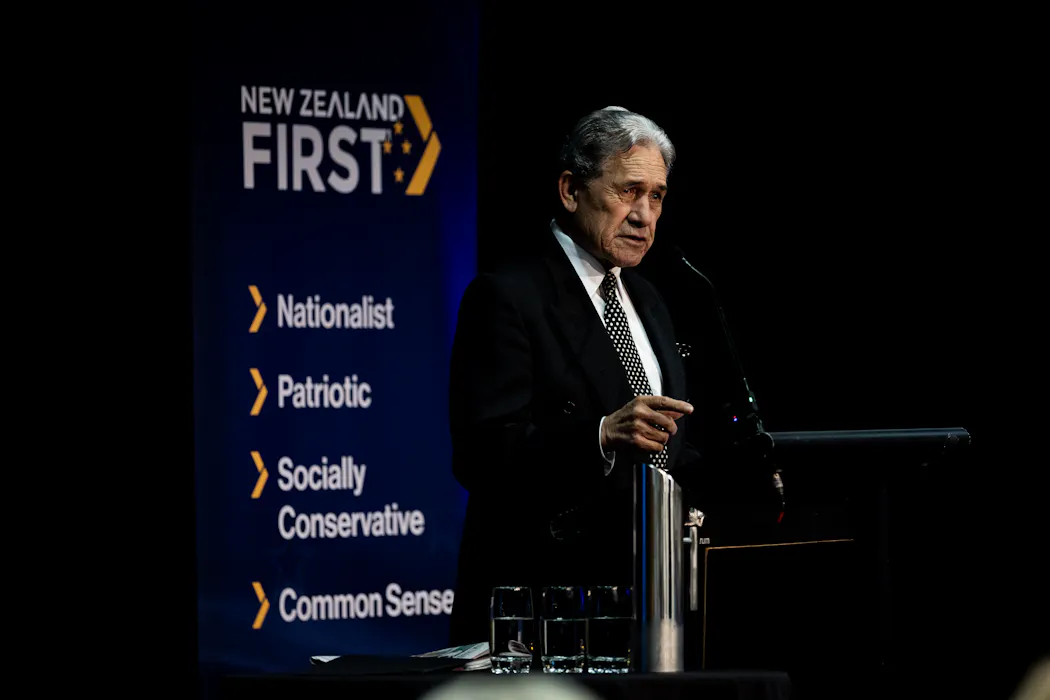
When New Zealand First leader Winston Peters recently announced his party’s immigration policy by saying “diversity is weakness and disunity”, he deliberately set himself apart from the political pack.
It’s become common to hear politicians, community leaders and businesses extol the benefits of diversity. And when the five smaller-party leaders were asked during a recent TV debate whether they supported the idea, all but Peters raised their hands.
Nonetheless, New Zealand has not been immune to questioning whether diversity – and especially diversity, equity and inclusion (DEI) policies – benefit organisations and countries. US President Donald Trump made purging the federal government of DEI programmes a priority.
So, what does the evidence tell us? The most influential work at a company level is in three reports from global management consultancy McKinsey & Company. The third, published in 2023, was titled “Diversity Matters Even More” and looked at 1,200 companies in 23 countries, including New Zealand.
Referring to gender and ethnic diversity in leadership, it concluded companies that “make diversity happen have better financial returns”. McKinsey’s analysis has its critics. But other work has tended to support the basic findings.
The Wall Street Journal, for example, has found diversity is associated with innovation. And a Bloomberg analysis of data since 2018 found female representation on boards and in leadership is associated with higher returns.
Diversity NZ style
In New Zealand, then Treasury Secretary Gabriel Makhlouf said in 2014, “Diversity doesn’t compromise performance. It’s a performance advantage”.
In 2020, the Royal Commission of Inquiry into the terrorist attack on Christchurch Mosques also made the case that diversity in leadership and policy aided social cohesion rather than undermined it.
As a judge for the Diversity Awards over the past decade I’ve observed a wide range of organisations – governmental, sporting, corporate – avoiding the political noise and pressing on with diversity and inclusion policies.
In 2026, the overall winner was New Zealand Football, highlighting how sports organisations and teams have embraced ethnic and gender diversity over recent decades.
High Performance Sport New Zealand’s 2020 report, “True Innovation Requires Diversity”, stressed that “successful people seek out diversity and utilise difference to innovate”.
In 2018, Sport New Zealand-Ihi Aotearoa adopted a campaign to increase gender diversity, with considerable success by 2022.
There is extensive research supporting the association between recognising diversity and sporting success, whether it be at the local park or on the world stage.
Beyond the sports field and corporate office, there is also evidence that countries benefit from the multilingualism a diverse population can provide. A World Economic Forum review in 2018 noted that Switzerland attributes 10% of its GDP to the four national languages spoken there.
The United Kingdom, in contrast, loses 3.5% of its GDP due to poor policies and support for linguistic competence.
This might be one area where New Zealand can do better. While there are three official languages (te reo Māori, Sign Language and English), a broader language policy would normalise and celebrate multilingualism and help bridge different language communities within New Zealand – and with major trading partners.
A super-diverse future
Finally, there is a demographic imperative. New Zealand is already am extremely diverse country. There is a significant Indigenous population and 30% of New Zealanders were born overseas (43% in Auckland).
The drop in the fertility rate over the past decade means immigration will become more important as a major contributor to both population growth and labour supply. It will also inevitably add to the country’s cultural diversity.
By the 2040s, one in three New Zealanders will be a member of one of the country’s Asian communities, while Māori will make up one in five New Zealanders and one in three school-age children.
The demographic reality is that Aotearoa New Zealand is already culturally and linguistically diverse and will become more so over coming decades. The question is how to respond to this inevitability.
From sports and business to government and education, the evidence suggests diversity and inclusion policies and programmes lead to greater social cohesion and can improve economic outcomes.
But this comes with a proviso. If there is an association between ethnic group membership and low socioeconomic status and marginalisation, there is the potential for anti-social behaviour and even radicalisation.
This could indeed fit Winston Peters’ warning of “disunity”. But that would not be the result of diversity itself, more an inability or unwillingness to manage it well.

Paul Spoonley received funding from the Ministry of Business and Innovation as part of the Capturing Diversity Dividend research programme. He has been a judge for the Diversity Awards run by Te Uru Tangata, previously known as Diversity Works.
Original source: https://analysis1.mil-osi.com/2026/10/15/winston-peters-says-diversity-is-disunity-what-does-the-evidence-tell-us/