

Source: The Conversation – UK
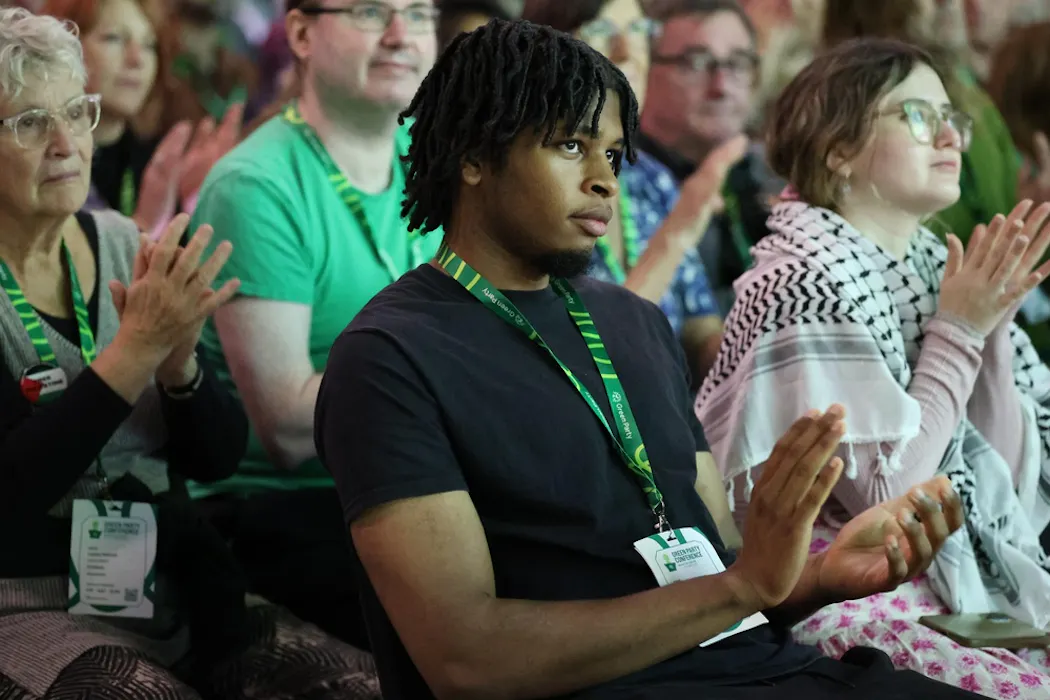
The Green Party of England and Wales’ prospects have fluctuated dramatically in recent years. At times, it has appeared on the cusp of becoming a major force at Westminster.
During this period, the Greens have had to balance their belief in internal party democracy while operating in a modern media and electoral environment.
Around the 2015 general election, the party’s membership and broader popularity surged, before the Labour Party picked Jeremy Corbyn as its leader and its subsequent move to the left stalled much of the Greens’ momentum.
Keir Starmer’s time as Labour leader allowed the Greens to once again successfully court progressive voters. They gained a record four MPs at the 2024 election, and their poll rating grew after Zack Polanski became leader in 2025.
But their popularity has slumped once again recently, something seemingly confirmed by their second-place finish in the recent Holborn and St Pancras by-election. They did, though, register their second-highest vote share in a by-election.
Over this period the Green Party of England and Wales and its sister parties in the rest of the UK have managed to consistently gain political representation at various levels, even if the Greens’ popularity and prominence have oscillated.
Dilution of democratic principles
Green parties are strongly associated with internal democracy. Many green parties have therefore had to manage this commitment once they have achieved national prominence and electoral success, at times leading to some dilution of democratic principles in the name of professionalisation. This was implied by Michels’ idea of the “iron law of oligarchy”: political parties tend towards hierarchical structures in the name of efficiency.
The Green Party of England and Wales is a pretty typical case. Historically, it had a strong, early commitment to the idea that it would not just seek to implement policies different from those of other parties, but approach politics in a distinct manner, including through participatory and democratic decision-making processes. There were numerous arguments over this within the Greens, reflecting the “fundi-realo” divide seen in Green parties in other countries.
In the early 1990s there were factious disputes over the “Green 2000” proposals for a more centralised organisational structure, with the reforms ultimately being adopted. Subsequently, a Rubicon was crossed in 2007 when the Greens voted to create the position of leader, replacing the previous shared principal speaker roles.
Nonetheless, the Greens have remained highly democratic compared to most other parties in the UK. Their policies are decided by votes at the party conference, which then provides the “foundation” for election manifestos and political programmes.
Challenges of democracy
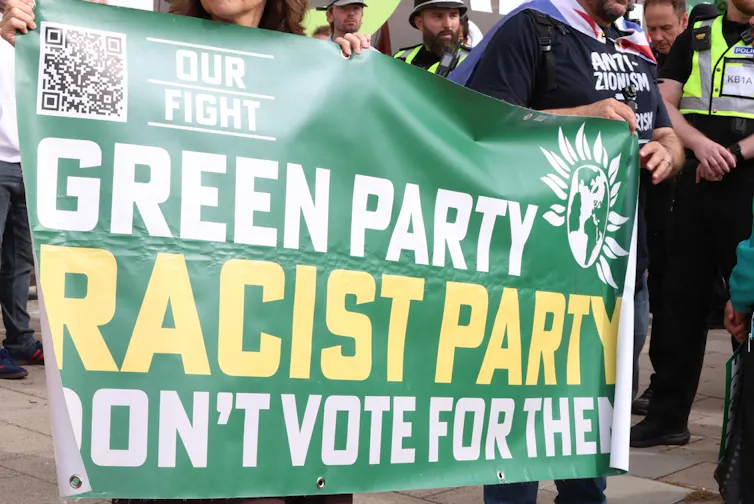
The Greens’ commitment to members deciding policy has created challenges for it as the party has become more prominent. At times members have voted for policies which have proved controversial, including the “Zionism is racism” motion which was recently passed at its conference. This has been widely criticised, with various Green figures distancing themselves from it.
S-Akram / Shutterstock
The leader’s role is somewhat ambiguous as the party’s policy foundation is decided by conference votes and a leader may end up defending a position they may not agree with. Polanski said that he would have voted against the Zionism motion.
Journalists have often picked up on policies in areas such as migration, drugs and defence which have been agreed at Green conference, but can be awkward for party leaders to explain in media interviews. This is partly a product of the system where the party provides an underlying body of policy, but a different manifesto is put forward at elections.
The most likely route for the Greens to enter the UK government would be via a coalition. This is increasingly plausible given the British party system’s fragmentation. However, Westminster’s culture is not used to this type of arrangement and larger parties can face pressure to rule out working with controversial partners.
Indeed, Labour figures recently ruled out future cooperation with the Greens after the Zionism motion, and some Labour MPs even involved the police. Green leaders may also require their party members’ approval during any future coalition negotiations, which for most other UK party leaders would be unnecessary.
The Greens have, additionally, been grappling with practical issues. The party has grown, reaching over 200,000 members, meaning it is difficult for more than a small proportion of members to attend conferences and vote on policy.
System here to stay
There are reports that the current Green leadership has been looking at ways to amend its system of policymaking in light of its enlarged membership. Polanski has argued in the aftermath of the Zionism debate that “our party democracy must now evolve”. It seems very unlikely, however, that this will lead to a full-scale jettisoning of the party’s democratic structure.
Political parties’ roots and principles shape and constrain them, which means that they are often not totally free to make choices even if they consider them to be in their immediate tactical interest, and the Greens’ commitment to internal democracy runs very deep. None of the challenges which have been outlined here are necessarily insurmountable either.
Nonetheless, the Zionism motion has highlighted some of the tensions within a party, which is increasingly prominent in British politics, deciding its policy democratically.

Mitya Pearson does not work for, consult, own shares in or receive funding from any company or organisation that would benefit from this article, and has disclosed no relevant affiliations beyond their academic appointment.
Original source: https://analysis1.mil-osi.com/2026/10/15/can-the-greens-stick-to-their-democratic-principles/