

Source: The Conversation – UK
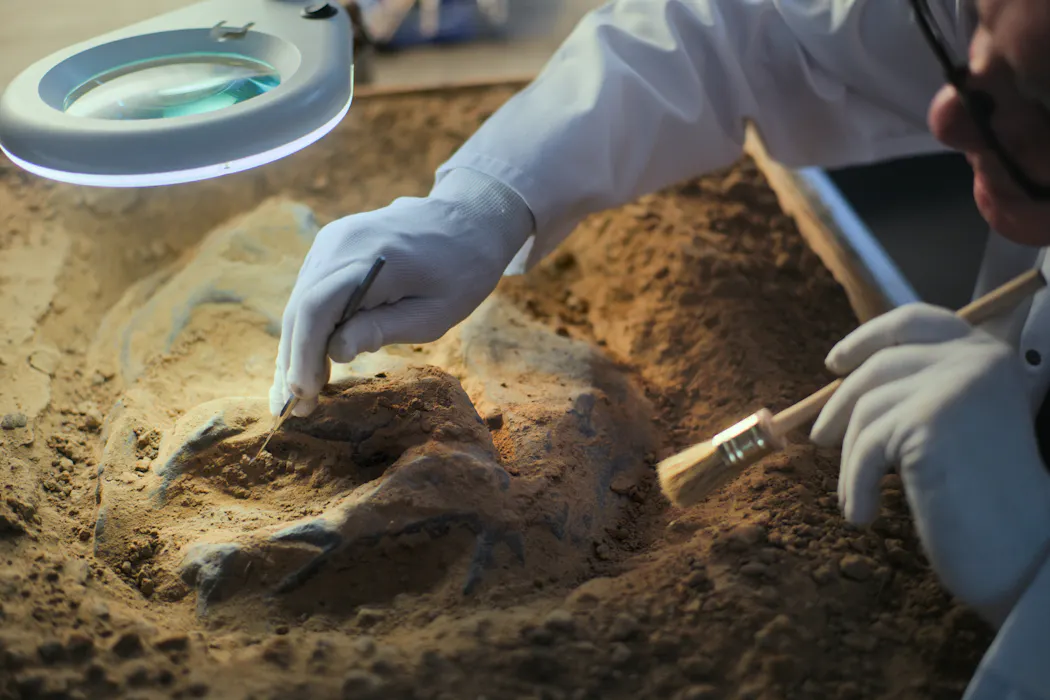
The question of when animals first evolved is one that has confounded scientists since the time of Charles Darwin. Studying rocks in north Wales in the mid-18th century, Darwin found the sudden first appearance of animal shells and skeletons in layers dating back over 500 million years perplexing. He had predicted a long history of evolution, with animals slowly gaining complexity through time, rather than this apparent instantaneous appearance of complex animals.
The sudden appearance of complex animals has led scientists to argue that animals must have a “hidden history”, a period in Earth’s past prior to their fossil record where they existed but have left no trace of their presence in the rocks. Our new study may help scientists understand how long this hidden history may have lasted.
Palaeontologists have made significant progress since Darwin roamed north Wales. The oldest animal fossils are now recognised in rocks 574 million years old from the UK and Canada. Although these fossils do not have hard skeletons, they are nevertheless visible to the naked eye and relatively complex just like Darwin’s Welsh fossils. Scientists have pushed the date of the first animal fossils back in time, but researchers still haven’t resolved why these oldest remains of animal life are so complex.
Molecular clock studies aim to tackle this problem. A molecular clock works like the speed = distance/time equation. The genetic difference between two living species’ DNA provides the “distance”. If we can estimate the “speed” at which those differences accumulated, we can work backward to estimate the “time” at which their ancestors separated. Fossils provide important dated anchor points that help calibrate the “speed”.
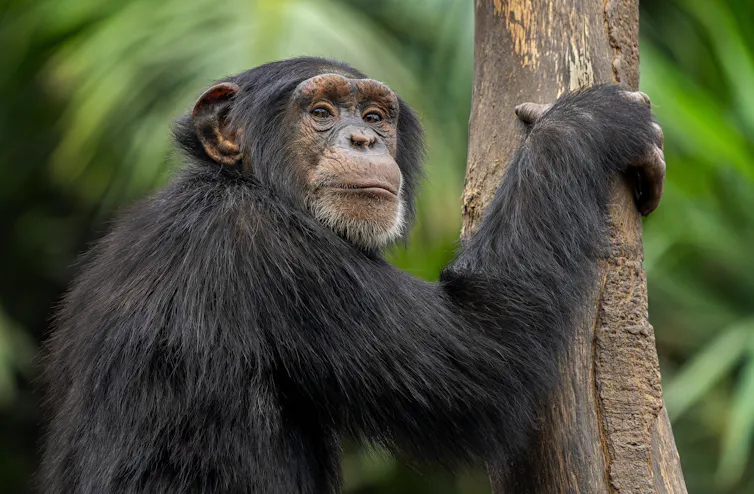
In some instances, such as the divergence of humans and chimpanzees, (when they split from a common ancestor and became different species) molecular clocks can be incredibly effective at estimating the timing of evolutionary origins. However, in the case of animal evolution, molecular clocks give wildly different answers. Depending on how the clocks are calibrated, estimates for the first animals can be hundreds of millions of years apart. Some suggest animals evolved 800–700 million years ago, but others indicate that they evolved only around 600 million years ago. In short, scientists don’t know when animals first evolved.
jindrich_pavelka/Shutterstock
With colleagues, we set out to address this issue in our recent paper. Much of the disagreement between molecular clocks is due to the different fossil calibrations used in the models. For example, 590-million-year-old rocks in China, which have the conditions to preserve early animals as fossils, but don’t show any evidence of animal fossils, have been used to suggest animals hadn’t evolved by this time.
We show that approximately 550-million-year-old rocks from Mongolia also have these same fossilisation-promoting conditions but still do not preserve animals. The problem is that animals have been found all over the world in rocks 550 million years old. Animals existed elsewhere at the same time. Their local absence in Mongolia might be because they didn’t live in that place or were not preserved. An empty fossil deposit like the one in Mongolia can tell us that animals are absent from that deposit, but not necessarily that animals were absent from the entire planet.
Earth’s deep past
The same could be true for the 590-million-year-old rocks in China. Perhaps animals are not preserved in them because they simply didn’t live there or were rare at the time. This casts doubt on our ability to use the Chinese rocks to argue animals were yet to evolve 590 million years ago.
We argue that palaeontologists need to use several deposits of roughly the same age from around the world, with each demonstrating the right conditions for animal fossilisation but producing no fossils. Only then might we have more confidence in the result.
We suggest that there might be enough deposits meeting these criteria around 900 to 720 million years ago to justify calibrating the animal molecular clock in this interval. Even then, we think that we could only do so with around 70% confidence (and a 30% chance that our evidence of absence is wrong with animals already having evolved).
Using these older rocks suggests that animals originated between 850 and 715 million years ago. Intriguingly, this older age revitalises the idea that animal evolution coincided with snowball Earth, when ice may have covered much of the planet.
The timing of animal origins remains uncertain. But by learning how to read not only the fossils preserved in rocks, but also the fossils that are missing, we are beginning to bring the hidden early history of animal life into view.

Ross Anderson receives funding from the Royal Society.
Orin Lole Durbin does not work for, consult, own shares in or receive funding from any company or organisation that would benefit from this article, and has disclosed no relevant affiliations beyond their academic appointment.
Original source: https://analysis1.mil-osi.com/2026/10/14/animal-life-may-be-far-older-than-its-most-ancient-fossils-heres-how-we-uncovered-its-hidden-history/