

Source: The Conversation (Au and NZ)
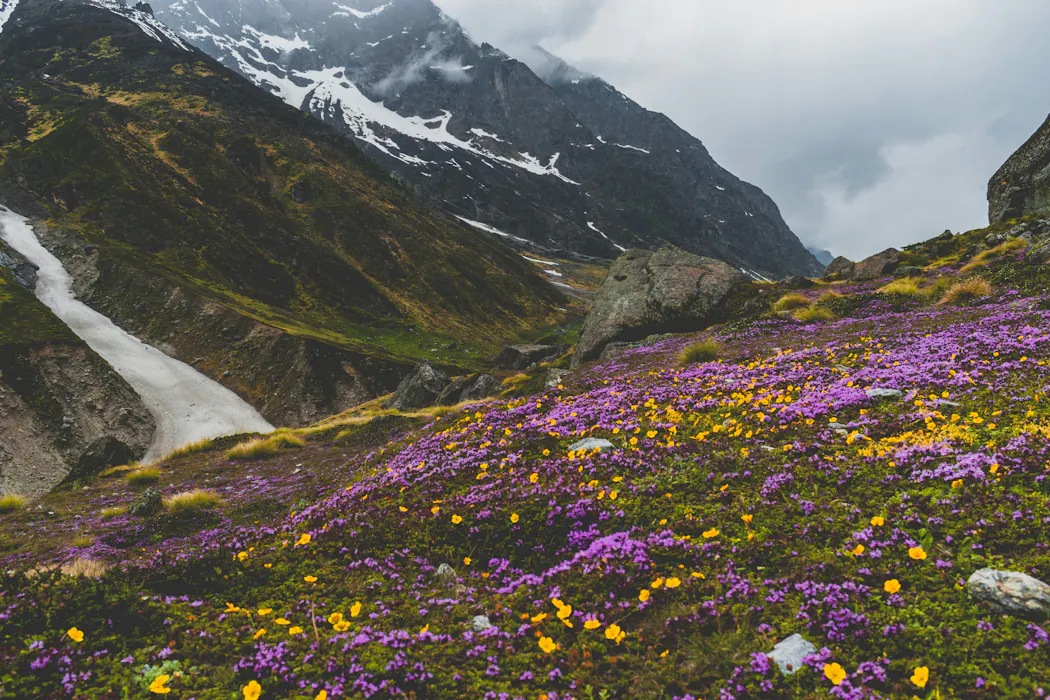
Plants are crucial for life on land. The energy they capture from the Sun underpins the existence of almost all land-based animals, fungi and bacteria.
In particular, flowering plants – the most productive and diverse group of land plants – dominate most ecosystems on Earth. There are at least 350,000 species, and they’re vital for capturing carbon dioxide from the air.
Over millions of years, flowering plants have evolved complex relationships with animals, fungi and bacteria. This created vast numbers of species, each specialising in eating, pollinating, dispersing seeds and decomposing different plants or in different ways.
It’s not clear how flowering plants came to rule the world. In the middle of the Cretaceous Period, during “peak dinosaur” time (about 100 million years ago), flowering plants began to displace older plant groups that had dominated the land for 200 million years before.
Did a warmer climate play a role? The Cretaceous was certainly often much warmer than today. But when researchers look at plant fossils, we can see that new, diverse plant types emerged during both warm and cool climates in the past.
Our new study, published in Nature Plants, examined fossilised pollen and spores, revealing that the two warmest times over the last 140 million years were indeed central to plant evolution – and not just flowering plants.
Fossil records are biased
Until now, a clear link between climate and plant diversity has been elusive, mainly because fossil records are strongly biased. The number of available fossils varies over geological time and between regions.
Because of this, simply counting fossilised species found in a given place can give a misleading sense of diversity over evolutionary time.
We compiled data of over 60,000 fossils, and applied multiple statistical methods that overcome the major biases in the fossil record described above. These methods ensure that periods with more individual fossils don’t unfairly dominate the results.
We then generated revised estimates of fossil pollen and spore diversity for successive time periods throughout the past 130 million years.

Australasian Palaeontological Memoirs/Chris Mays
We compared data from regions at different latitudes to find out if the patterns we saw were global. We compiled data from southeastern Australia, because Australia sat much closer to the south pole than it does today for the majority of this time period.
We also compiled datasets from two regions that sat in tropical, low latitudes: northeastern Africa and northern South America.
Our results showed that the phases when land plant groups became more diverse closely tracked climate change.
A planetary greenhouse
Most of the changes we found among the fossils – both pollen and spore types going extinct, and new types appearing – happened during the warmest climates. In contrast, cooler climates were marked by little change.
This led to the conclusion that new – but related – land plants emerged mostly during two intervals of globally extremely warm climate.
Each of these extremely warm intervals lasted a few million years. So the warmest greenhouse climates simultaneously destroyed and promoted plant diversity, but only when considered over million-year timescales.
There are other potential causes that could have driven an explosion of plant life. Among those are interactions between plant groups. For example, one group might slowly displace another, or one group might provide beneficial shade for another.
Alternatively, geographic isolation (such as when Australia began moving away from the rest of the southern supercontinent, Gondwana) could drive the evolution of unique species.
However, neither of these explained the pattern we saw in plant diversity as much as climate did.
Most importantly, these patterns didn’t just apply to flowering plants. Conifers and their relatives, as well as mosses and ferns, also responded to these warmer intervals. The patterns appeared at both high and low latitudes.
As a result, we are confident there are general processes linking both evolution and extinction in land plants to extreme greenhouse climates. These effects were greater in flowering plants possibly because of the many unique features that evolved in this group.
Gustav Gullstrand/Unsplash
Human-made climate change is different
Our study shows that extremely warm climates wipe out much of the plant diversity that was previously important in land ecosystems, but also provide conditions for the evolution of new plant species.
The current, human-driven warming is much faster than the warming during the two greenhouse phases we identified.
Human-driven warming is therefore likely to cause major plant extinctions more quickly than the extinctions in the past.
While extinct species will eventually be replaced by new species, not many of us will be satisfied having to wait the few million years for them to evolve, especially since we have the power to prevent the loss of species today – by stopping the carbon dioxide emissions from burning fossil fuels.

Kale Sniderman receives funding from the Australian Research Council, and has received funding from the Rural Industries Research and Development Corporation, the National Geographic Foundation and the Australia & Pacific Science Foundation.
Chris Mays received funding from Research Ireland, and the Irish Centre for Applied Geoscience (iCRAG).
Greg Jordan is not currently funded by external organisations but has received funding from the Australian Research Council, the Department of Agriculture, Water and Environment, Forest Practices Authority, and the Wet Tropics Management Authority.
Original source: https://analysis1.mil-osi.com/2026/10/14/why-are-there-so-many-plants-new-research-reveals-two-key-phases-in-earths-past/