

Source: The Conversation – USA (2)
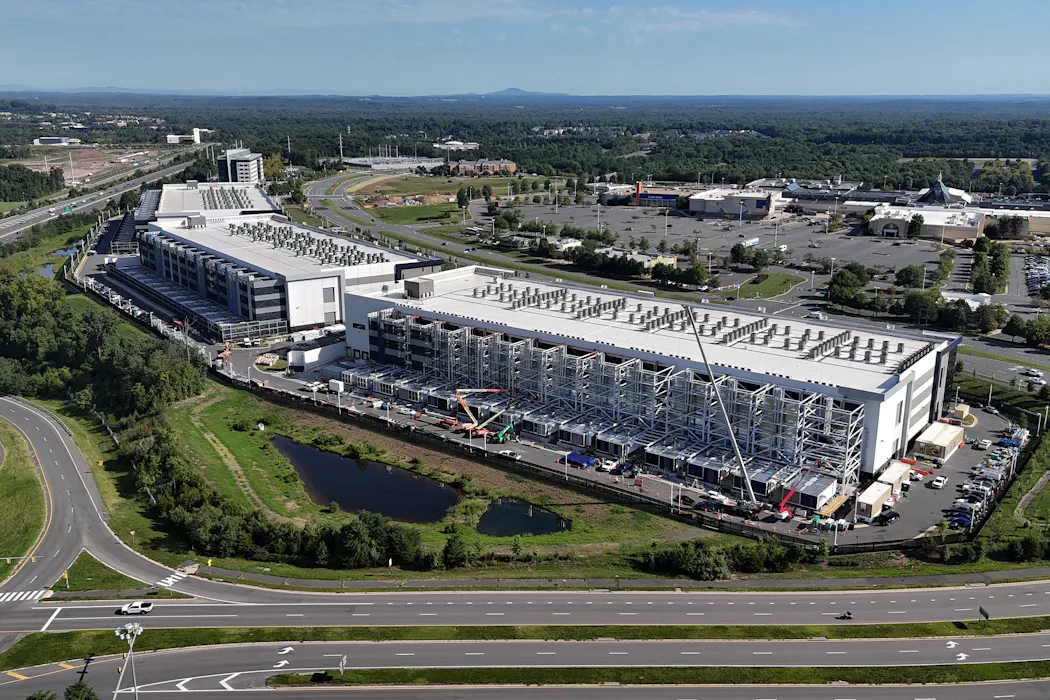
Regardless of their views on politics or climate change, most Americans oppose the development of data centers in their communities.
These large buildings filled with computers that store and process digital information, increasingly to support various applications of artificial intelligence, are being built rapidly across the United States. They can bring economic investment and jobs, but the pollution created by generating the electricity they need can also harm public health, pollute air, use up water, create noise and raise energy costs.
As more data centers are proposed, some local communities are pushing back against new and prospective projects. These debates are already influencing local zoning and permitting decisions, and increasingly reaching state lawmakers.
In early September, Massachusetts Gov. Maura Healey issued an executive order that no state agency will issue permits for data center development unless the project already has local approval from the municipality where it will be located. In Vermont, where Gov. Phil Scott vetoed a bill that would have imposed strict regulations on data centers, local governments are taking matters into their own hands by banning data centers in their towns.
Public opinion is playing an important role in shaping how data center expansion unfolds across the country.
We are researchers studying science communication, climate change and public health. To better understand what Americans think about these issues, we examined data from the Spring 2026 Climate Change in the American Mind survey. It is a nationally representative survey of adults in the U.S. conducted by the Yale Program on Climate Change Communication and the George Mason University Center for Climate Change Communication. Our findings align with other recent polling on the topic.
Most Americans oppose a data center in their area
In an April 2026 survey of 1,068 adults, 930 of whom are registered voters, we and our research colleagues Jennifer Carman, Seth Rosenthal, Anthony Leiserowitz and Edward Maibach asked respondents the degree to which they would support or oppose building a data center in their local area.
Just over half – 56% – said they would oppose it, while only 15% said they would support it.
The opposition is not limited to one political group. A majority of Americans in most groups across the political continuum said they oppose the development of data centers in their communities, although the extent of that opposition varies somewhat between groups.
Among registered voters, about three-quarters of liberal Democrats and about half of conservative Republicans said they oppose having a data center built in their local area.
People’s perspectives on climate change
For a closer look at how people view data centers, we built on our past work about Americans’ views about global warming and actions to reduce climate change and its effects. That research has identified six distinct groups of views on those issues, which we call “the Six Americas.”
Opposition to local data centers is highest among those in the Alarmed category, those most worried about climate change – 71% of whom opposed data centers being built in their community. But opposition is also very strong among those in the Dismissive category, who reject the idea that global warming is happening and human-caused.
These findings show that Americans with widely different beliefs about global warming can nonetheless hold similar views about local data center development.
Most Americans expect data centers to increase their electricity bills
Electricity costs are a major concern Americans have about data centers, particularly amid broader concerns about the increasing cost of living. Agreements between power companies and data center owners aren’t always clear about who will pay to generate the massive amounts of electricity involved – and it may be functionally impossible to tell if the costs are shared fairly.
A majority of Americans, 59%, expect their electricity bills to increase if a data center opens in their local area. Just 5% think their bills would decrease; 25% said they don’t know. The remaining 12% said they don’t expect their bills to be affected.
Concern about higher electricity bills is bipartisan. Among registered voters, majorities of every political group expect their bills to increase.
Electricity cost worries also span all views on climate change. The only group where a majority didn’t expect a data center to raise their power bills was the Disengaged, who don’t pay much attention to or hear about climate change very often, of whom 43% reported that expectation. But about as many of that group, 42%, said they didn’t know what might happen to their electric bills.
Most Americans support requiring data centers to offset their electricity use
We also asked Americans about one idea to address the large amount of electricity used by data centers: Instead of building new power plants to provide additional electricity, an advocacy group called Rewiring America has proposed that data center developers could be required to install rooftop solar and help weatherize and insulate nearby homes whose owners want these improvements. Those changes could generate new electricity and save additional energy to help provide the power the data center needs.
Respondents strongly supported making this idea a state or local requirement.
This proposal has considerable public support, from across the political spectrum and among the various Six Americas groups of views on climate change. Only the Dismissive group – those who dismiss the idea that climate change is happening – saw less than half of its members support these policies, even though majorities of that group oppose having a data center nearby and expect a local data center to increase their electricity bills. This is consistent with their tendency to oppose renewable energy development more generally.
What this means
The companies leading the AI boom are seeking not only computer servers, electricity and land, but also public support. As data centers continue to expand across the country, understanding Americans’ views on them, and what people expect from developers, is becoming increasingly important.
Our research shows that Americans with very different political views and opinions about global warming can share similar views about data center development.
Some state regulators and utility companies are already considering structuring electricity rates to prevent data center costs from being passed on to other customers.
At the same time, the differences matter, especially in terms of specific policies that may or may not be broadly popular.
For policymakers, data center developers and community leaders, understanding where different groups agree and disagree can help them better serve the public interest.

John Kotcher receives funding from The U.S. Energy Foundation, The Kresge Foundation, and The Commonwealth Fund.
Teresa Myers receives funding from the U.S. Energy Foundation.
Neha Gour does not work for, consult, own shares in or receive funding from any company or organization that would benefit from this article, and has disclosed no relevant affiliations beyond their academic appointment.
Original source: https://analysis1.mil-osi.com/2026/10/13/across-the-us-people-dont-want-data-centers-coming-to-their-communities/