

Source: The Conversation – Canada
As the days darken, making more room for arts-based practices and experiences is one way to bring useful, interesting or sustaining activities into the seasons ahead.
For families and people working in schools, this may be particularly relevant as the school year settles into its routines and demands. Making more room for the arts can expand the resources available to students, families and educators, including opportunities for curiosity, connection and enjoyment in daily life.
Even positive or eagerly anticipated changes require us to adapt, which can take attention, time and emotional energy. What requires little thought once it becomes habitual can require considerable attention when new. Our capacity to navigate these changes is shaped by the resources available to us and the relationships and systems we are part of.
A student who was excited to be back at school may stumble with figuring out new friendships, expectations or responsibilities, while another may feel the dread that can emerge after difficult experiences or alongside boredom and uncertainty.
Parents and caregivers support these day-to-day challenges alongside everything else they carry and manage, while teachers lead classrooms within school systems where time, staffing and other resources are often stretched thin.
Art to expand our resources
As an art therapist, my work generally begins when someone is already struggling. This has led me to consider what happens further upstream: what experiences, relationships and resources might become part of everyday life before difficulties become overwhelming?
Everyday art-making is not art therapy, nor is it a substitute for professional support when needed. But a growing body of research suggests that arts engagement can contribute to health and well-being, including social and personal dimensions of well-being in educational settings.
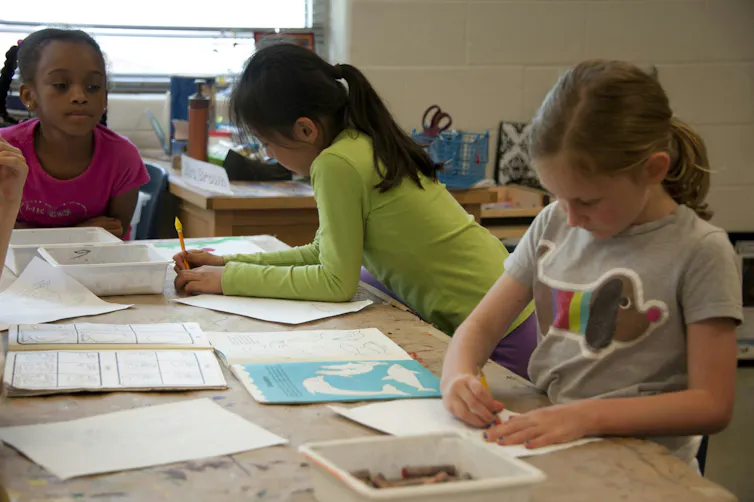
(Unsplash)
Making and experiencing art can expand the resources people have available and help them discover capacities they may draw on in other parts of their lives.
While creative practices can help expand the ways we express or comfort ourselves in difficult moments, they can also bring curiosity, imagination, connection and enjoyment into ordinary days.
Read more:
For both artists and scientists, slow looking allows surprising connections to surface
Something interesting and pleasurable
Sometimes, the value of making art simply lies in being absorbed in something interesting or pleasurable. Like exercise, reading or other activities that sustain us, engaging with the arts does not have to begin with a problem that needs solving.
I am focusing here on visual art, though music, theatre, dance, writing and other creative practices may be more inviting depending on people’s interests and affinities.
One common obstacle is the expectation of being “good” at art right away. Artistic skills and visual languages can be learned and explored, with people bringing different strengths, ways of learning and interests to them.
Making art will not appeal to everyone, but deciding it is “not for you” because it does not come easily at first can mean giving up something you might enjoy. Most people who enjoy cycling will never compete in the Tour de France, nor would they want to; the pleasure and value of cycling do not depend on reaching that level of ability.
Getting lost in doodling can take the imagination somewhere else. Knitting or beading can offer repetition and rhythm that feel welcome after a day filled with too many unknowns.
Clay, collaging and painting engage the senses differently and offer room to experiment, play or express what is difficult to put into words. Photography can invite closer attention to our surroundings. None of these need to become a project, accomplishment or regular practice to have value.
Creative resources can be kept within easy reach: a student might keep a container of putty among their school supplies, something tactile to turn to in a stressful moment.
These resources need not disappear with childhood. A tired parent might appreciate their own ball of modelling clay during yet another Zoom meeting.
Keeping creative corners accessible
Experiencing the arts can spark curiosity, introduce experiences beyond our own, or let us encounter something of our own experience in another person’s work.
Access to the arts can be built into places people already spend time. A creative corner in a school staff room could offer materials to explore and opportunities for colleagues to connect differently during a break.
Libraries, museums, galleries and community centres offer inexpensive or free ways to engage with the arts. Making these experiences accessible is important, particularly when time, money, space or access to materials can limit people’s options.
Building capacity also means looking beyond what individuals can do for themselves to what resources families, schools and communities can make available. What we make available to one another is also part of how we build care and support into our environments.
Making more room for the arts is one way to do this. Through all seasons, we can think beyond what needs to be accomplished and build in more of what can help people stay connected, engaged and resourced.

Heather McLaughlin does not work for, consult, own shares in or receive funding from any company or organisation that would benefit from this article, and has disclosed no relevant affiliations beyond their academic appointment.
Original source: https://analysis1.mil-osi.com/2026/10/12/as-the-school-year-settles-in-making-room-for-the-arts-can-support-everyday-well-being/