

Source: The Conversation – UK
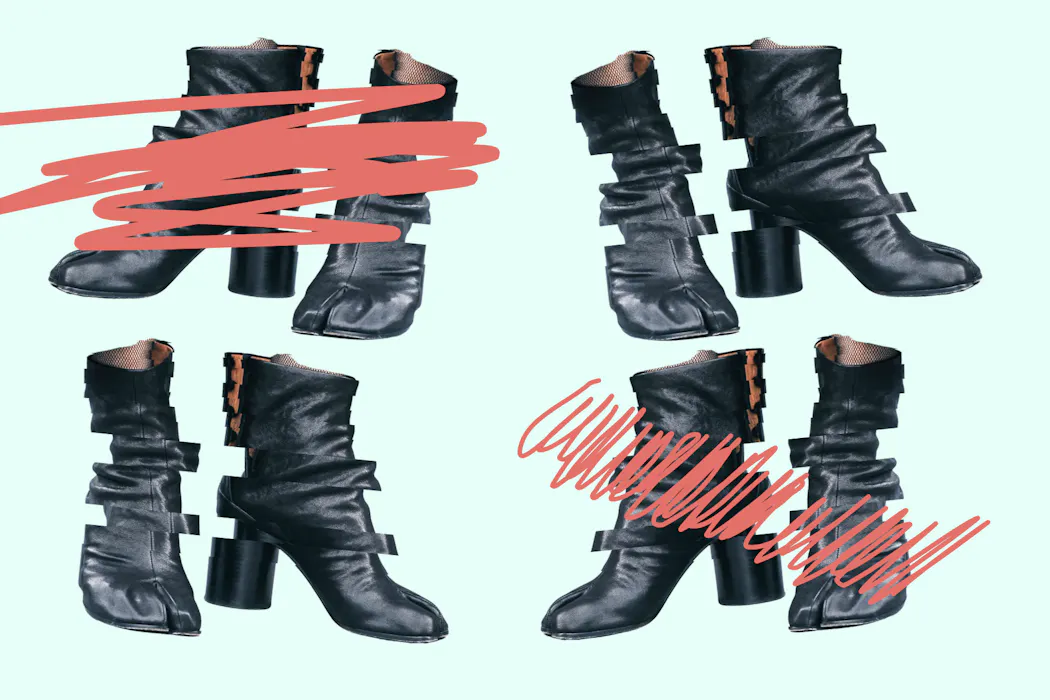
The tabi shoe, a divisive style which features a cloven hoof-like split, has its origins in 15th-century Japan. In 1988, fashion designer Martin Margiela reimagined the split-toe silhouette for a high-fashion boot for his brand’s inaugural runway collection. While the style became synonymous with Margiela, because of its historic origins, it could not be legally or culturally copyrighted by a single fashion house.
In my research on luxury fashion influencers and Instagram, I examine how fashion meanings are produced through repeated images, performances and visual codes. As such, I’m interested in the way the split-toe tabi has moved from esoteric marker of good taste (and deep pockets) to mainstream trend.
More and more brands have released their own version. Summer 2026 seemed to be the peak of tabi-mania. Good Housekeeping described tabi shoes as “everywhere” as it moved from fashion-insider favourite into the mainstream. British Vogue used “tabi flats, capri pants, slicked-back hair” as shorthand for somebody working in fashion PR.
However, at New York Fashion Week this September, Teen Vogue published a street-style dispatch with a blunt headline: “Tabis Are Over”. One attendee said that “tabis should have been kept in the past”.
The tabi is therefore in a strange position. The shoe has not simply moved from fashionable to unfashionable. What has changed is how easily we can read what it means.
No one’s 20s and 30s look the same. You might be saving for a mortgage or just struggling to pay rent. You could be swiping dating apps, or trying to understand childcare. No matter your current challenges, our Quarter Life series has articles to share in the group chat, or just to remind you that you’re not alone.
Read more from Quarter Life:
-
Social media hasn’t killed personal style, it’s killed how we communicate it
-
Indie sleaze: a brief fashion history, from messy rebellion to mainstream revival
-
High hemlines and maximum thigh exposure: a brief history of men’s shorts
From fashion-person favourite to mainstream shoe
In the book The Fashion System (1967), cultural critic Roland Barthes examined fashion as a system of signs, showing how clothing acquires meanings beyond its practical function.
Applying Barthes’ theory to the tabi you can see that there is nothing inherently avant-garde or intellectual about a split-toe shoe, especially within its original Japanese context. However, the tabi’s meaning has been created through repetition in runway shows, editorial photography, proximity to celebrity, fashion criticism, advertising, and the practices of people who wear them. Once it became predominantly associated with Margiela, it’s cultural meaning changed from old-fashioned Japanese silhouette to a signifier of an experimental and unconventional modern global style.
French sociologist Pierre Bourdieu’s idea of cultural capital is useful here too. In his book Distinction (1979), Bourdieu showed how taste is shaped socially and how cultural knowledge can become a means of distinction.
If you wore tabis you weren’t a dedicated follower of mainstream fashion but a discerning person with unique taste. It was like being a person who understood and appreciated the beauty of abstract painting or the harshness of Brutalist architecture in a room full of people saying “I don’t get it, it’s ugly”.
Knowing what to recognise, appreciate and wear can therefore carry social value. The tabi worked particularly well in this way. A visible logo makes it relatively easy to identify a designer, but the tabi’s meaning depended on recognising the shape itself. Understanding it meant you had a very specific kind of fashion knowledge and wearing it meant you part of an exclusive set of tastemakers.
Then, in July 2025, British Vogue described the shoe as “unexpectedly mainstream”, pointing to tabis circulating across social media, resale sites and the market being flooded with cheaper imitations.
As I outline in my research, social media trends circulate fashion objects – but they also circulate explanations of them. A tabi appears in an outfit post, someone identifies it, another explains its history, creators show how to style it and eventually it becomes part of a shared visual vocabulary.
The shoe had become mainstream. With this, the tabi lost its cult status. It was no longer avant-garde, no longer a sign of rebellion and no longer a sign of being part of a small and exclusive fashion in group. People do not necessarily stop wanting the shoe, but the knowledge attached to it becomes more accessible and the meaning of wearing it is diluted.
In my opinion, social media has not killed the tabi. It has just worn out its ability to communicate insider fashion knowledge. So the tabi is not dead, it’s mainstream, which to some people is one and the same.
If anything, social media has made the shoe more culturally powerful by making it recognisable to far more people. Perhaps that is what being “over” increasingly means in fashion. The object remains, but we have learnt how to read it too well. Once a shoe can no longer prove that we are early, knowledgeable or particularly fashionable, continuing to wear it becomes a different choice. We might simply be wearing it because we like it.
This article features references to books that have been included for editorial reasons, and may contain links to bookshop.org. If you click on one of the links and go on to buy something, The Conversation UK may earn a commission.

Catherine Greenwood does not work for, consult, own shares in or receive funding from any company or organisation that would benefit from this article, and has disclosed no relevant affiliations beyond their academic appointment.
Original source: https://analysis1.mil-osi.com/2026/10/07/tabis-are-so-over-what-the-mainstreaming-of-the-split-toe-shoe-says-about-how-fashion-loses-meaning/