

Source: The Conversation – UK
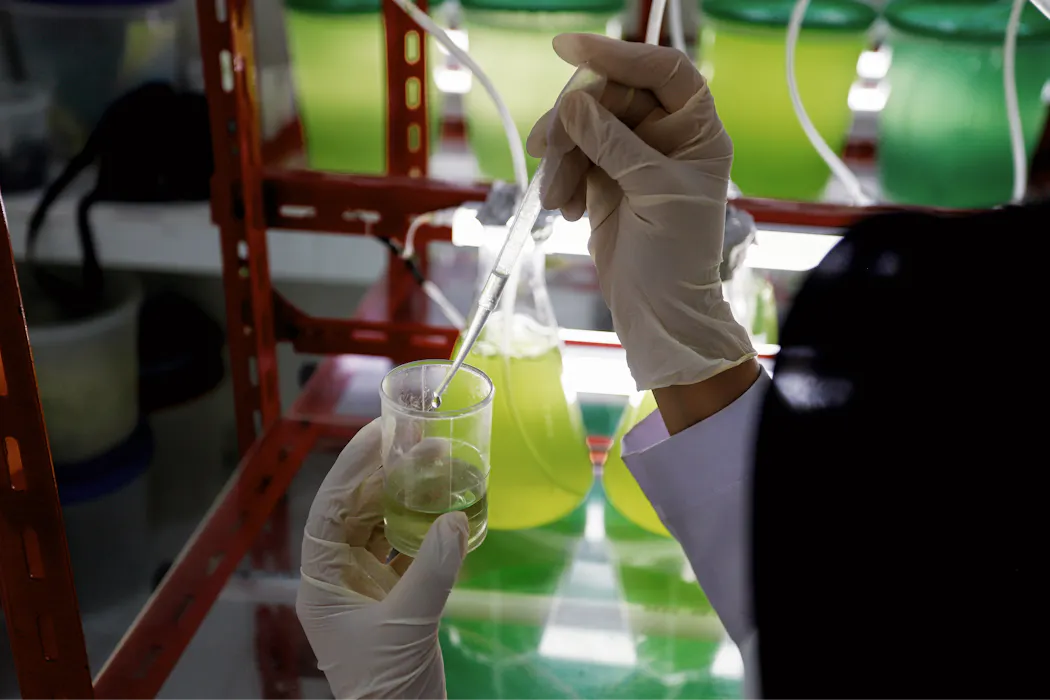
Microalgae (microscopic organisms that use light and carbon dioxide to grow) can be used to make ingredients and food for animals, pigments and potentially renewable fuels. But growing microalgae efficiently at an industrial scale is difficult.
My own research with microalgae began with their potential for biofuel production. I have been exploring how AI can help scientists scale up the growth of microalgae, particularly for the production of biofuel from microalgal species such as Chlorella vulgaris and Nannochloropsis oculata.
Thousands of species of tiny microalgae are abundant in seas, rivers and lakes. They act as primary producers, using the process of photosynthesis to convert light into proteins, fats and carbohydrates as well as other organic compounds.
Microalgae can be grown in photobioreactors. These industrial systems have been designed to provide suitable conditions for photosynthetic microorganisms. Several parameters need to be controlled during cultivation. These include light, temperature, pH, and the concentration of oxygen.
These parameters also influence each other. For example, insufficient light can limit photosynthesis, while excessive light can cause photoinhibition, where too much light reduces photosynthetic efficiency. As the amount of microalgae in the reactor increases, the cells can also shade each other and reduce the amount of light available. Aeration can affect carbon dioxide supply, oxygen removal and pH at the same time.
Controlling all these parameters during cultivation can be difficult. My current research is looking at this cultivation problem more closely in the laboratory. Part of my work explores how AI-assisted monitoring and imaging could be used to analyse microalgal growth and improve cultivation.
Artificial intelligence and machine-learning methods are already being used by researchers to help monitor and optimise some of these conditions.
Read more:
Microalgae is nature’s ‘green gold’: our pioneering project to feed the world more sustainably
Teaching computers to watch algae grow
Sensors can continuously measure parameters such as temperature, pH, dissolved oxygen, light and carbon dioxide. Machine-learning models can analyse the data collected from these sensors and identify patterns related to the condition and growth of the culture.
I have been reviewing how AI is currently being applied to photobioreactors and where it can provide practical benefits. Machine-learning methods have already been used to predict microalgal growth and to optimise cultivation conditions.
Image-based approaches are also being studied for monitoring microalgae without having to rely only on manual sampling. For example, images of a culture can be analysed to estimate changes in biomass or culture density. This is also one of the approaches my colleagues and I are developing within our microalgae laboratory.
Some biological changes are more difficult to measure continuously. Conditions that put microalgae under stress — and therefore inhibit growth or productivity — can begin to develop before a clear change in the culture can be observed. Combining different sensor measurements with machine-learning models can help researchers identify these changes and better understand what is happening during cultivation.
The information obtained from these systems can then be used to support decisions about operating conditions such as carbon dioxide supply, pH and light.
My research has examined different aspects of microalgae production. Much of the microalgae production I have examined remains at laboratory or small pilot scale, although AI-based control has also been tested in some larger outdoor cultivation systems.

Amarnath Krishnamoorthy
One 2026 study by researchers in Almeria in south-eastern Spain tested reinforcement learning in an 80m² open raceway used for microalgae cultivation. An open raceway is a shallow, open-air cultivation system where water containing the microalgae circulates around channels, typically using a paddlewheel.
In this study, the AI system was connected to the cultivation process and used to regulate pH by controlling carbon dioxide injection. Reinforcement learning is a type of machine learning where a computer system learns which actions produce suitable outcomes. The AI-based computer control system used measurements including temperature, sunlight and dissolved oxygen to decide how much carbon dioxide should be added.
It was tested for eight days under changing outdoor conditions, and the researchers showed that the controller was able to regulate the process while responding to changes in operating conditions. The study provides just one example of AI-based control being applied to an operating microalgae cultivation system rather than being evaluated only through modelling or laboratory experiments.
AI still needs good biology and good sensors
Several problems still need to be addressed before these approaches can be routinely used in commercial production.
AI models depend on reliable data. Sensors used in photobioreactors can become fouled or their measurements can drift over time. Microalgae strains can also respond differently to cultivation conditions. As a result, a model developed using one strain or photobioreactor may not give the same performance when applied to another system.
This is particularly relevant to my own work because microalgae cultivation combines biological and engineering problems. Improving cultivation is not only about developing a better AI model. The photobioreactor, sensors, microalgae strain and operating conditions all have to be considered together.
AI should therefore be considered as an additional tool for researchers and process operators rather than a replacement for conventional process engineering. It can help analyse large amounts of cultivation data and support decisions about how operating conditions should be adjusted. The emphasis of my research will now be to recognise and address the practical limitations that come with moving from laboratory experiments towards larger systems.

Amarnath Krishnamoorthy does not work for, consult, own shares in or receive funding from any company or organisation that would benefit from this article, and has disclosed no relevant affiliations beyond their academic appointment.
Original source: https://analysis1.mil-osi.com/2026/10/06/from-food-to-fuel-ai-helps-pinpoint-how-to-grow-microalgae-at-scale/