

Source: The Conversation – USA
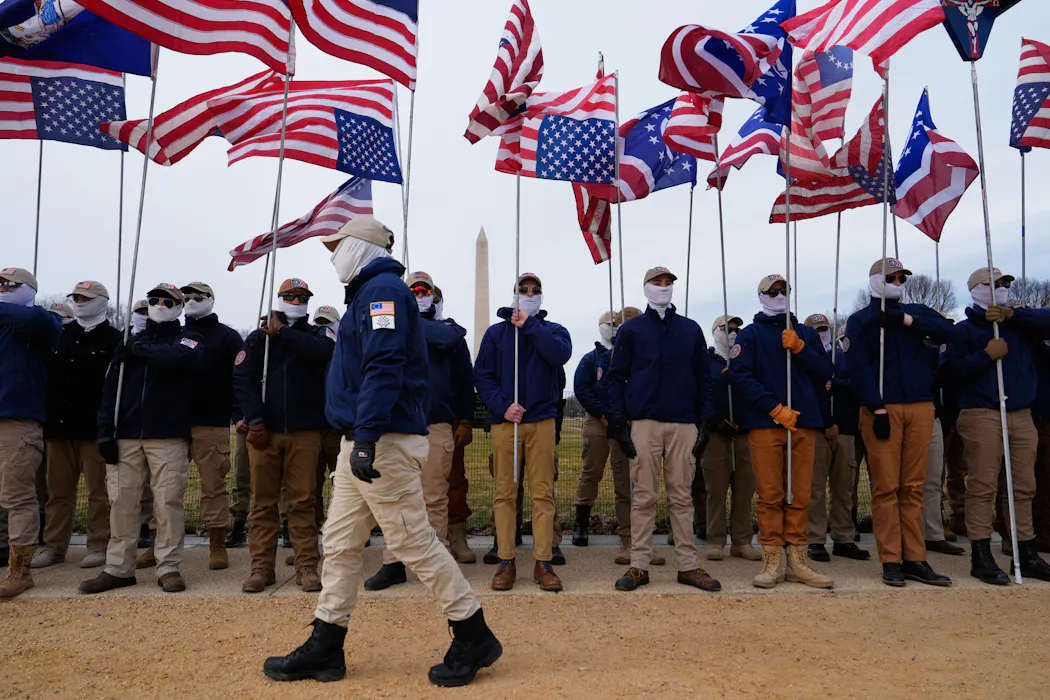
As Americans prepared to celebrate the nation’s 250th birthday on the morning of July 4, sobering images flashed across their phones and TV screens. Hundreds of masked men marched the streets of Washington carrying flags and chanting “Reclaim America!” It soon became clear from the logos on their identical baseball caps that the marchers were members of Patriot Front, a white nationalist group.
The march ended without incident. Still, it joined the 2017 “Unite the Right” rally in Charlottesville, Virginia, and the Jan. 6, 2021, attack on the U.S. Capitol – both of which culminated in deadly violence – as recent mass demonstrations with participants who openly embrace white nationalism. Members of a loosely organized movement that usually operates out of public view, white nationalists hold that shifting demographics pose an existential threat to the white race, which they view as culturally superior and deserving of power over other groups in the U.S.
Combined with the spread of white nationalist ideology from obscure corners of the internet into mainstream politics, these events have led many Americans to wonder: How extensive is white nationalism’s appeal among the broader public, and who is drawn to this extremist ideology?
We are political scientists who study political behavior, identity and social media. In recently published research in the scientific journal Nature, we offer some answers to these questions using national surveys we conducted with nearly 8,000 non-Hispanic white Americans from 2021 to 2025.

AP Photo/Steve Helber
Asking Americans about white nationalism
We expected many Americans would be unfamiliar with the term “white nationalism,” so we defined it for survey respondents with a brief statement covering the movement’s major tenets: the purported need to maintain a white majority in the U.S., claims about the superiority of white culture, and calls for white people to hold more political and economic power than other groups. We measured endorsement of the movement’s ideology, not participation in the movement itself or approval of its tactics.
We randomly varied whether respondents saw the description before or after we asked whether they supported the white nationalist movement. Overall, nearly 5% of white adults – about 1 in 20 – said they did.
Those asked the question before seeing the description were less likely to express support at first, but their reported support rose after they read it. Along with several tests for possible response bias, this suggests that 5% is a reasonable lower-bound estimate of the true level of support.
Whether 1 in 20 white adults is a high or low number is a matter of interpretation. For context, it’s roughly the same as the share of American adults who identify as vegetarian or vegan.
Young white men
A number that jumped out to us was the share of white men under age 30 who support white nationalism: just over 13%, or about 1 in 7. This was more than twice the level of support for white nationalism among women in this age group: 6%. Endorsement of white nationalism among men significantly declined by age: Only 2% of white men age 65 and over registered support.
Our discovery that white men born before the passage of the Civil Rights Act were more likely to reject white nationalism than those coming of age today may come as a surprise, as younger white Americans typically hold more tolerant views on racial matters than their elders. But young men have long been overrepresented in extremist groups, and white nationalism’s grievance narrative may resonate for young white men today as they fall behind previous generations of men on key indicators like finishing college, starting careers and forming families, as well as on their overall health.
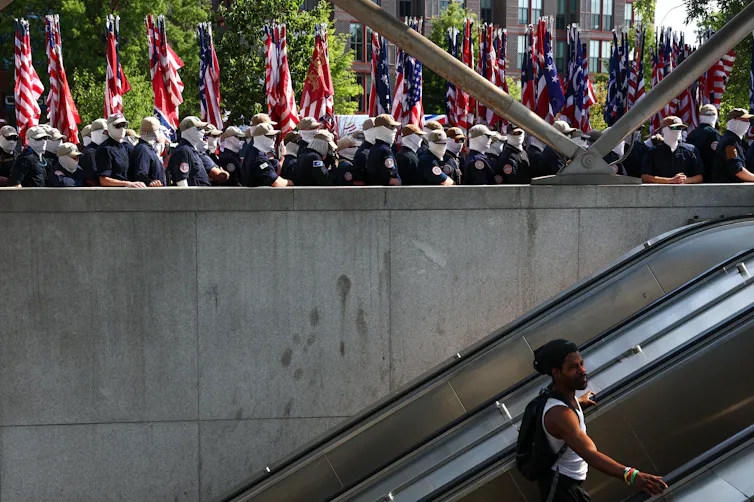
Finn Gomez/Getty Images News via Getty Images
Online life
Another key predictor of support: online social life that crowds out offline relationships. We asked respondents to call to mind their three best friends and then to tell us whether each friend was known only offline, only online or both.
We found that the more best friends known only online, the stronger one’s support for white nationalism. The internet and particularly social media are channels through which people may be exposed to white nationalist content. They are also places where alienated people may turn for the human connections they lack offline.
Interestingly, we did not find a general relationship between more social media use and more support for white nationalism. So while online life appears to be related to support for white nationalism, what matters in our findings is not how much people use social media, but whether their closest friends are known only online.
Individual and social strain
Strain, whether defined as undergoing personal difficulties or being exposed to wider social distress, is also a strong predictor of support for white nationalism. We asked respondents whether they had suffered from specific hardships over the past year, including the death of a loved one, losing a job, being the victim of a crime or getting divorced. Respondents experiencing more of these adversities were more likely to endorse white nationalism.
Social strain in the counties where respondents live – such as poverty, unemployment and population loss – emerged as another strong predictor of support for white nationalism, as did countywide rates of “deaths of despair,” which include suicide and deaths associated with drug and alcohol use. In other words, support for white nationalism was higher among people living in more distressed or economically depressed places.
More than just partisan politics
White nationalism is often cast as a political phenomenon by advocates, commentators and scholars, and indeed it is.
We found in our research that white Democrats and liberals are significantly less likely to endorse white nationalism than white Republicans and conservatives. However, we also found high levels of support among those who were unsure of their ideology or partisanship, suggesting a potential untapped reservoir of political support for white nationalist ideas.
Still, our findings show that support for white nationalism cannot be explained solely by partisan politics. Larger forces, including generational change, the ubiquity of the internet and the strain Americans are experiencing in part due to profound economic transformation are at work.
In our view, those who seek to understand and address this critical development in American public life must reckon with the broad structural shifts that have reshaped Americans’ identities, social relations and sense of economic security and that undergird white nationalism’s appeal to the broader public.

Funding for this research was provided in part by an NYU Mega-Grant Initiative Seed Award. The NYU Center for Social Media, AI and Politics was supported while this research was carried out by funding from the John S. and James L. Knight Foundation, the Charles Koch Foundation, Craig Newmark Philanthropies, the William and Flora Hewlett Foundation and the Siegel Family Endowment.
James Bisbee and Patrick Egan do not work for, consult, own shares in or receive funding from any company or organization that would benefit from this article, and have disclosed no relevant affiliations beyond their academic appointment.
Original source: https://analysis1.mil-osi.com/2026/10/02/white-nationalisms-appeal-runs-deeper-than-partisan-politics/