

Source: The Conversation – UK
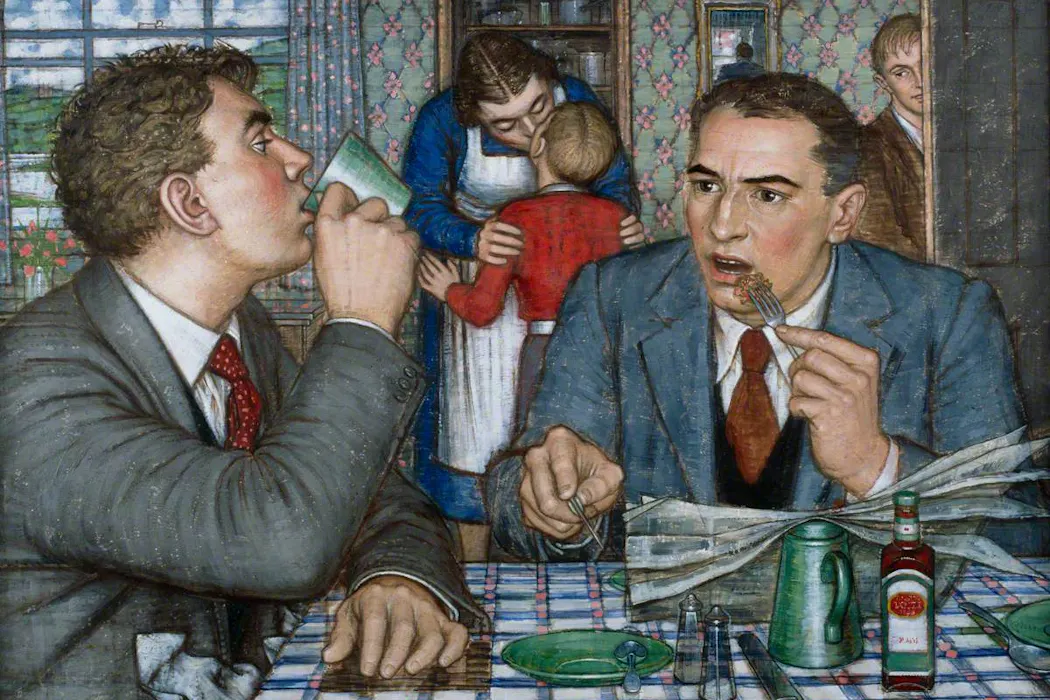
English food is often perceived as ancient and reassuringly unchanging. Podcast host Lewis Bassett’s new book The Full English: The Ways We Eat and Why makes that view harder to sustain.
Bassett’s sociological approach shows how urbanisation, empire, industry and even Brexit have influenced the way the nation eats. Take the now ubiquitous sausage roll. Such a meat dish was once the preserve of the upper classes, but as Bassett states, modern mass manufacturing has allowed “people in Britain to regularly eat meals that were once the preserve of the wealthy”.
The Full English is not a history of English recipes, nor a conventional food history. Bassett combines professional kitchen experience with academic humanities expertise to explore why the English eat the way they do, and what those habits reveal about English society. The book’s central argument is that English food is unusual because of England’s particular route to modernity, which has entangled ideas about food with ideas about class and identity.
One of the book’s strengths is the combination of historical research and personal anecdote. Bassett goes commercial fishing and works in an artisan bakery then recounts his experiences. These excursions allow him to observe food culture at close quarters, but the sociological imperative sometimes comes at the expense of the food itself.
He gives detailed descriptions of the settings in which he eats: a “posh” restaurant where he spends £369.56 on a solitary fine-dining experience – the very restaurant he has worked in for free all week, which revealingly didn’t see fit to discount the bill in light of this – and a fish-and-chip shop with plastic tablecloths, where he assumes the cod will be frozen Icelandic. But there is surprisingly little about what was enjoyable, distinctive or memorable about either meal. Bassett is primarily interested in what these dining experiences tell us about society.
The book takes us through eight foods or products, including bread, curry, fish and chips and roast beef. Bassett illustrates his argument about class with the eponymous full English breakfast, a dish with “a distinctly landed ancestry” that has acquired a working-class identity in contemporary culture.
Its familiar components of Danish bacon, factory-made white bread and Italian tinned tomatoes reveal a dish assembled from ingredients that would once have been absent from a lower-class diet. White bread itself, as Bassett explains in the opening chapter, was historically a preserve of the wealthy. The full English highlights the book’s broader argument: what looks like an ancient expression of national identity may actually be the product of relatively recent social and economic change.
Readers anticipating a nostalgic, sensory history of food will need to look elsewhere. There is little attempt to evoke the pleasures through which food becomes part of everyday life.
Take whelks. Bassett could have followed the rise of seaside leisure and the whelk stalls that appeared on promenades and piers in the Victorian era, where boiled whelks were sold by the half- or full-pint, dressed with malt vinegar and white pepper. Instead, he confesses his difficulty relating to them as a foodstuff and observes that “almost no one in Britain [eat them] or does so regularly”.
This island nation harvests and sells tonnes of whelks but scarcely eats them, while the fish we do eat is apparently “almost all imported”. This conundrum poses a good sociological question, but one that leaves the reader knowing rather less about why anyone might actually enjoy eating a whelk.
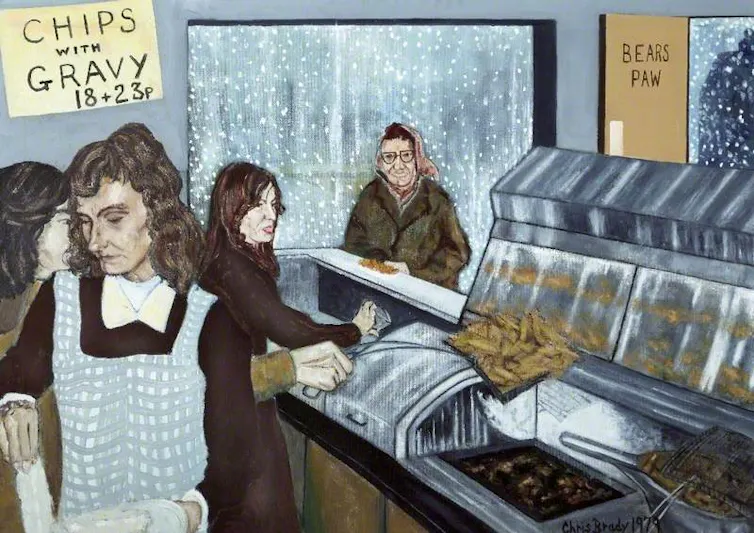
St Helens Council Collection, CC BY-NC
Structurally, the book investigates English food culture through commerce and restaurant culture so extensively that it might almost have been subtitled “The Ways We Eat Out and Why”. Even the humble sausage roll becomes an occasion for an account of Greggs and the growth of the takeaway chain. This is often fascinating, particularly when Bassett uses commercial history to explain how foods once associated with particular classes become everyday fare. But it also reinforces the sense that food here is principally evidence: something to be interpreted rather than savoured.
Yet for all that, there is something invigorating in Bassett’s project. By stripping English food of its comforting myths, he opens the door to seeing it anew. The book may not always make you hungry, but it does make familiar foods newly puzzling. Its insistence that we look harder at what and how we eat is a call to think differently about English food culture – and perhaps to imagine what it might become.
This article features references to books that have been included for editorial reasons, and may contain links to bookshop.org. If you click on one of the links and go on to buy something, The Conversation UK may earn a commission.

Sara Read does not work for, consult, own shares in or receive funding from any company or organisation that would benefit from this article, and has disclosed no relevant affiliations beyond their academic appointment.
Original source: https://analysis1.mil-osi.com/2026/09/29/from-sausage-rolls-to-full-breakfasts-class-has-shaped-the-foods-that-define-english-identity/