

Source: The Conversation – Canada
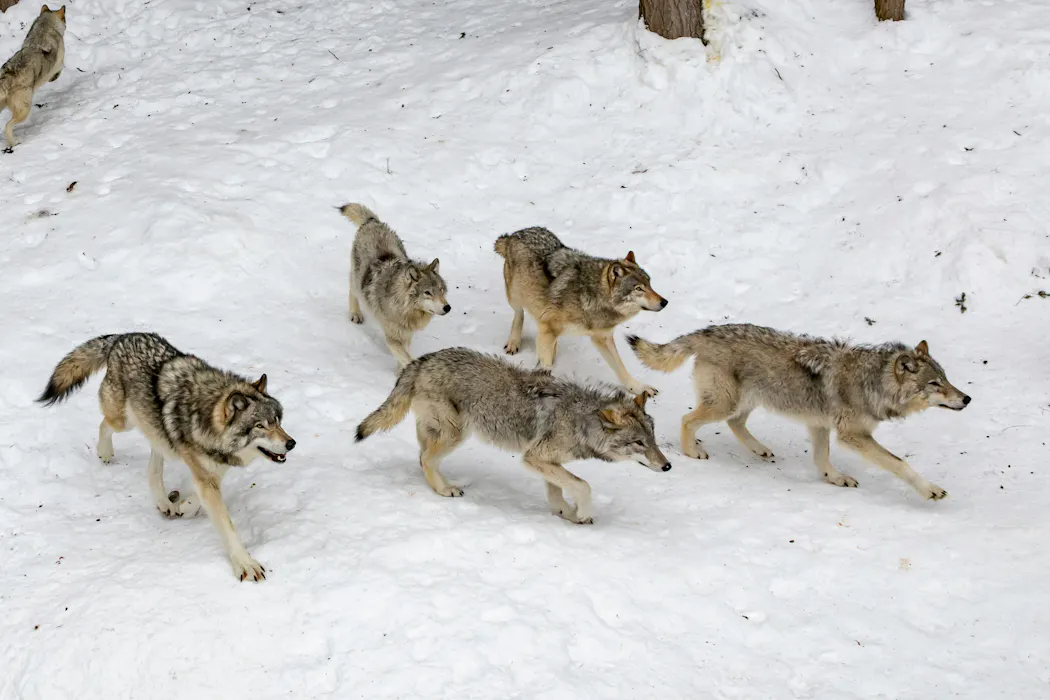
The government of British Columbia is facing renewed criticism over a proposed extension of its controversial wolf culling program. This decade-long program, which has cost taxpayers $13 million, was mobilized in response to dwindling caribou populations across the province.
While the government emphasizes the effects of predators on caribou, they gloss over the impact of habitat destruction by humans. The scapegoating of wolves is not new, but a repackaging of a centuries-long settler colonial view of the wolf as a monster — a narrative largely inspired by European folklore.
Our ongoing research engages with the social dimensions of predator culling, the cultural iconography of wolves and grizzly bears, human wildlife conflict and the militarization of wildlife management.
The true driver of caribou declines
Habitat loss is the primary driver of caribou declines. This is driven by natural events and resource extraction. Habitat loss has far-ranging consequences for caribou, creating competition for resources and increasing the risk of predation from wolves and other predators.
Yet, the B.C. government continues to approve logging projects in caribou habitat. Caribou have lost more habitat than they have gained in recent years, accelerating their path towards extinction. Some researchers have argued that this wolf cull subsidizes caribou habitat destruction. Killing wolves does not address this ecological destruction and may create new challenges.

(Arctic Odyssey/Flickr), CC BY
Some studies have documented that caribou populations rebounded following wolf culls, while others indicate that this isn’t an effective long-term solution. Reviews of predator control programs, more broadly, illustrate there is no clear consensus surrounding their efficacy.
The B.C. government’s emphasis on wolf culling ignores that other predators fill the gap in more accessible landscapes. This presents a new set of challenges as certain predators, like grizzly bears, are threatened species whose future is also in jeopardy.
Militarizing wolf ‘management’
While the vilification of wolves is not new, the processes for killing the iconic species have constantly evolved. Methods such as hunting, trapping and poisoning have now evolved to use strategies taken directly from the military in the name of conservation.
B.C.’s wolf cull involves the use of helicopter gunning, where assault-like weapons are used to kill wolves. In addition, the government uses so-called “Judas wolves.” Radio tracking collars are placed on individual members of a wolf pack. Aerial gunners then follow the wolf back to its pack and kill all the wolves. The process is then repeated with new packs.
While there is research examining the militarization of conservation, primarily in the realm of anti-poaching patrols, there is less research on how similar militaristic logic is used to kill animals in the name of conservation. This includes bounty-like programs and predator-killing contests.
This militaristic mindset is buttressed by a centuries-long use of the “wolf” as a proxy for supposed racial and immigrant threats. This shapes the reciprocal dehumanization and animalization of marginalized peoples and wolves, rendering each as deserving of state violence. This image of a monstrous wolf legitimizes violence against them.
Importance to Indigenous Peoples
Both wolves and caribou hold spiritual importance to many Indigenous nations. In 2021, 216 wolves were killed in Wisconsin’s hunt in less than 72 hours. The Ojibwe, for whom the wolf is spiritually important, mobilized by invoking their treaty rights to safeguard the wolves.
In B.C., the Gitxsan First Nation has opposed the provincial government’s wolf cull. In February, members of the Allied Clans Coalition wrote a letter to the government stating that the province does not have permission to kill wolves on their territory.
In many ways, wolves and Indigenous nations have experienced a parallel erasure in the context of settler colonialism. Some Indigenous leaders have argued the ideologies that have fostered violence against Indigenous nations are the same ones that foster violence against wolves and the land.
Some Indigenous nations have also taken part in or encouraged predator culling to ensure their food sovereignty. To suggest this means that wolf culling is not a form of settler colonial violence is overly simplistic. Rather, the settler colonial dimensions of predator culling arise from the transformation of natural resources as forms of property to be possessed and managed.
The ethics of wolf culling
There are longstanding concerns about the ethics of B.C.’s wolf cull and conservation organizations have drawn attention to its inhumane nature.

(Government of B.C.)
Wolves are not the monsters that western culture has portrayed them as; they are social beings with complex family structures.
Wolves have highly complex social structures. When a pack member is killed, the disruption destabilizes the group. Packs lose the collective knowledge and co-ordination required to hunt wild prey, so packless wolves may redirect their efforts toward accessible livestock. This illustrates the contested nature of predator culling and its supposed efficacy.
The B.C. government has continued to sign the death warrants of wolves and caribou, prompting some Indigenous nations to call for emergency protections from the federal government.
Wolves are a vital part of Canada’s rich biodiversity and are recognized as a culturally important species. They embody all that is wild about the Canadian wilderness. As long as the B.C. government prioritizes resource extraction in sensitive habitats, the fates of both wolves and caribou will remain dire.

The authors do not work for, consult, own shares in or receive funding from any company or organisation that would benefit from this article, and have disclosed no relevant affiliations beyond their academic appointment.
Original source: https://analysis1.mil-osi.com/2026/09/17/b-c-s-militarized-wolf-cull-is-a-misguided-approach-to-a-complex-issue/