

Source: The Conversation (Au and NZ)
Artificial intelligence (AI) is changing the tasks people do at work and the skills they need. As work changes, being able to move between jobs, and sometimes industries, may become increasingly important.
For women, the pressure to adapt may be particularly significant. Jobs and Skills Australia has found women have greater exposure than men to automation and AI changes, largely because of the industries and occupations in which they work.
And while it doesn’t mean that jobs will just disappear, it does mean AI is likely to change how the jobs are conducted. Many workers will need to learn new skills and adapt; others may need to move into different jobs or industries altogether.
Much of this discussion about transition currently focuses on workers – they need to reskill, retrain and become more adaptable.
But there’s another side to this story. Employers across industries may also need to become more flexible in how they decide what experience really matters.
Changing industries doesn’t mean starting again
Our research with women who successfully moved into construction from other unrelated industries suggests employers will also need to adapt, particularly in how they recognise experience gained in other sectors and industries. Changing industries does not mean starting from zero.
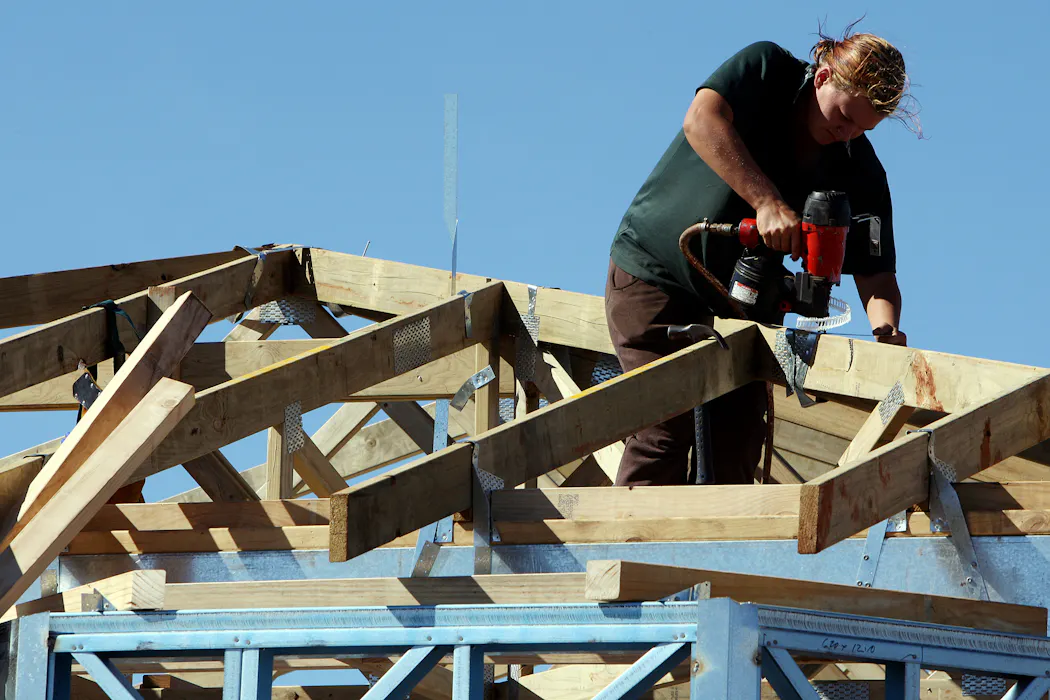
We studied 655 women working in Australian construction companies. Some had started their careers in construction, while others had moved there from health care, education, transport, finance, hospitality or manufacturing.
Those career changers brought many skills developed over the years, including management, communication, collaboration, coordination and experience. One woman who previously worked as a commercial pilot and later in engineering consulting told us:
I do have a lot of experience, and I do have lot of relevant skills that I think I bring to the table too.
But having these skills from diverse professional backgrounds and getting the employer to recognise them are two different things.
Australian construction industry is already struggling to find enough workers. Around 20,000 construction jobs remain unfilled, while women make up just 13% of the industry’s 1.37 million workers.
Attracting more women could help. BuildSkills Australia estimates that increasing women’s participation in residential construction could add 51,000 workers by 2029, reducing its projected workforce gap by 44%.
Getting through the door
In fact, most of the career changers in the study entered construction through informal channels, often using personal networks rather than conventional recruitment.
One woman explained how important these connections had been for her:
If I […] didn’t have access to this network, I’m not sure how I’d even go about starting. I’d find it intimidating, and would presume my qualifications wouldn’t marry with the expectations.
Networks might help with people getting a foot in the door, but they also reveal a bigger problem. What if people moving between industries don’t have the industry contacts, and they don’t know where opportunities are? They may assume that their skills and experience are not what the employers want.
Our research showed this may also happen via formal recruitment. Hiring managers recognised that the problem was not simply with the candidates, but with how the industry viewed career changers. One told us:
I don’t believe the obstacle is with the candidate; I think it’s us not being creative enough to create roles or positions that would suit the skill set of those candidates or provide them with a platform where they can transition into the industry.
This creates a paradox – we are asking workers to become more mobile and more adaptive, while employers may still struggle to recognise experience gained in another industry.
Who really needs industry experience?
This does not mean employers should ignore industry experience, of course. It takes time to learn those critical skills.
The hiring managers we interviewed said specialist roles require specialist training in construction or engineering. But they also saw much more scope for people to move across industries into roles such as administration, finance, safety and environmental work. In these jobs, skills developed elsewhere could be very useful, while industry experience could sometimes be learned.
That suggests a different way of thinking about career changers.
Instead of asking only whether this candidate has worked in our industry before, employers could ask:
- what existing skills could the person bring to the role?
- what can they learn?
- and what genuinely requires specialist training or experience?
Adaptation may need to work both ways. Employers will have to get better at recognising transferable skills.
Focus on the skills
This matters beyond construction. As AI changes the jobs and the skills needed, workers will increasingly be told they need to adapt.
But career mobility and adaptation depend on more than workers being willing to change. If we expect workers to become more adaptable as AI changes the work we do, employers may need to become more adaptable too.
They can do that by getting better at recognising what skills people already bring, what they can learn, and what really requires previous industry experience.
Read more:
These 3 charts show female-dominated jobs are actually the most exposed to AI

Marzena Baker does not work for, consult, own shares in or receive funding from any company or organisation that would benefit from this article, and has disclosed no relevant affiliations beyond their academic appointment.
Original source: https://analysis1.mil-osi.com/2026/09/18/as-ai-reshapes-jobs-and-workers-change-industries-employers-need-to-be-more-flexible-too/