

Source: The Conversation – UK
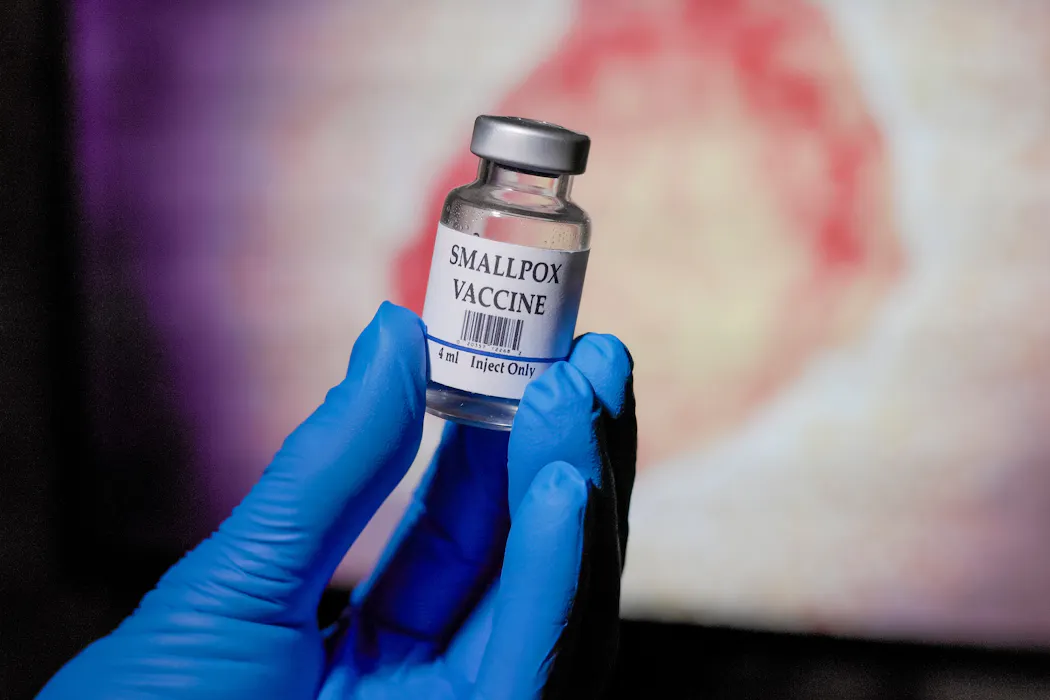
Smallpox is the only human infectious disease to have been eradicated worldwide. Researchers have now recovered fragments of ancient DNA belonging to variola virus, the virus that causes smallpox, from the naturally mummified remains of two Indigenous people buried in northern Chile.
For centuries, smallpox caused devastating epidemics. Its severe form, variola major, killed around 30% of those infected, although the rate varied between outbreaks and populations.
The first documented outbreak in the Americas occurred on the island of Hispaniola in 1518. During the 16th century, successive epidemics became a major contributor to the catastrophic loss of Indigenous life, amid the wider violence and disruption of European colonisation.
In 1967, the World Health Organization (WHO) launched an intensified eradication programme, combining vaccination with surveillance and containment. The last-known naturally acquired case occurred in Somalia in 1977, and the WHO declared smallpox eradicated in 1980.
Live variola virus is officially retained at two high-security WHO-designated laboratories for approved research. The material found in Chile consists only of damaged genetic fragments preserved for centuries.
These remains date from approximately 1492 to 1631, spanning the transition from Inca rule to the Spanish colonial period. They are the first ancient smallpox genomes recovered from the Americas.
Historical records had already provided strong evidence that smallpox arrived following European contact. The recent study adds direct molecular evidence by revealing how the Chilean viruses were related to strains previously found in Europe – but it cannot identify who carried the virus, or how it reached this community.
The mummified remains also bore small skin lesions. Earlier research led by bioarchaeologist Bernardo Arriaza, a co-author of the study, had linked these lesions to chronic arsenic exposure – supported by elevated arsenic levels in the remains’ tissues.
The variola DNA confirms that both people were infected with smallpox, making the disease another possible explanation for the lesions. However, it cannot establish what caused those particular marks, or whether smallpox caused either person’s death.
Arsenic remains plausible because the region’s rivers carried naturally occurring arsenic from the surrounding geology, contaminating local food and water.
Could ancient smallpox return?
The researchers recovered fragments of viral DNA. No intact virus particles were found.
Ancient DNA usually breaks into short pieces and undergoes chemical changes as it ages. Scientists can sequence the surviving fragments and use computers to determine how they once fitted together.
So, when the researchers say they reconstructed two genomes, they mean that they assembled genetic sequences computationally. They did not create physical viruses.
A poxvirus particle contains an intact genome, together with proteins and enzymes that it needs to begin reproducing inside a cell. The ancient fragments lack this viral machinery, so cannot spontaneously cause smallpox.
Deliberate reconstruction in a laboratory raises a separate question. In 2018, researchers assembled horsepox virus from purpose-made synthetic DNA, using highly specialised laboratory procedures including a helper poxvirus that supplied essential functions.
The Chilean study involved sequencing naturally degraded DNA and assembling its genetic information on a computer. It creates no plausible route by which smallpox could return.
What the genomes reveal
As viruses reproduce, genetic changes accumulate. Comparing these changes allows scientists to place samples on an evolutionary family tree.
The two Chilean viruses belonged to a now-extinct lineage that diverged from other known variola lineages around 1296. This is an estimated evolutionary branching date, rather than the date smallpox arrived in Chile.
On the family tree, the Chilean genomes branch after early medieval European strains and before lineages that circulated in later centuries. Their relationship to earlier European viruses, combined with the post-1492 dates of the remains, supports the conclusion that smallpox reached the Americas through colonisation.
The genomes also illuminate how variola became specialised for infecting humans.
Many related poxviruses can infect several animal species. They carry accessory genes that help them reproduce in different hosts and overcome each species’ immune defences. Variola virus, by contrast, infects only humans.
During its evolution, some of these accessory genes were no longer essential for transmission between people. Some remain as recognisable but non-functioning copies, called pseudogenes, while others have disappeared entirely.
Scientists call this gradual loss of functioning genes reductive evolution. Comparing which genes are intact, disabled or missing in ancient and modern variola genomes helps researchers trace how the virus became increasingly specialised for humans. This process may help explain its restricted host range.
But gene loss alone cannot explain why smallpox was so deadly, because severity depends on complex interactions between viral genes and the human immune response.
The dated remains also reveal that the virus did not evolve at a constant speed. The study found that gene inactivation continued at a roughly steady pace until the late 16th century. A period followed in which genetic substitutions accumulated more slowly, before the rate increased again.
The authors suggest that during the enormous colonial-era epidemics, variola was already well suited to spreading among populations with little acquired immunity, so relatively few new variants gained an advantage.
Vaccination, introduced in 1796, later changed the immune environment, and may have altered which mutations persisted. The timing suggests a connection, although the study’s genomes cannot prove what caused the changes in evolutionary rate.
Nonetheless, the Chilean sequences fill a gap between genomes recovered from medieval Europe and those belonging to later variola lineages. They are helping researchers trace how smallpox reached the Americas, and evolved as it spread.

Aris Katzourakis receives funding from the European Research Council.
Original source: https://analysis1.mil-osi.com/2026/09/15/can-an-ancient-virus-be-brought-back-to-life-what-500-year-old-smallpox-dna-reveals/