

Source: The Conversation – UK
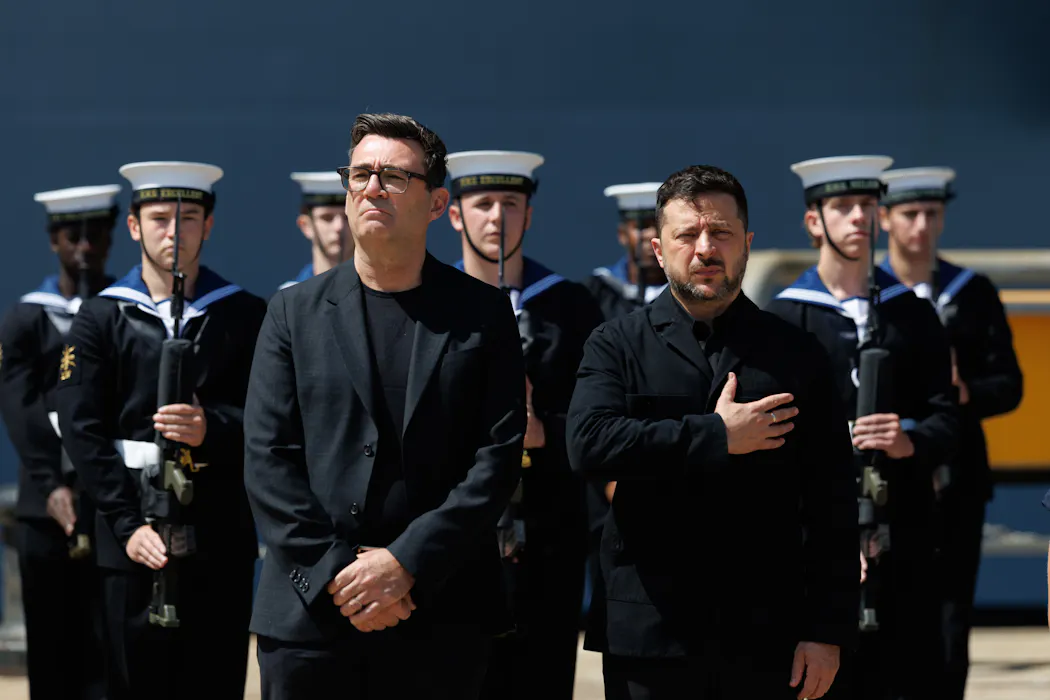
Shortly before entering Downing Street, Andy Burnham made a promise that appeared to be reassuring in its simplicity. “I won’t change,” he said. “I have a style. It’s my style.”
Burnham’s political appeal partly rests on the impression that there is little distance between the politician and the person. His black T-shirt and jacket, attachment to Everton football club and the band New Order, ease with crowds and habit of speaking without notes all reinforce a recognisable persona. After the more reserved Keir Starmer, Burnham’s informality has been part of the attraction.
Read more:
No lectern and the promise of a ‘new model’ – what we can learn from Andy Burnham’s speech
Burnham has also been described as a people pleaser, raising questions about whether he would be willing to disappoint or anger people when a decision requires it. Conservative leader Kemi Badenoch used the same label in questioning his fitness to make difficult choices.
Yet the description is difficult to reconcile with his record. His campaigning for the Hillsborough families suggests a politician prepared to pursue difficult causes. His first instruction as prime minister launched a drive to end rough sleeping, and he has pledged to spend “political capital” on social care.
Social care in particular raises unavoidable questions about who should bear the cost. Choosing it as an early priority sits uneasily with the idea that Burnham is mainly concerned with approval.
The problem with the label is that it frames the leadership test too narrowly. The sharper question is how Burnham’s instincts will operate in government. A leader driven to correct what he feels is wrong may create energy and direction. But a prime minister must also decide which problems to address first, how much political capital each can consume, and what must wait.
His promise therefore prompts a larger leadership concern. Does staying authentic require him to behave as he always has?
Time to start disappointing people?
A recognisable style can help to build trust, while abrupt changes may invite accusations of opportunism. Yet governing creates demands that do not exist when you’re campaigning, in opposition or a regional leader.
As mayor of Greater Manchester, Burnham built much of his reputation by not being part of the political centre. He could press Westminster for more money, criticise national policy and speak for a region that felt overlooked. In Downing Street, he is at the centre. He must now arbitrate among competing claims, accept responsibility for trade-offs and disappoint groups whose demands cannot all be met.
The identity that has served him well is that of the campaigner who identifies a neglected problem, mobilises attention and presses for action. Campaigning provides immediate and visible feedback through public response, media attention and a clear sense of momentum. In government, the results are slower and dispersed across institutions. Often they only become apparent several years later.
Under pressure, returning to campaign mode may therefore feel familiar and productive for Burnham. But repeated appeals to urgency or a preoccupation with worthy causes could produce too many initiatives competing for limited capacity.
The prime minister must sometimes be the approachable listener – it appears that Burnham already knows how to do this. At other times, he must slow down an initiative, defend an unpopular compromise, create distance, absorb criticism or tell supporters that a worthy proposal cannot yet be funded. The politician who prospered by challenging authority now must exercise it.
Psychologists use the term self-monitoring to describe the capacity to notice social and situational cues and adjust behaviour accordingly. It has sometimes implied a lack of authenticity. Someone who self-monitors becomes a social chameleon, changing colours to suit the audience.
But the evidence is more complicated; self-monitoring is different to seeking approval. It involves recognising what a situation requires and adjusting accordingly. Burnham can read an audience, but the test in Downing Street is whether he can respond as readily to less visible cues – things like capacity issues, competing claims for funds and the need to achieve things in a short space of time.
A better description of what leaders need is repertoire. This accords with the idea of multiple selves. People behave differently across roles and relationships without assuming that one version is false or inauthentic. A leader may be decisive in a crisis, curious in discussion, supportive when a colleague is struggling and demanding when standards slip. Each can be a genuine capacity of the same person, with context determining which should come to the fore.
An indication that Burnham’s repertoire is wider than he has perhaps been given credit for is the way he showed he can adopt a more statesmanlike role in his first overseas trip to Ukraine in August 2026??. The evidence is in his formal attire, chairing the “coalition of the willing” meeting, and firm tone in declaring continuing UK support for Ukraine.
At the same time, he rebuffed Russian criticism that the UK was adding fuel to the fire with the no-nonsense response: “Who started the fire? That’s the question isn’t it?” There will be much tougher tests, of course.
A prime minister needs to remain close to public sentiment while creating distance from it, press for change while pacing reform, and advocate a cause while arbitrating among competing claims. This implies Burnham will need to bring forward a less visible part of his repertoire, the patient institutional leader who delegates, sets priorities and accepts that lasting reform rarely moves at campaign speed.
We already know that he can connect with people, recognise their frustrations and draw attention to causes he believes deserve action. What remains unclear is whether he can convert those instincts into a coherent and sustainable programme of government. In that sense, Burnham’s authenticity will be tested by whether he can expand his leadership and change his style when necessary without losing the moral and political identity that brought him to office.

The authors do not work for, consult, own shares in or receive funding from any company or organisation that would benefit from this article, and have disclosed no relevant affiliations beyond their academic appointment.
Original source: https://analysis1.mil-osi.com/2026/08/27/andy-burnham-the-social-chameleon-why-a-leader-with-different-personas-can-still-be-authentic/