

Source: The Conversation (Au and NZ)
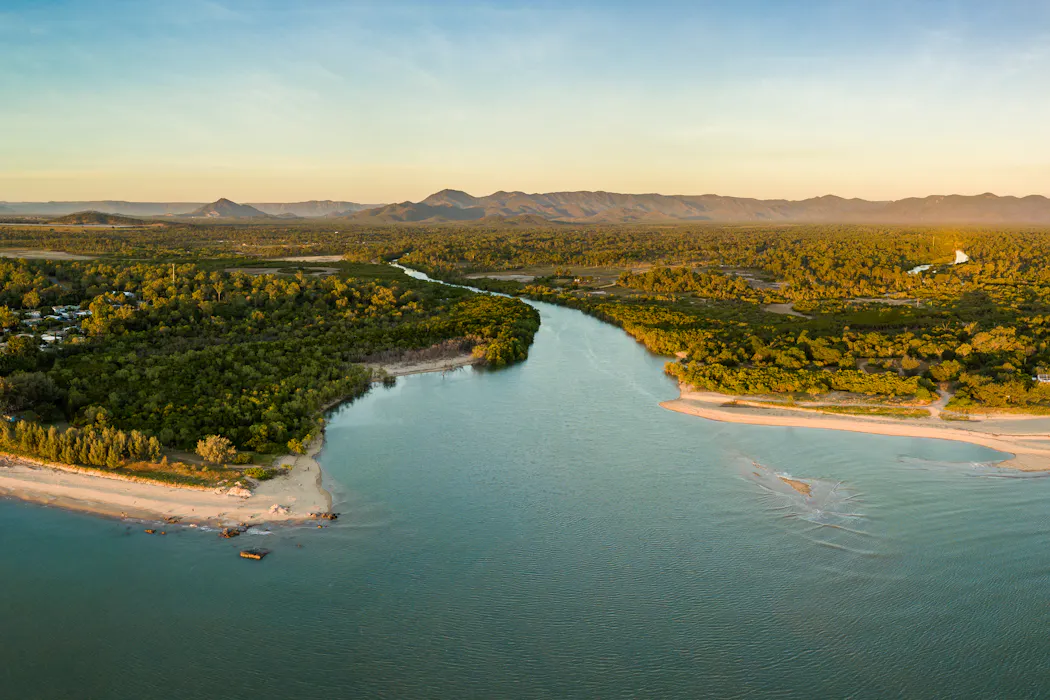
Imagine a plume of brown sediment is washed off the land into Queensland rivers and carried out to sea. Here, it can settle on seagrass and inshore corals, potentially smothering them. River water often also carries nitrogen from fertiliser residue, which can fuel algal growth and damage coral health.
We have long known that poor water quality is a serious threat to areas of the Great Barrier Reef close to shore. The reef faces other major challenges, such as marine heatwaves driven by climate change that trigger large-scale coral bleaching. But unlike climate change, water quality is something Australia can directly control.
Since 2014, the federal and Queensland governments have collectively spent more than A$5 billion on catchment programs for reef health. Many of these aim to improve water quality by reducing fertiliser runoff from farmland and tackling erosion to stop sediment entering waterways.
Our new research shows water quality is improving in many rivers that flow to the reef. This is good news.

Matt Curnock, CC BY-NC
What did we learn?
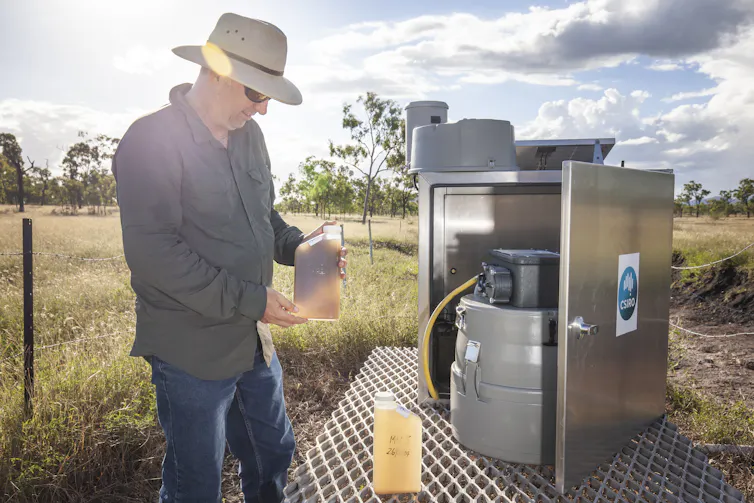
To find out if water quality is changing, our research team analysed up to 37 years of monitoring data from seven major river systems to track changes in fertiliser runoff (dissolved inorganic nitrogen) and suspended sediment. These are two of the five key pollutants scientists use to track changes in river basins. Our research is the largest and most comprehensive analysis of catchment water quality for the reef to date.
These river basins drain around two thirds of the Great Barrier Reef water catchments, an area the size of New Zealand. Given the complexity of the data, and the size of some catchments, we did not necessarily expect to detect measurable improvements in water quality.
However, the data showed small but measurable improvements in nitrogen and sediment across most monitoring sites. Rivers with improved long-term water quality include the Herbert, Burdekin and Pioneer Rivers, as well as the Tully and Fitzroy.
Our data show that water quality didn’t follow a predictable pattern of steady improvement. Most rivers improved in bursts, often following major shifts in rainfall patterns, cyclones, land use or fertiliser practices.
In 2028, Australia will have to report progress on its water quality plan to UNESCO, which has monitored the Great Barrier Reef since it was listed on the World Heritage List in 1981. Trends in these two pollutants will form part of this response.
CSIRO, CC BY-NC
What changed?
In a companion study, we analysed what factors might be responsible.
To do this, we used data on how much fertiliser had been applied to key farmland cropping areas in these regions between 1910 and 2024.
This new data set showed synthetic fertiliser use peaked in the 2000s and 2010s and has now fallen in many sugarcane- and banana-growing regions. The drop is substantial. In 2024, fertiliser use was 25–49% lower compared with each region’s peak.
Importantly, less fertiliser didn’t mean less sugarcane. Crop yields have stayed steady. These declines likely reflect a combination of factors such as improved farm management practices, changes to land use and increasing fertiliser costs.
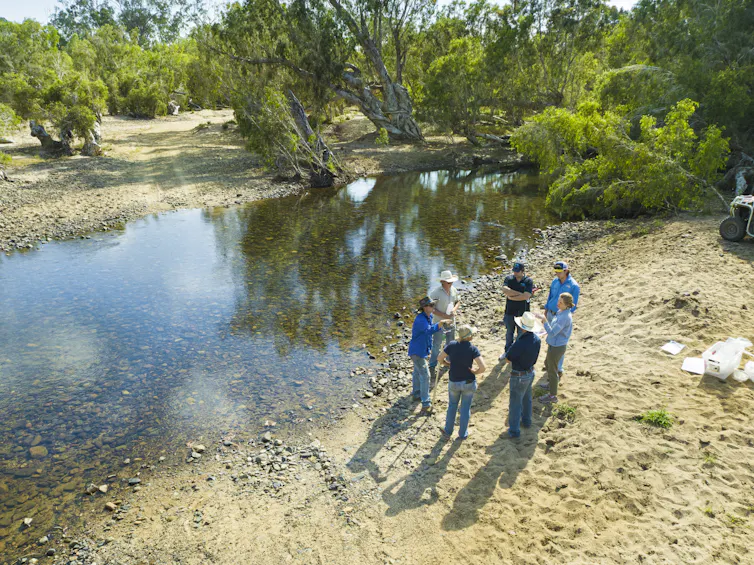
We’ve worked alongside many of these graziers and farmers through water quality projects and know the effort and costs involved in changing long-established farming practices. Farmers have to balance productivity, cost, time and ongoing challenges such as weather conditions and market demand.
NQ Dry Tropics, TropWATER JCU, CC BY-NC
There’s more to do
It’s encouraging to see signs of improvement. But our findings should not be interpreted as meaning all rivers in these catchments are now healthy.
Although the trends are improving, nitrogen and sediment levels in many rivers are still higher than the thresholds considered suitable for supporting healthy coastal and marine ecosystems, such as wetlands, seagrass and near-shore coral reefs.
This isn’t surprising. Environmental recovery rarely happens quickly or evenly. River catchments often take several years to respond to improvement efforts, such as riverbank revegetation for sediment erosion control.
That’s why long-term river monitoring data is so important. Without this, it’s difficult to distinguish short-term fluctuations from genuine change.
The reef still faces enormous challenges from climate change, extreme weather and ongoing land-use pressures, including tree clearing.
What our findings suggest is that water quality trends in many of the river catchments discharging to the Great Barrier Reef are moving in the right direction.
It has not been easy to get here. It has taken long-term effort from farmers, graziers, catchment managers and researchers. Our scientific evidence demonstrates previous management efforts have made an impact, at scale – and that current and future efforts are worthwhile.
In a world increasingly dominated by stories of environmental decline, these slow signs of improvement are worth celebrating.
We would like to acknowledge the research team: Cassandra James and Stephen Lewis (TropWATER, James Cook University) and Petra Kuhnert and Emma Lawrence (CSIRO).

Zoe Bainbridge receives funding from the Australian government under the National Environmental Science Program and the Queensland Department of the Environment, Tourism, Science and Innovation.
Rebecca Bartley receives funding from the Department of Climate Change, Energy, the Environment and Water. She is also a member of the Reef 2050 Independent Expert Panel.
Original source: https://analysis1.mil-osi.com/2026/08/25/we-finally-have-some-encouraging-news-on-great-barrier-reef-water-quality/