

Source: The Conversation (Au and NZ)
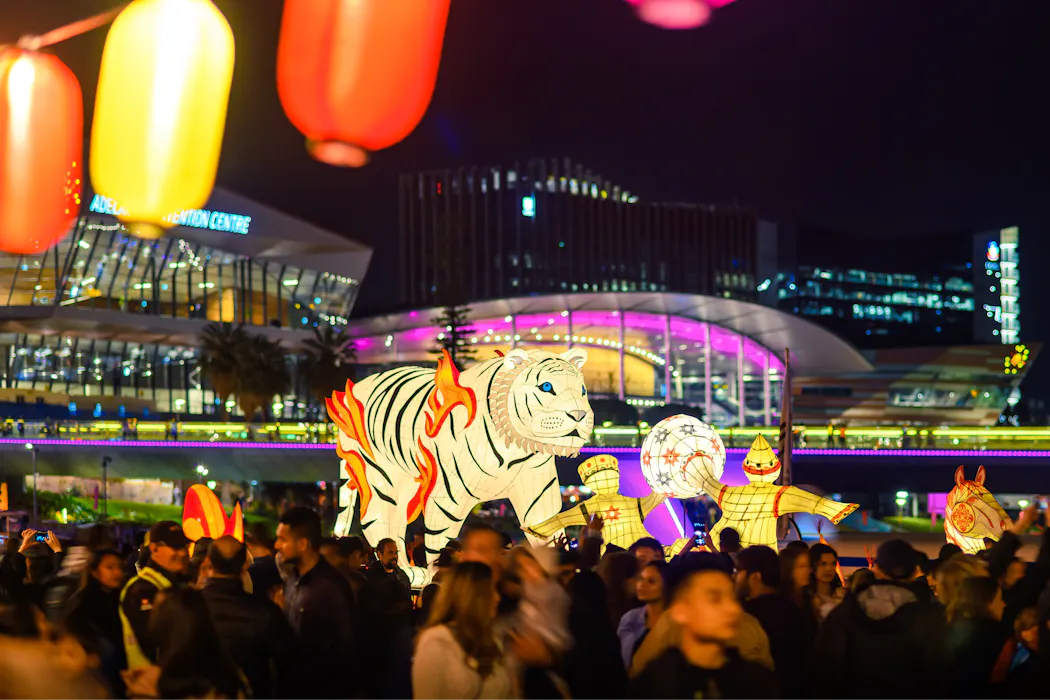
Adelaide has spent decades building its identity as a “festival city”, yet 2026 will be the final OzAsia Festival after 20 years. Since 2007, OzAsia has showcased Asian and Asian-Australian art, literature, music and public debate.
The festival’s presenter, Adelaide Festival Centre, says Asian voices will be programmed year-round from next year onward, while The Lucky Dumpling Market will continue to be held each spring.
Adelaide Festival Centre chief executive Kate Gould framed this as a strategic move:
having a dedicated OzAsia Festival that’s about Asian arts doesn’t really represent the fact that Asian voices also want to see a year-round presence at the centre.
But it raises broader questions about the importance of cultural festivals to the fabric of a society, and what can be lost when they disappear.
Visibility matters
More year-round arts programming is always welcome – but festivals serve a different purpose. Their power comes from concentration. For a limited period, people gather in the same place, cultural activity becomes highly visible, and everyday routines are interrupted.
Festival researchers call this liminality. It can create communitas, a temporary sense of connection and belonging among people sharing an experience. Research on festivals and liminality shows these experiences can continue to shape how people relate to others after returning to everyday life.
A festival focused on Asian and Asian-Australian art and culture matters even more right now, given the renewed social division around migration. Anti-Asian racism was widely documented during the COVID pandemic. And we have since seen a number of anti-immigration demonstrations held across major cities, including Adelaide.
Cultural authority and authorship
Diversity Arts Australia’s 2019 Shifting the Balance report found culturally and linguistically diverse Australians made up only 9% of 1,980 leaders (such as board members, chief executive officers and creative directors) across 200 major cultural organisations. About half (51%) of these organisations had no culturally and linguistically diverse representation at the leadership level.
Similarly, Creative Australia’s Artists as Workers report found only 3% of artists surveyed in 2023 were born in Asian countries, compared with 15% of the overall workforce.
Research has also shown Australia’s ethnic-minority artists often have less access to financial resources and professional career networks, despite having strong artistic skill, knowledge and qualifications.
My research, published last year with Ting Zhang and Ying Zhu, explored how Asian-Australian artists are subject to structural exclusion. Based on 21 interviews, we found they face stereotyping, network gatekeeping, and the burden of unpaid cultural labour. They also have fewer role models, and limited influence over programming, funding and strategic decisions.

Xplorer Studio
Under the leadership of former Artistic Director Annette Shun Wah, and current Festival Director Joon-Yee Kwok, OzAsia became a platform for artist development and community-building.
The Artist Lab, developed with Contemporary Asian Australian Performance and held alongside the festival, helps artists build networks, gain mentoring and skills, and connect with South Australian arts organisations. It would be sad if OzAsia removed this dedicated development pathway.
With the shift towards year-round programming, and the loss of Asian-Australian leadership at the festival, who will have the authority to decide which stories are told, how they are told, and by whom?
A strategic bridge with Asia
Australia is geographically embedded in the Indo-Pacific, a region with about 4.8 billion people, or 58% of the world’s population. Our political, economic and diplomatic future is closely tied to Asia. And this is increasingly reflected in our demographics.
In 2025, 32% of Australians were born overseas (up from 24.2% in 2005), with India and China among the largest overseas-born populations.
Moreover, Creative Australia’s 2025 National Arts Participation Survey found 40% of Australians aged 15 and above participated in the arts to connect with their cultural background, language group or community (up from 32% in 2022).
But OzAsia isn’t just for Asian communities. For non-Asian Australians, it’s an opportunity to engage with Asian stories, perspectives and artistic practices.
More broadly, it provides a space where different communities can recognise cultural differences and celebrate them together. It also holds strategic value as a platform for long-term cultural exchange.
Reducing the festival to the Lucky Dumpling food market risks losing narratives that explore the complexity of the Asian-Australian experience.
The gap between policy and practice
South Australia has built much of its cultural identity and infrastructure around festivals. Yet, in less than a year, Adelaide Festival Centre has removed two longstanding events from its portfolio. The Adelaide Guitar Festival ended late last year, after 18 years.
This is significant for a city that promotes itself as “Australia’s festival capital” and a UNESCO City of Music.
The City of Adelaide, the state government, and federal policy all emphasise the importance of cultural infrastructure, diversity, participation and international engagement.
The City of Adelaide’s cultural policy explicitly defines festivals as “cultural infrastructure”, while the state policy commits to strengthening South Australian festivals and events.
How will these policy ambitions be delivered as festival platforms disappear?

Boram Lee does not work for, consult, own shares in or receive funding from any company or organisation that would benefit from this article, and has disclosed no relevant affiliations beyond their academic appointment.
Original source: https://analysis1.mil-osi.com/2026/08/25/ozasia-festival-to-end-after-20-years-in-a-huge-blow-for-asian-australian-art-and-culture/