

Source: The Conversation (Au and NZ)
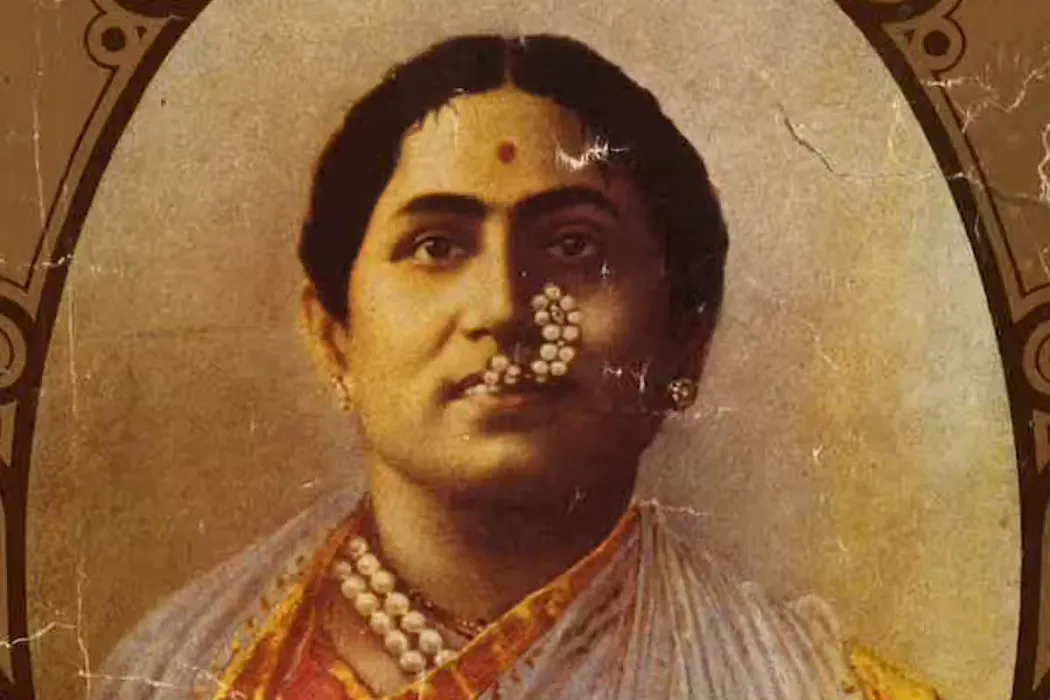
For much of the 20th century, the most admired wife in Marathi-speaking India was not a woman at all.
Bal Gandharva (1888–1967), a celebrated impersonator of Marathi sangeet natak (musical theatre), played devoted heroines with such conviction that film actresses well into the 1970s were trained to reproduce his mannerisms.
How did a man come to define middle-class femininity with such authority?
My recently published research traces Gandharva’s enactment of womanhood from the stage to the marketplace.
It reveals how his star persona became a site where respectable Hindu femininity was produced and commodified – a project that the theatre industry, emerging consumer culture and Hindu nationalist politics each exploited for their own ends.
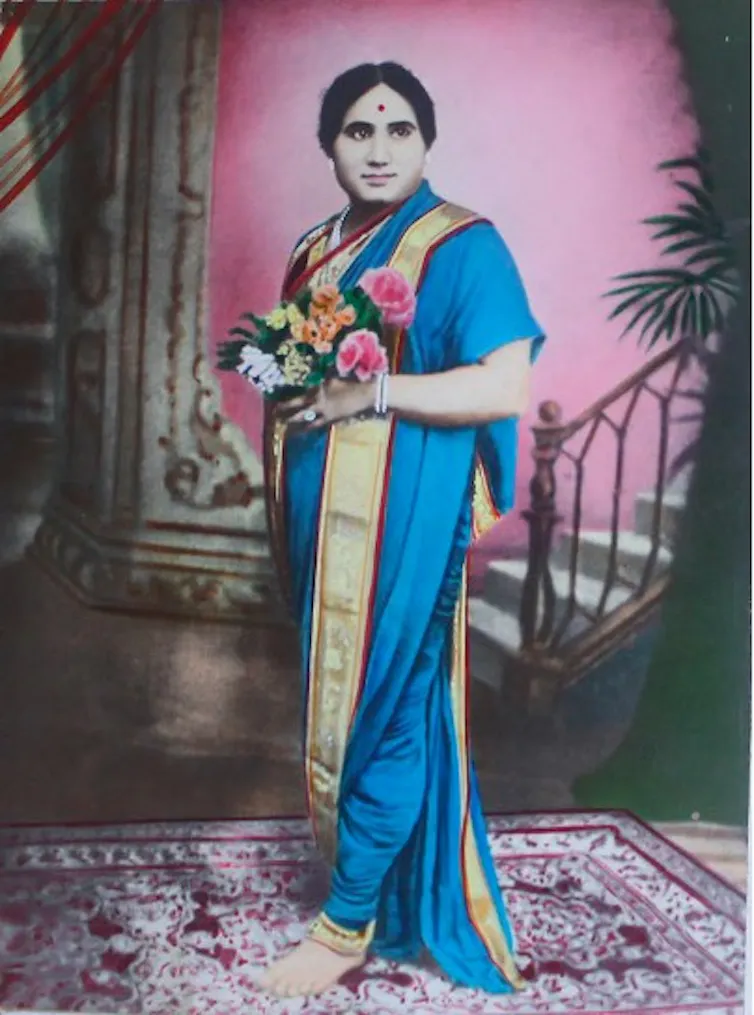
Display placard, courtesy of Bharat Natya Sanshodhan Mandir, Pune
Staging respectability
India’s pervasive caste system divides Hindus into distinct groups based on which caste they are born into, with certain castes regarded as “higher” than others.
Some of these “lower” castes are made up of hereditary performers: families with a lineage of performing arts. Historically, women from these communities were allowed – and sometimes expected – to perform and entertain.
But Marathi sangeet natak, which emerged in the mid-19th century, was a predominantly upper-caste and middle-class practice.
Its proponents viewed women from hereditary performing castes as unfit to appear before upper-caste audiences, and refused to engage them – or any women – on stage, even while relying on their uncredited labour behind the scenes. Instead, female stage roles were performed exclusively by upper-caste men.
Hindu nationalists condemned any trace of effeminacy in men as a sign of a weakened spirit. However, they made concessions for sangeet natak as the sector developed close ties with the influential nationalist leader Bal Gangadhar Tilak (1856–1920).
Sangeet natak was a vehicle for Hindu nationalist politics, and Tilak was the leader of this political ideology – so they fulfilled each other’s agendas.
Tilak’s newspaper, Kesari, ran favourable reviews of performances and lent a respectable air to the enterprise, helping to quieten suspicion about men dressing up in saris to play women’s roles.

Wikimedia
Across his career, Gandharva played 27 female roles drawn from Hindu mythology, reformist writing and classical drama. His heroines were bound by unwavering adherence to stridharma: a concept in Hindu scriptures that positions wifely devotion as a woman’s sole destiny.
Stridharma was also heavily pushed at the turn of the 20th century, during the nationalist movement, by upper-caste men and women reformers writing in novels, women’s journals and newspaper columns. These writers gave advice on hygiene, housework and raising children, to help shape the reader into the perfect housewife, or sugrahini.
Playing the perfect wife
Stridharma found its most immersive expression on stage, where Gandharva turned it into a visually and emotionally legible experience.
His heroines such as Shakuntala, Sindhu and Rukmini became emblems of reticence, forbearance and self-effacement. Yet these pathos-ridden performances were always delivered in exquisite saris and jewellery, turning the stage into something close to a fashion runway.
Women left the theatre and went directly to sari shops to replicate “Gandharva fashion”. Although women who longed for material things had long been seen as morally dangerous, Gandharva fashion made feminine objects both desirable and respectable.
In one 1917 play called Ekach Pyala, Gandharva played Sindhu, a devoted wife who is brutalised and killed by her alcoholic husband. The audience hail Sindhu as Sati, the Hindu goddess of self-sacrifice.
A promotional portrait (pictured in the header image of this article) shows Sindhu/Gandharva in fine jewellery and a golden-border sari. It’s as though her suffering earned her the right to such finery. The underlying message? Only through stridharma can a woman earn redemption and recognition.
The same image was later used in the product packaging for “Gandharva toilet powder” (face powder).
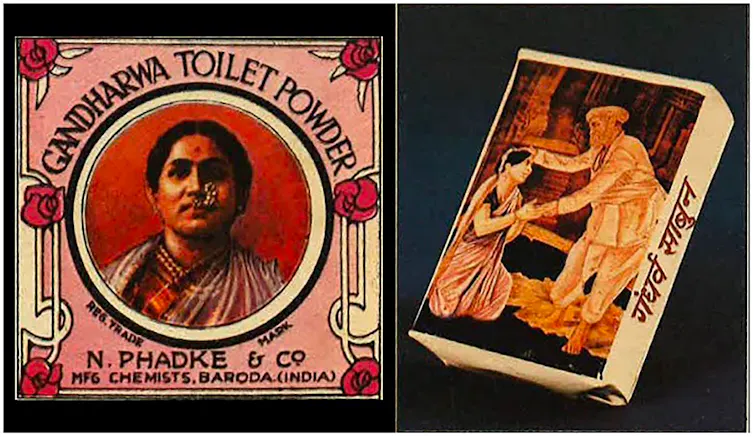
Maharashtra Times centenary issue magazine, Balgandharva Janmashatabdi Visheshank, 1988
Sugrahini in the consumer market
Gandharva’s dutiful wife image fit naturally into ads for family products. He endorsed Zenith Drakshasava, an Ayurvedic tonic made from raisins and barley and sold as a cure for tiredness and weakness.
Such tonics were once prepared locally by Ayurvedic physicians. Slowly, pharmaceutical companies began manufacturing and selling these “homemade” cures commercially.
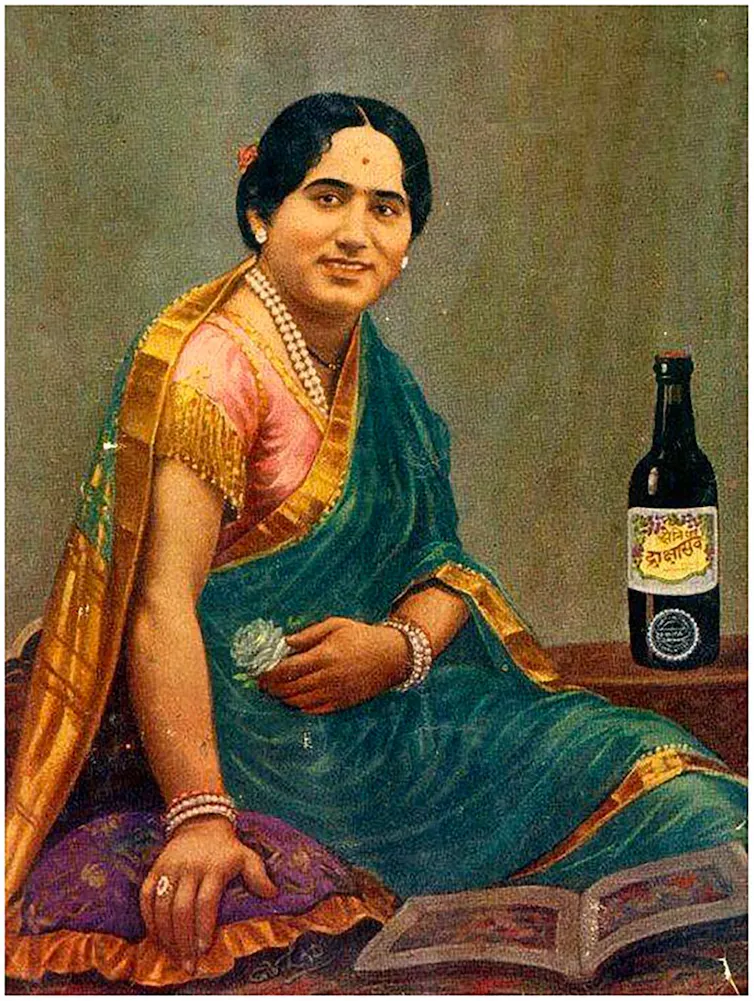
Bharat Natya Sanshodhan Mandir/Maharashtra Times centenary issue magazine, Balgandharva Janmashatabdi Visheshank, 1988
Gandharva’s sugrahini image lent these products a sense of homely authenticity. They reinforced the idea that protecting family wellbeing was a devoted wife’s central duty – a duty that could now be conveniently purchased.
The domestic life of the sugrahini became a way to assert Hindu identity and push back against Western influence brought by colonial rule. She offered a controlled alternative to the seductive “modern girl” figure that arose globally in popular media between the first and second world wars.
In Indian context, the “modern girl” was embodied onscreen by stars such as Sulochana. She could be seen speeding along in motorcars, in a split-sleeve blouse, with a flapper hairstyle. But by the end of the narrative, she was either “tamed” or punished.

Wikimedia
Gandharva’s sugrahini needed no taming.
Govindrao Tembe, a contemporary of Gandharva, once observed that upper-caste families “saw a reflection of their own daughters in him”, and even sought a daughter-in-law like him. Thus the sugrahini archetype outlived the stage and entered the marriage market.
From sugrahini to tradwives
In post-independence India, the sugrahini archetype appeared in all manner of ads, from pressure cookers, to laundry powder and kitchen appliances. She was economically savvy and efficient. And even as she shopped, she remained fundamentally tied to the domestic realm.
Today, we see echoes of sugrahini in the broader global tradwife culture, where women perform traditional forms of domesticity online. They cook, clean and care for children. In many cases they monetise this performance.
Gandharva’s career reminds us that domesticated and commodified femininity is not new. It is deliberately constructed and marketed – ironically, in many cases, by men.

Radhika Raghav does not work for, consult, own shares in or receive funding from any company or organisation that would benefit from this article, and has disclosed no relevant affiliations beyond their academic appointment.
Original source: https://analysis1.mil-osi.com/2026/08/24/in-20th-century-india-the-perfect-hindu-wife-was-a-man/