

Source: The Conversation (Au and NZ)
“Pics or it didn’t happen” was a thing people used to say online when they wanted to verify a claim. Technology has changed this.
We now regularly see a mix of the surreal and the fantastic. World leaders saying things they didn’t. Public figures seemingly endorsing fake products. And disasters that unfold before our eyes but didn’t really happen.
Now, anyone can create photorealistic images or videos using AI for a range of purposes. This has changed the nature of visual evidence and our relationship to photos and videos, more broadly.
The glut of AI slop we see online is eroding trust in institutions, gobbling up resources, and scamming people out of their hard-earned money.
When faced with this challenge, we might ask ourselves: what images can we trust in
the age of AI? And how are individuals and organisations alike responding?
The changing nature of visual evidence
We still rely on photographs and videos as evidence in many contexts. Want to prove an UberEats delivery arrived safely and on time? Take a photo. Want to prove your behaviour was appropriate? Record a video.
But as AI is being increasingly used to scam, mislead, and deceive, big tech is trying to innovate to reduce the chaos and restore our faith in the vision our cameras capture.
Google, for example, began embedding content authenticity software – a way to prove the origin of an image – in its smartphone cameras in 2025. It uses a technology standard, C2PA, that big camera brands, such as Nikon, Sony, and Canon, have started using in their standalone cameras, too.
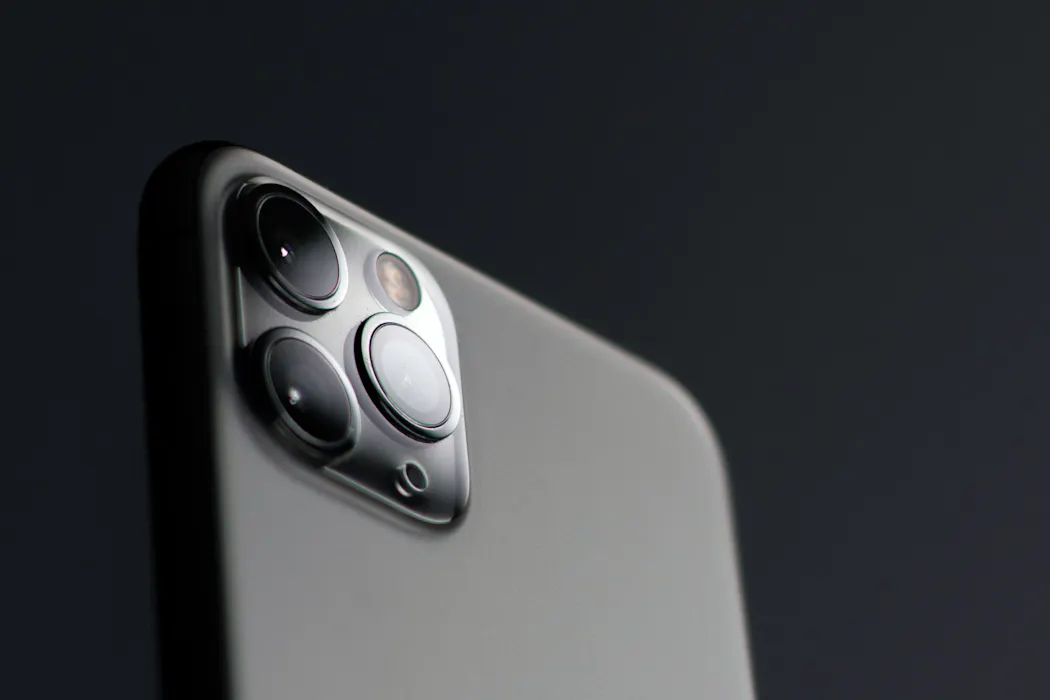
Similar though distinct technology might be coming to iPhones later this year. Reports surfaced earlier this month that the next version of Apple’s operating system could include a “reference image” feature. Like the software used in some Google smartphones, this tech could be used to prove that a photo you’ve taken actually came from your device and isn’t AI fakery.
The software works by sharing the raw image and accompanying metadata to Apple for verification. If everything checks out, the image receives a unique ID. The ID allows others to verify when the image was made and the device used to make it.
But there are, of course, caveats.
The limits of visual evidence
First, the feature, if it is rolled out, will allegedly be turned off by default. Users will have to manually turn it on.
Second, once turned on, the feature doesn’t work retroactively with your existing photos. It also doesn’t work automatically with all the future photos you’ll take.
You have to decide before taking a photo whether it will be one you need to later prove. This makes sense. You might not need to verify photos of your latest meal or dog’s newest outfit. But you might want to document that something you ordered online arrived broken or that a fight you see break out on the street really happened.
Third, even “verified” photos can deceive or mislead. How close or far away from the subject the photographer is impacts the angle of view and the resulting interpretation. A fast camera shutter can turn an unrepresentative facial expression into a political statement. And the action appearing in front of the lens can also be staged or posed.
Beyond technological solutions
So, what to make of all of this? A “verified” label doesn’t necessarily mean an image is true and a lack of one doesn’t necessarily mean it isn’t. These authenticity signals can provide some information – about time and device of capture – but they don’t tell a complete story.
You’ll still need to use your critical thinking skills and the wider presentation context to make sense of what you’re seeing and whether you can believe it.
Relationships matter, too. We might spend less time looking deeply into a single piece of content and, instead, put more weight into the source behind the content.
If we don’t know the source or have reason to trust it, we might be best served by moving on. This is because most adults have limited time and fact-checking skills and we encounter too many claims to verify them all.
Ultimately, provenance technology can be a useful piece in the puzzle but it doesn’t provide the entire picture.

T.J. Thomson receives funding from the Australian Research Council. He is an affiliate with the ARC Centre of Excellence for Automated Decision Making & Society.
Original source: https://analysis1.mil-osi.com/2026/08/23/more-phones-may-soon-let-us-prove-photos-are-real-but-will-it-solve-the-ai-fake-image-crisis/